
Guide
Why a Door Goes Off Track in This Town's Houses
Naperville homes built 1938-2003 pair older track hardware with cold-climate freeze-thaw swings. Here's why doors jump track here and what actually fixes it.
Local detail
What the Weather Here Does to It
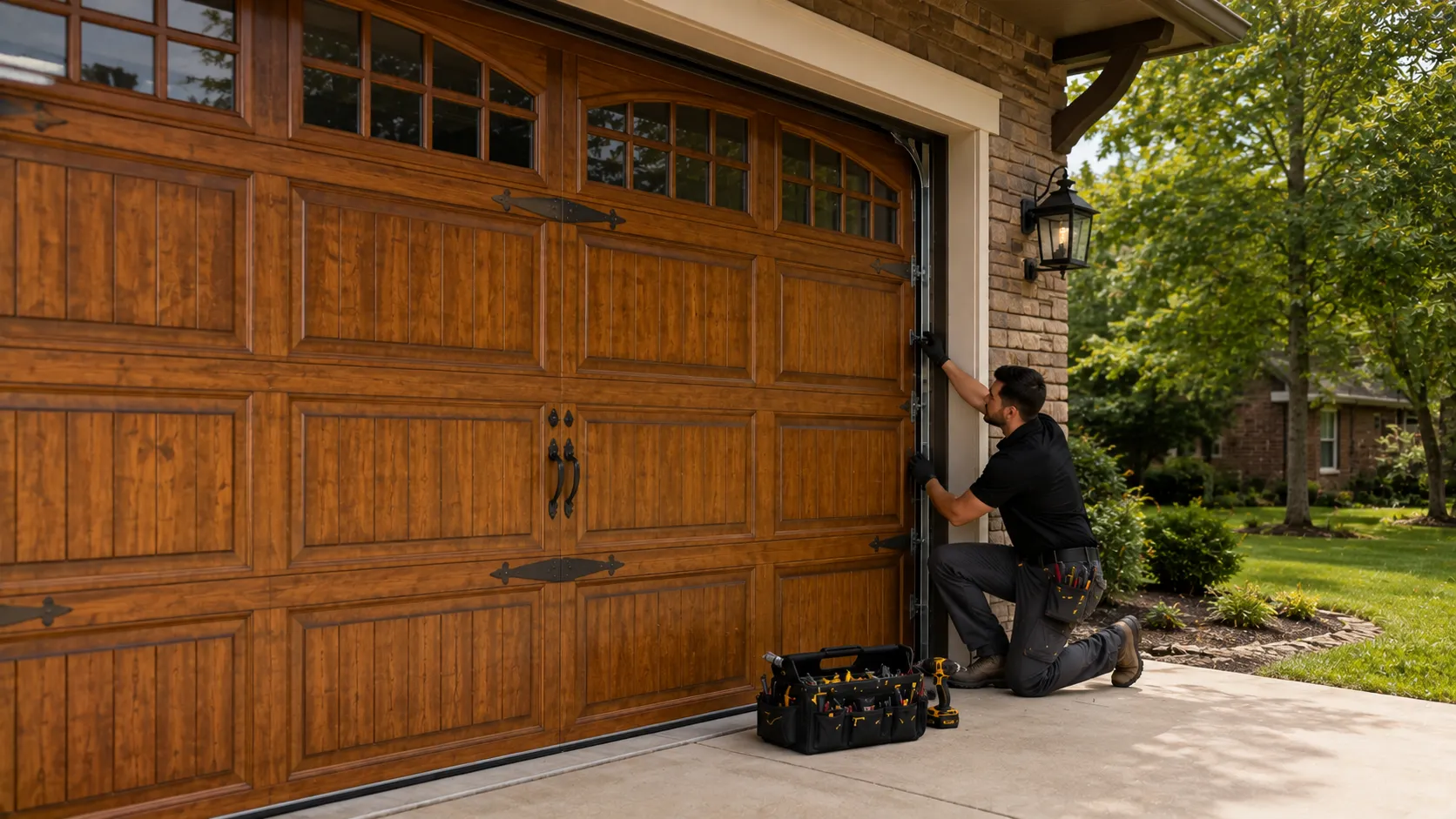
Naperville sits in a cold, moderate climate band, which means the tracks on your door go through a real freeze-thaw cycle every winter, not just a couple of cold snaps. Steel track contracts when the temperature drops, and the brackets holding it to the jamb don't contract at the same rate wood or masonry does. Over years, that mismatch works the lag screws loose a fraction of a turn at a time. You don't see it happen. You just notice one morning that the door hesitates on the way up, or that a roller pops the lip of the track on the last foot of travel.
Ice is the other half of it. Snow melts off the roof edge, runs down the door, and refreezes right where the bottom roller rides. That ice ridge is enough to shove the roller sideways on its next cycle, and once one roller is off-line the whole panel starts pulling the track out of true. This isn't a defect in the door. It's what a cold-climate winter does to track alignment over time, and it's why off-track calls in this area cluster in the first hard freeze and the first real thaw, not the deep middle of winter.
The area
When to Call Someone
If the door is off the track but the panel is still sitting mostly straight in the opening, don't run the opener again. Every cycle you force it grinds the roller further off the rail and can bend the track badly enough that it needs replacing instead of re-hanging. Pull the release cord, leave the door where it is, and call.
If a cable has come off the drum along with the track problem, or if one side of the door is visibly lower than the other, that's a spring or cable failure riding along with the track issue, not a simple nudge back into place. Those two failing together is common enough in houses built in the 1960s and 70s with original hardware still on the door - the track finally lets go right around the same age the springs are due to fail anyway.
What we find
The Problem
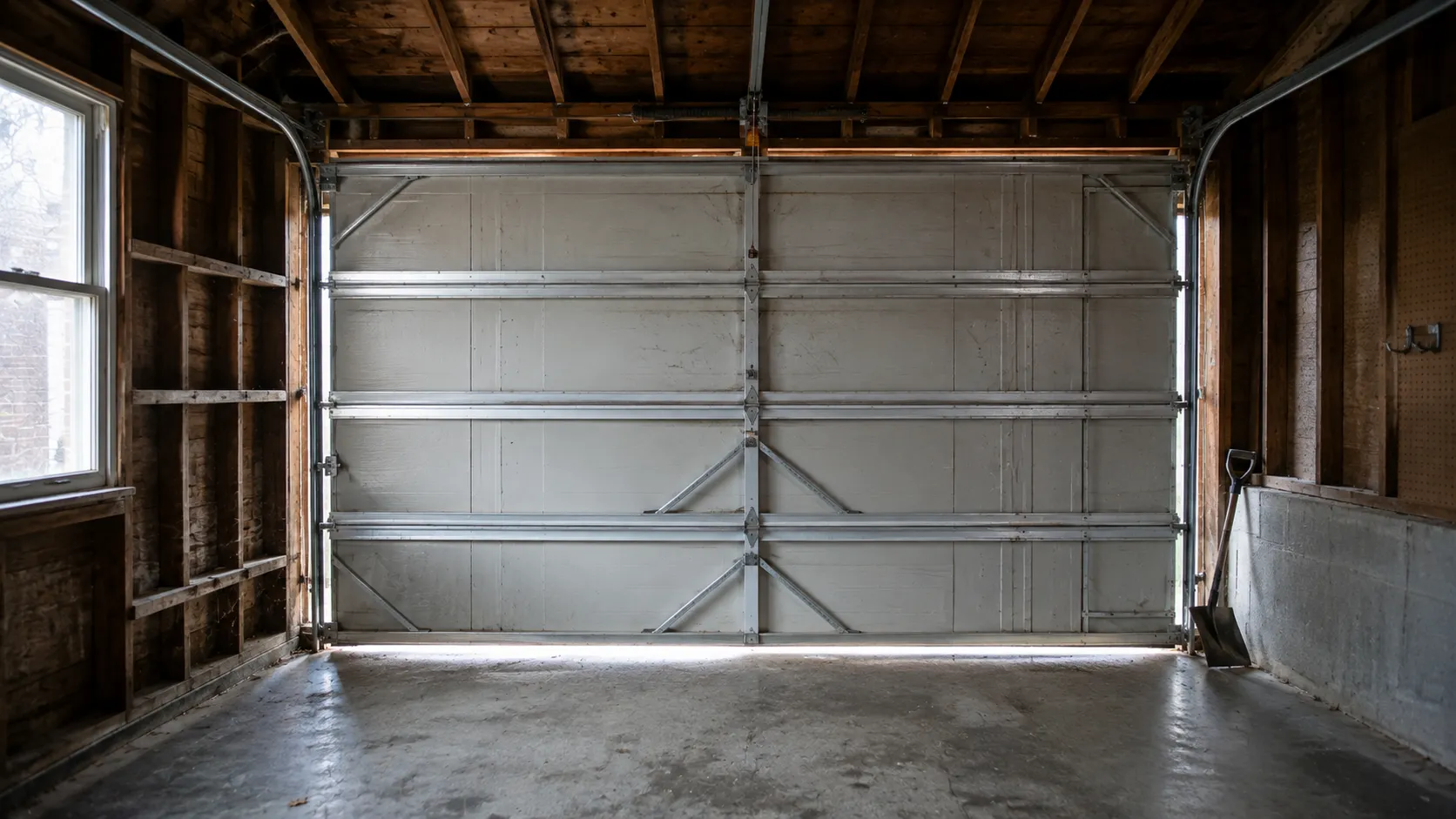
A lot of the housing stock in this area was built between 1938 and 2003, with the bulk of it going up in the 1960s and 70s across the named subdivisions here. That means a large share of doors are still running on the track and roller hardware that came with the house, or a close replacement of it decades ago. Galvanized track from that era wasn't built with today's tolerances, and the brackets are often spaced wider than current code calls for.
Wider bracket spacing gives the track more room to flex under a cold-weather load, and a track that flexes is a track that eventually walks out of alignment. It's not that the original installers did bad work - it's that forty-plus years of seasonal contraction and expansion will loosen almost any fastener eventually. The result is the same complaint over and over: the door runs fine most of the year and starts binding or jumping the track right when the temperature swings hard.
How we work
Where People Go Wrong
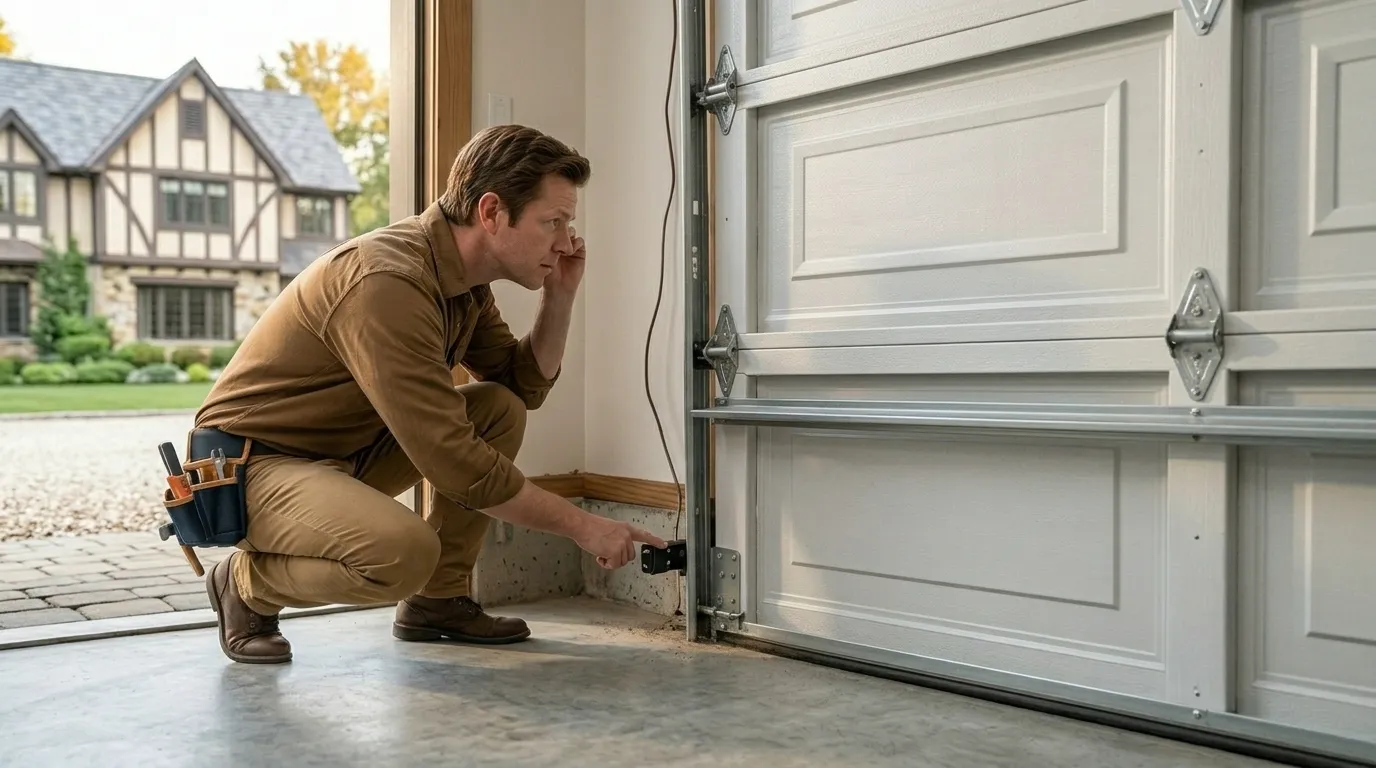
The most common mistake is bending the track back into place with a pry bar and calling it fixed. It looks straight to the eye, but a track that's been bent once has a memory - it will flex back toward that bend under load, and the door will jump again within a few cycles, usually worse. The honest limitation here is that once track has been forced, it's often cheaper and more reliable to replace that section than to keep straightening it.
The other mistake is tightening the roller bracket lags without checking whether the track itself is still plumb. On a lot of the older houses in this area, the jamb has shifted slightly over sixty-plus years, so the track was never quite square to begin with, and just cranking down the same worn holes doesn't fix that. It has to be reset against a level reference, not just retightened where it already was.
Questions
Common questions
Why does my door only go off track in the winter?
Cold makes the steel track contract and can build a ridge of refrozen meltwater right where the bottom roller travels. Either one is enough to push a roller off the rail. It's a seasonal load on hardware that's fine the rest of the year, which is why the complaint shows up right around the first hard freeze or thaw.
Can I just push the door back onto the track myself?
If the door is only partly off and the panel isn't warped, it's sometimes possible, but forcing the opener to run while it's off track can bend the rail permanently. Pull the manual release, leave it alone, and have someone look at the bracket spacing and track alignment before running it again.
Is my track original to the house?
A lot of houses in this area date to the 1960s and 70s, and it's common for the track and rollers to be original or a like-for-like replacement from decades ago. That older hardware tends to have wider bracket spacing than current installs, which gives it more room to flex and eventually walk out of line.
Ready when you are
Need a garage door sorted in Naperville?
Naperville Garage Door Pros repairs and installs garage doors, springs and openers in Naperville, IL and the surrounding area.