Guide
Is Your Naperville Garage Door Worth Repairing, or Done
Naperville homes mostly date 1938-2003, median 1976. Here's how our cold winters affect that older stock and when repair still beats replacement.
Local detail
What the Weather Here Does to It
Naperville sits in a cold moderate climate band, and that matters more than most homeowners think when it comes to a garage door's hardware. Winter cold pulls the grease out of rollers and bearings, shrinks steel tracks just enough to throw alignment off, and makes torsion springs more likely to snap on the first really cold morning of the season rather than gradually wearing out. A door that's been fine all fall can seize or drop a cable the day the temperature falls hard.
Most houses across this area were built between 1938 and 2003, with a lot of the stock concentrated in the 1960s and 70s across the many named subdivisions and areas that make up greater Naperville. That means a lot of original steel doors and openers that were never spec'd for the freeze-thaw cycles they've now been through for 50-plus winters. Panels flex, seals crack, and the bottom section that sits closest to the cold slab tends to go first.
We don't guess at what a specific unit built in a specific decade needs without seeing it, but the pattern holds: the older the door, the more the cold has already worked on it, and the more a repair is really a temporary patch on hardware that's near the end of its run.
The area
When to Call Someone
Call before the door fails completely, not after. If a door built in the 1960s-70s window that makes up most of this area's stock is grinding, hesitating, or reversing without cause, that's the cold finding a weak spot in old hardware, not a fluke. Waiting usually means the failure happens on the coldest morning, with the car trapped inside or out.
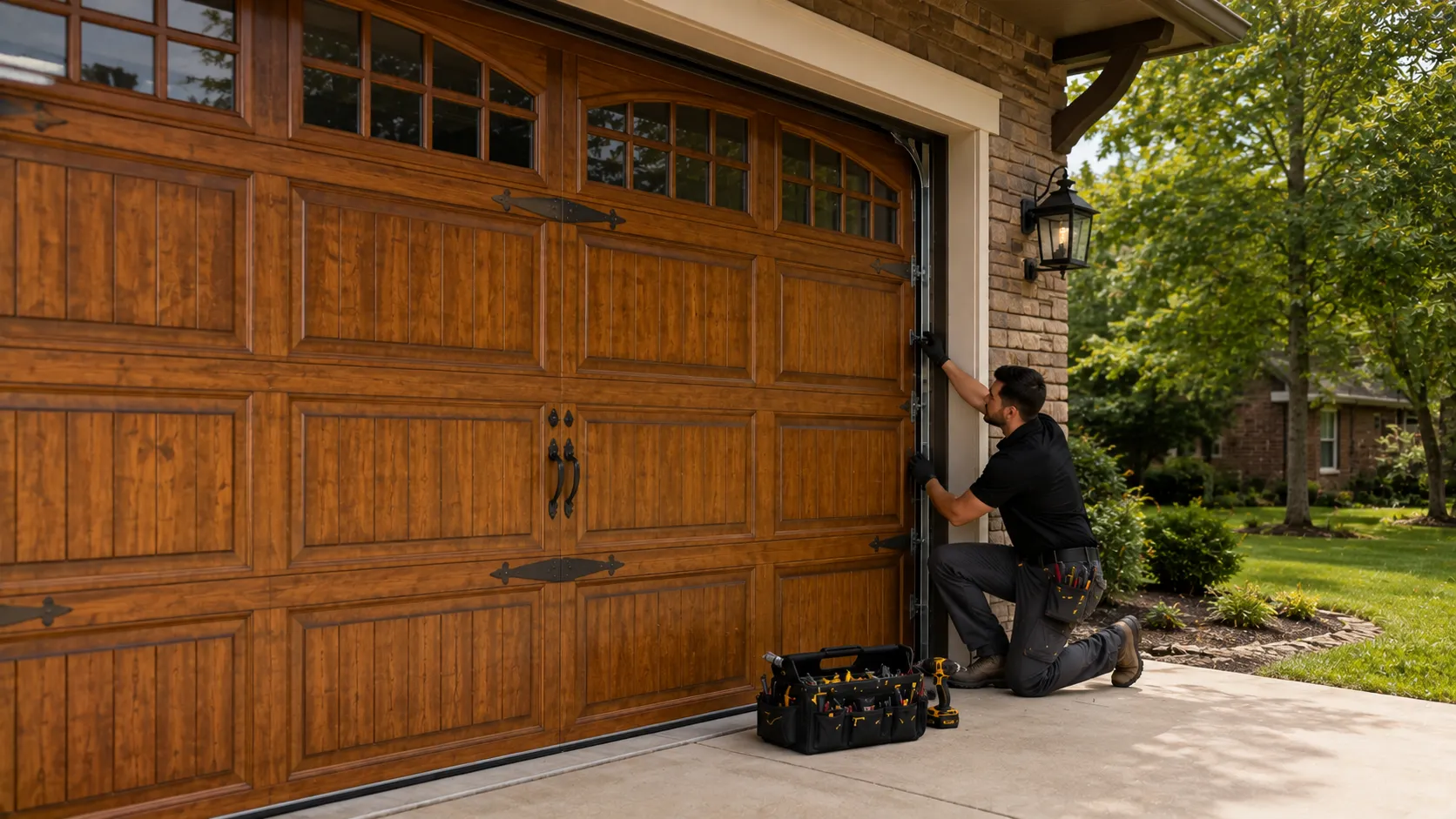
A torsion spring that's visibly stretched, rusted, or has a gap when the door is down is a same-week call, not a someday call. Springs on doors from this older housing stock were often undersized by today's cycle-count standards to begin with, and cold makes brittle metal worse.
We'd rather look at a door once while it's still working than get the call after a cable snaps and the door comes down crooked. If you're not sure whether what you're hearing is normal aging or a real problem, that's exactly the kind of call worth making.
What we find
The Problem
The core issue with a lot of Naperville garage doors isn't the door itself, it's the age of everything around it. With median household income here at $99,525, plenty of owners could replace a door outright, but a lot of the calls we get are for doors that are structurally sound and just need the parts that take the daily wear: springs, rollers, cables, and weatherstripping that a cold climate chews through faster than a mild one.
Across the roughly 244,587 owner-occupied houses in this broader service area, the majority were built well before current opener safety standards and insulation expectations existed. That's not a defect, it's just the era. The problem shows up when someone assumes a 1970s-built door with a worn spring needs a full replacement, when really the box, tracks, and panels are fine and only the moving parts have given out.
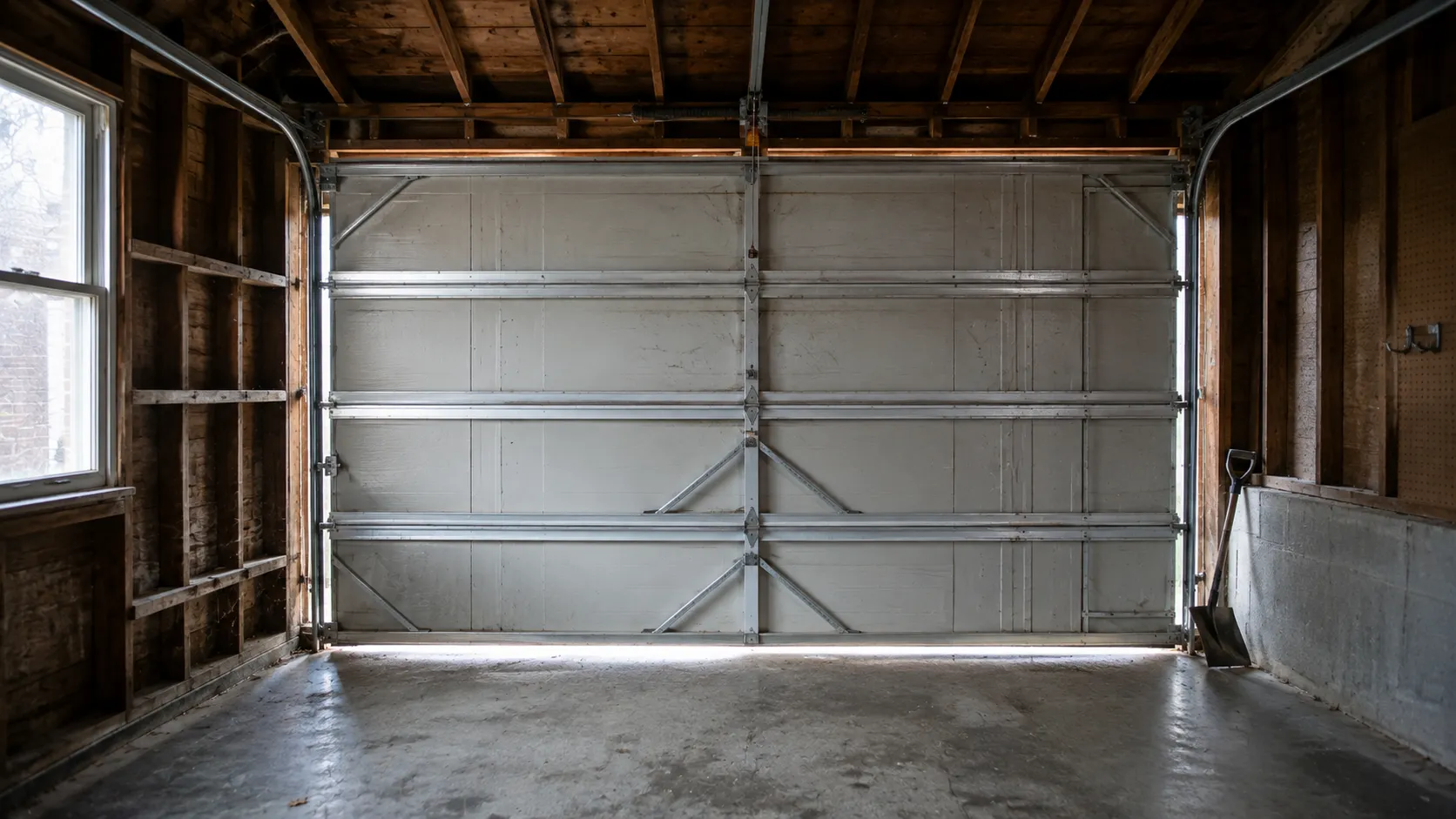
The honest limitation: once a steel panel has rusted through at the bottom or the door has been forced off its tracks more than once, repair stops being worth it. At that point you're paying for labor to prop up a door that's going to need the same work again in a year.
How we work
Where People Go Wrong
The most common mistake we see is treating every older door the same way, either fixing everything on it out of habit or replacing everything out of caution. Neither fits a housing stock that spans 1938 to 2003 with a median build year of 1976. A door from the earlier end of that range with an original wood-and-steel panel is a different job than one built in the 90s with foam insulation.
The second mistake is ignoring what cold does to the timeline. People wait until spring to deal with a spring that started sagging in December, and by then it's snapped and taken a cable with it. In this climate, a small problem in late fall is a bigger problem by January.
The third is assuming a neighbor's fix applies to your house. A door that makes sense to repair in a home near Lisle or Warrenville, five miles out, might have a completely different age and hardware setup than one ten miles away near Glen Ellyn or Batavia. Local age and exposure vary block to block, which is why we look at the actual door before saying repair or replace.
Questions
Common questions
How do I know if my garage door is too old to repair?
If the panels themselves are rusted through, warped, or the door has come off its tracks more than once, repair is a short-term fix on a door that's failing structurally. If it's the springs, rollers, or cables giving out on an otherwise sound door, that's a normal repair, especially common in the 1960s-70s stock common across this area.
Why do garage door springs fail more in winter here?
Cold makes steel more brittle and pulls lubrication out of moving parts, so a torsion spring that's already near the end of its cycle life is far more likely to snap on a cold morning than a mild one. Naperville's cold moderate climate band means this is a seasonal pattern, not bad luck.
Is it worth replacing an old opener along with the door?
Depends on the opener's age and condition, not the door's. A lot of homes built in the 1938-2003 range have openers that were swapped out at some point, so we check that separately rather than assuming they're the same vintage.
Do you serve areas outside Naperville itself?
We work across the wider area, including places like Lisle, Warrenville, and Woodridge a few miles out, and farther towns like Glen Ellyn, Batavia, and Geneva. Reach out through our site to check your specific address.
Ready when you are
Need a garage door sorted in Naperville?
Naperville Garage Door Pros repairs and installs garage doors, springs and openers in Naperville, IL and the surrounding area.