Guide
Where We Start When You Call: Springs, Track, and What the Cold Does First
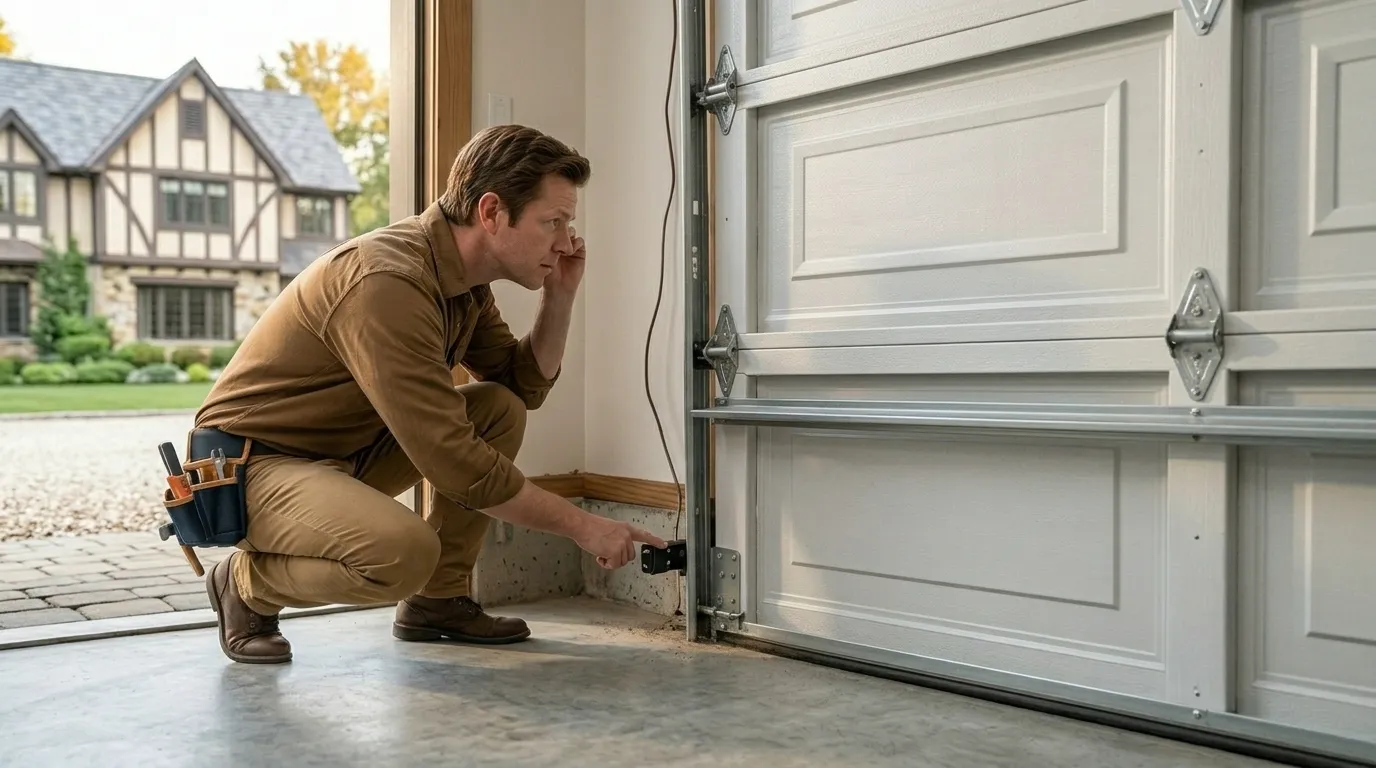
See what a Naperville Garage Door Pros technician checks first on homes built between 1938 and 2003, when cold winters stress springs, tracks, and openers.
Local detail
What the Weather Here Does to It
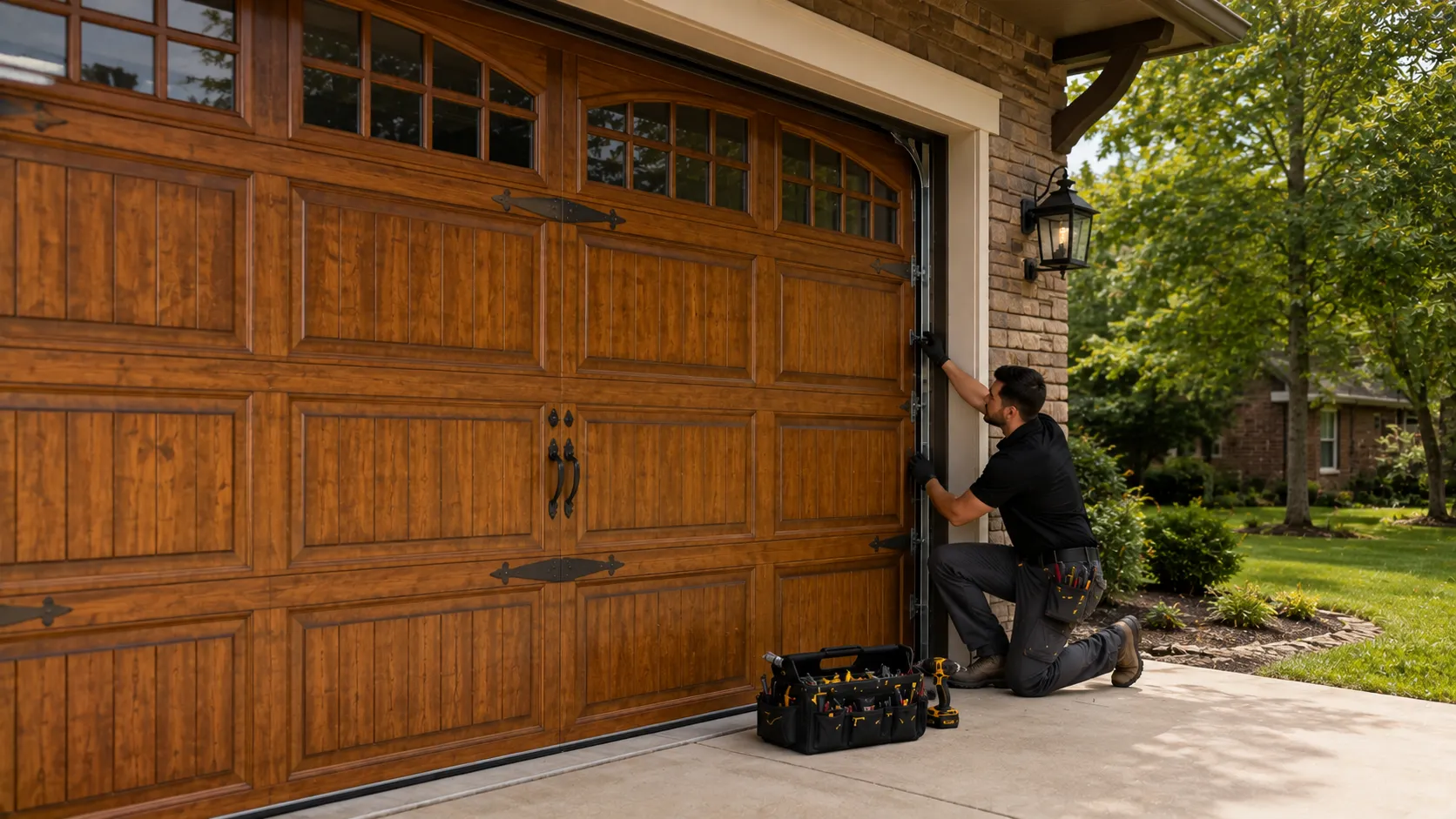
Naperville sits in a cold-moderate climate band, which means the garage door lives through a real freeze-thaw cycle every winter, not just a couple of cold snaps. Steel contracts, the torsion spring loses a little tension it never fully gets back, and the track - if it's even a degree out of plumb - starts binding right when the cold makes the rollers stiffest. That's the pattern a technician is looking for before touching anything else: does the door struggle more on a 20-degree morning than it does in July.
If it does, the spring is usually undersized for the cycle count the cold demands, or the track has drifted out of alignment over years of that seasonal push and pull. This isn't a defect specific to one brand or one door; it's what this climate does to any torsion system over time. The honest limit here is that we can't stop the cycle - cold weather is going to keep stressing the hardware every year it's up.
What we can do is size the spring and set the track so the door isn't fighting the season on top of fighting gravity. That's the first thing checked, every time, before we talk about the opener or the panels.
The area
When to Call Someone
Call before the door stops working, not after. A door that's slow to open in the morning but fine by afternoon is telling you the spring tension is marginal and the cold is finding the gap - that's worth a look before it snaps a cable trying to lift a door it can't balance anymore. A door that reverses on its own, or that shudders partway up, is usually a track or roller problem, not an opener problem, even though the opener gets blamed first. If the door won't move at all and you hear a spring that let go - a loud bang, usually from the ceiling - don't try to lift it manually with the release cord pulled.
That's a loaded system and it's not a DIY fix. One thing we won't do is talk you into a full replacement over the phone. Some of this housing stock has doors old enough that parts are hard to source, and in those cases replacement genuinely is the better call - but that's a decision made after a technician has the door in front of them, not before.
What we find
The Problem
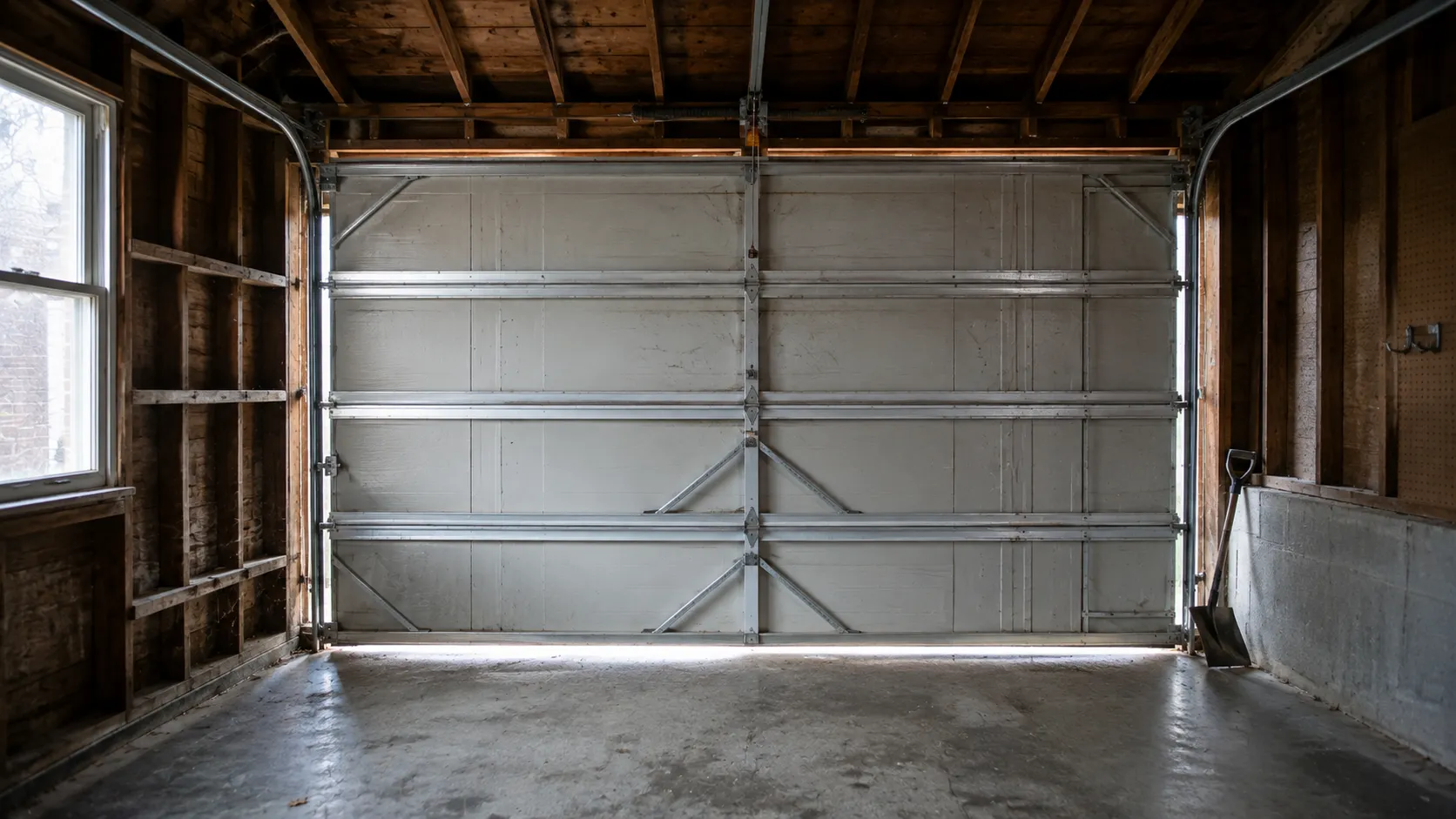
Most of the housing here went up between 1938 and 2003, with the median landing around 1976 and the bulk of it concentrated in 1960s and 70s construction spread across roughly 80 named subdivisions in the area. That means a large share of the doors and openers we see were installed to match hardware standards from that era - lighter-gauge torsion springs, older extension setups on some of the postwar builds, and openers that predate the rolling-code security standard most homes have now. None of that is a flaw in the house. It's just what happens when a door built to a 1970s spec spends fifty winters absorbing this climate's temperature swings.
The spring is almost always the first thing that gives, because it's the part doing the most work and aging the fastest under repeated cold-weather cycling. Panels and track usually outlast the spring by a wide margin unless there's been physical damage. So when a technician opens the garage, they're not guessing at what decade the hardware might be from - the age of the house is a strong predictor of exactly what's inside that torsion tube.
How we work
Where People Go Wrong
The most common mistake is treating a stiff or noisy door as an opener problem first, because the opener is the part people interact with. Swapping the opener on a door with a tired spring or a slightly bent track just moves the failure point - the new opener will strain the same way the old one did, and usually faster, because it's fighting the same imbalance. The second mistake is skipping seasonal lubrication on the track and rollers, which matters more here than it would in a mild climate, since cold makes old grease stiffen and grit stick. The third: assuming a door that's original to a 1960s or 70s build still has a spring rated for today's cycle count.
It probably doesn't, and running it until it fails outright usually means it fails at the worst possible moment - full extension, cold morning, someone underneath it. None of these are dramatic failures. They're slow ones, and they're the reason a technician always starts at the spring and track before ever looking at the opener.
Questions
Common questions
Why does my garage door get harder to open in the winter?
Cold steel loses a bit of flex, and an aging torsion spring loses tension it doesn't recover. In this climate, that combination shows up every winter on older doors, especially ones original to houses built before the 2000s. It's usually a spring or track alignment issue, not the opener.
How old is the hardware in a typical Naperville garage?
Housing in the area runs from 1938 to 2003, with most built in the 1960s and 70s. That means a lot of doors still have original or first-replacement torsion springs and openers dating from that build era, which is the first thing we check on a service call.
Is it worth repairing an old door or should I replace it?
Depends on what's actually worn. A spring or roller replacement on an otherwise sound door is usually worth it. If the track is bent, the panels are rusted through, or parts for the original opener are hard to find, replacement often makes more sense - that call gets made in person, not over the phone.
Ready when you are
Need a garage door sorted in Naperville?
Naperville Garage Door Pros repairs and installs garage doors, springs and openers in Naperville, IL and the surrounding area.