Guide
When to Stop Repairing and Start Replacing
A guide for Naperville homeowners on when a garage door repair stops making sense, tied to the area's 1960s-70s housing stock and cold-climate wear.
Local detail
What the Weather Here Does to It
Naperville sits in a moderate-cold climate band, which means the door on your house goes through real freeze-thaw cycling every winter, not just a cold snap or two. That cycling is hard on steel torsion springs and on the weatherstripping at the bottom panel - metal contracts, rubber stiffens and cracks, and lift cables that were fine in October start showing frays by February. Most of the housing stock in this service area was built between 1938 and 2003, with a median build year around 1976, and a lot of it concentrated in that 1960s-70s wave.
Doors and openers installed as original equipment on those houses, or replaced once in the 1990s or early 2000s, are now old enough that the springs have cycled tens of thousands of times through decades of Illinois winters. A door that's slow to close or that reverses partway up in cold weather isn't broken because of one bad day - it's telling you the hardware has been doing this job for forty-some winters. That matters when you're deciding whether a repair is worth doing at all, versus putting the money toward a new door built for how the panel material and seals actually hold up here.
The area
When to Call Someone
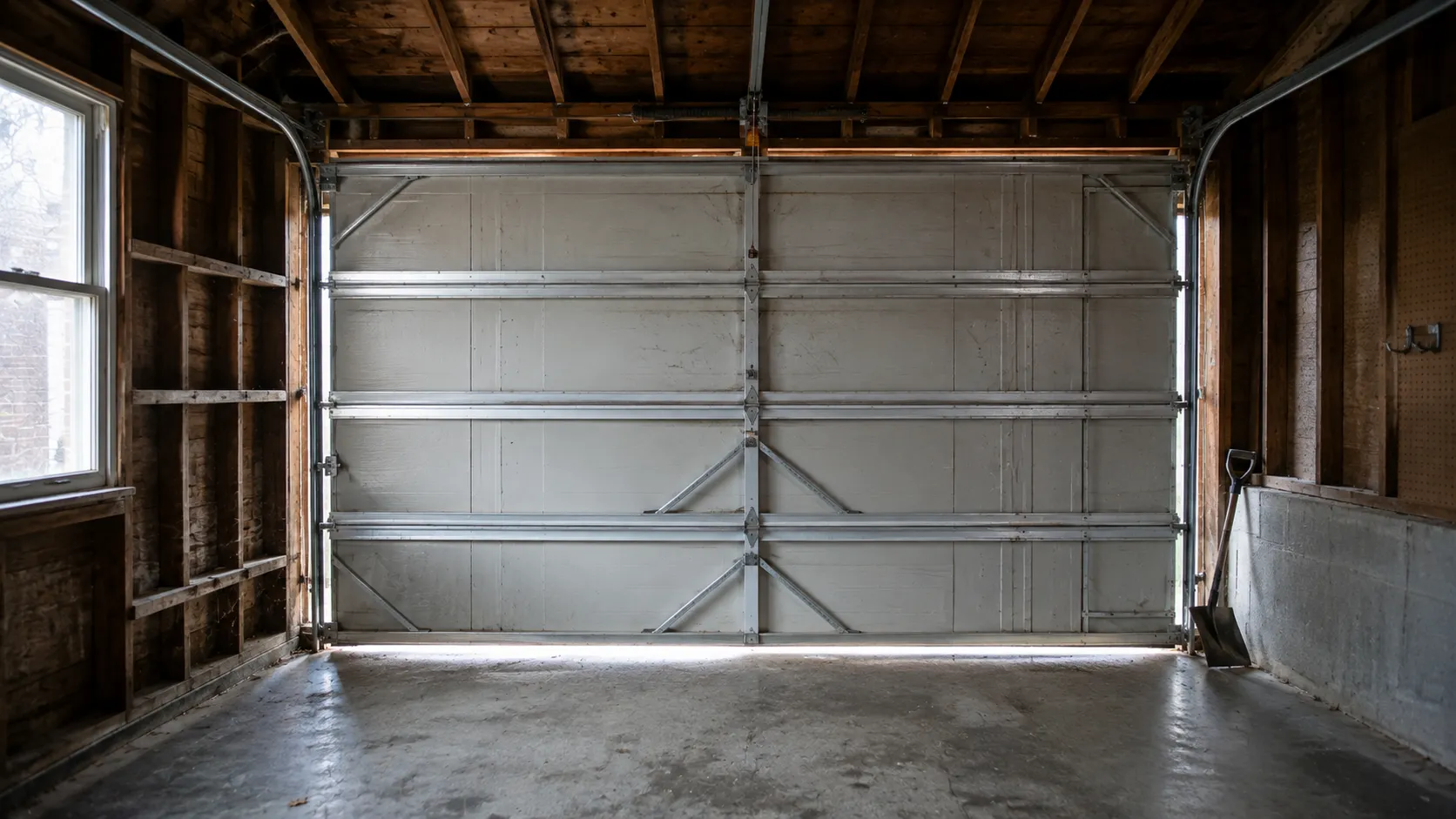
Call before the door fails completely, not after. A torsion spring that's visibly stretched, a cable that's fraying at the drum, or a track that's pulled away from the frame are all things that get worse fast, and on a house from the 1960s-70s stock common across this area, the hardware behind the wall may not match anything sold today.
If your opener strains audibly, if the door drops instead of lowering smoothly, or if one side of a double door lifts before the other, that's a spring or cable problem, not an opener problem, and it's not a job to keep nursing along. The honest limit here: we don't stock parts for every original mechanism from a house built in 1958 or 1962, and if yours is one of those, a repair visit may turn into a conversation about replacement on the spot, because the part simply isn't made anymore.
What we find
The Problem
The core issue for homes in this area is that a door and its hardware were sized and speced for a house built decades ago, and nobody's touched it since. With a median build year around 1976 across the service area, a huge share of doors are original or one generation removed from original - meaning springs rated for a lighter, thinner panel than what's sometimes been swapped in over the years, or an opener that predates modern force-sensing safety reversal.
Add the moderate-cold climate cycling and you get metal fatigue that doesn't announce itself until the spring snaps, usually on a cold morning when the steel is least forgiving. Repairing that one component in isolation - just the spring, just the cable - can leave the rest of the assembly one winter away from the same failure, which is why a single fix sometimes turns into three service calls over two years instead of one replacement.
How we work
Where People Go Wrong
The most common mistake we see in this service area is treating every failure as a standalone repair instead of asking how old the whole assembly is. With household incomes here running well above the national median - the area median is $99,525 - the math on replacement usually works out fine, but people still default to the cheaper-looking fix out of habit, not because it's actually cheaper. If your door and opener came with a house built in the 1960s or 70s, and you've already replaced a spring or a cable once in the last five years, the next failure is not a coincidence - it's the same age catching up with the rest of the hardware.
Stop repairing and start replacing when you're fixing the same door for the third time, when the opener predates safety-reversal sensors, or when a part needed for the repair is no longer manufactured. One limitation worth saying plainly: not every old door needs replacing, and we won't tell you it does just to sell a new one - if the spring is the only thing worn and the rest of the assembly checks out, a spring swap is the right call.
Questions
Common questions
How do I know if my garage door is too old to keep repairing?
If your house falls in the common 1960s-70s build range for this area and you've had two separate spring or cable failures in the last few years, the assembly as a whole is aging out. A third repair on the same door, or an opener without modern safety-reversal sensors, is usually the point to stop patching and replace.
Does Naperville's winter weather actually shorten garage door life?
Yes. The moderate-cold climate here puts torsion springs and cables through repeated freeze-thaw cycling every winter, which fatigues steel faster than in a milder climate. On a door that's already decades old, that cycling is often what turns a slow-close annoyance into a snapped spring.
Is it cheaper to keep fixing an old door than replacing it?
Not always. One repair is usually cheaper up front, but if your door dates to the original 1960s-70s construction common in this area, parts for the old hardware are getting harder to source, and repeated repairs on the same aging assembly can cost more over a few years than one replacement.
What's a sign my opener itself needs replacing, not just the door?
An opener that predates force-sensing safety reversal, or one that strains audibly and still can't lift the door smoothly, is a sign the motor is undersized or worn for the door it's paired with - common when an original 1970s-era opener has been kept running long after the door hardware around it was updated.
Ready when you are
Need a garage door sorted in Naperville?
Naperville Garage Door Pros repairs and installs garage doors, springs and openers in Naperville, IL and the surrounding area.