Guide
Openers, Power Cuts, and the Naperville Housing Stock
Naperville homes built 1938-2003 face opener failures when power cuts hit in cold weather. Here's what actually goes wrong and when it's worth a call.
Local detail
What the Weather Here Does to It
Naperville sits in a cold moderate climate band, which means winter isn't brutal every day but it doesn't let up either. That matters for openers because the motor, the circuit board, and especially any battery backup unit all lose performance as temperatures drop. A backup battery rated to carry a door through a short outage in July might not have the same reserve in January.
Most of the housing here went up between 1938 and 2003, with the bulk of it dating to the 1960s and 70s across the many named subdivisions in this area. Openers installed in homes from that era have usually been replaced at least once, sometimes twice, and the replacement units vary a lot in what they can handle. A chain-drive opener from a 1990s upgrade doesn't behave like a belt-drive unit with a modern circuit board. When a power cut hits, what happens next depends heavily on which generation of opener is bolted to your ceiling.
Cold doesn't just affect the electronics. It stiffens grease in the rail, tightens tolerances on the trolley, and makes a door that was already borderline heavier to move by hand. That combination - old opener, cold garage, sudden power loss - is where most of the calls we get start.
The area
When to Call Someone
If the power goes out and your door won't respond to the wall button or the remote, don't assume the opener is dead. First check whether it's a house-wide outage or just the garage circuit. A tripped GFCI outlet in the garage is a common, cheap-to-fix cause, and it has nothing to do with the door itself.
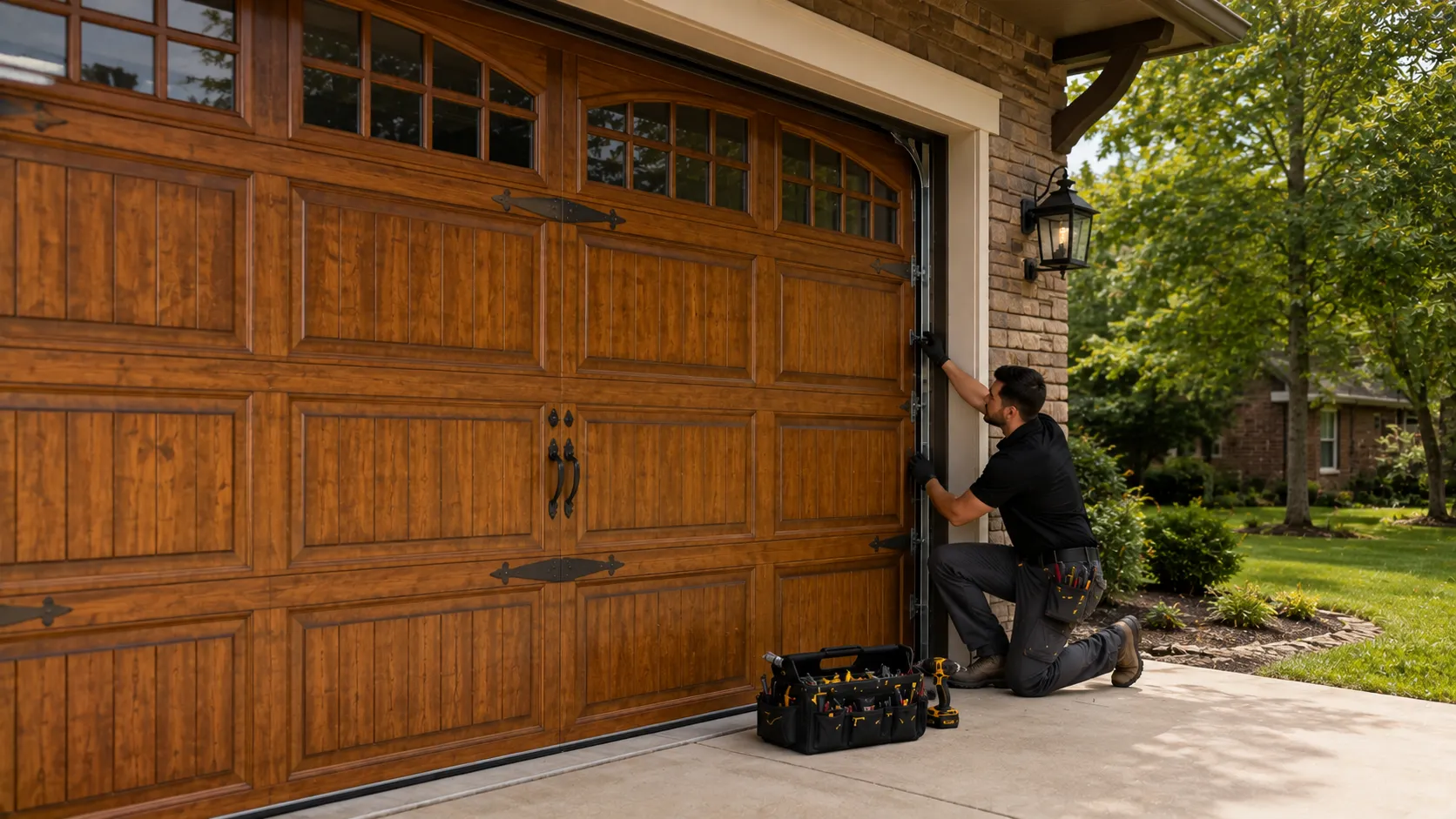
If power is out and you need the car, every opener has a manual release cord - usually a red handle hanging near the rail. Pulling it disconnects the trolley so you can lift the door by hand. This is worth knowing before you need it, not during a cold snap at 6am when you're already late.
Call someone when the door won't move by hand either, when the release cord is stiff or won't engage, or when power comes back but the opener doesn't respond at all. That last one usually means the circuit board took a hit, which is more common in homes with older wiring - not unusual given how much of the housing stock here dates to the 1960s and 70s. If the opener smells hot or has visibly scorched contacts, stop trying to force it and get it looked at.
What we find
The Problem
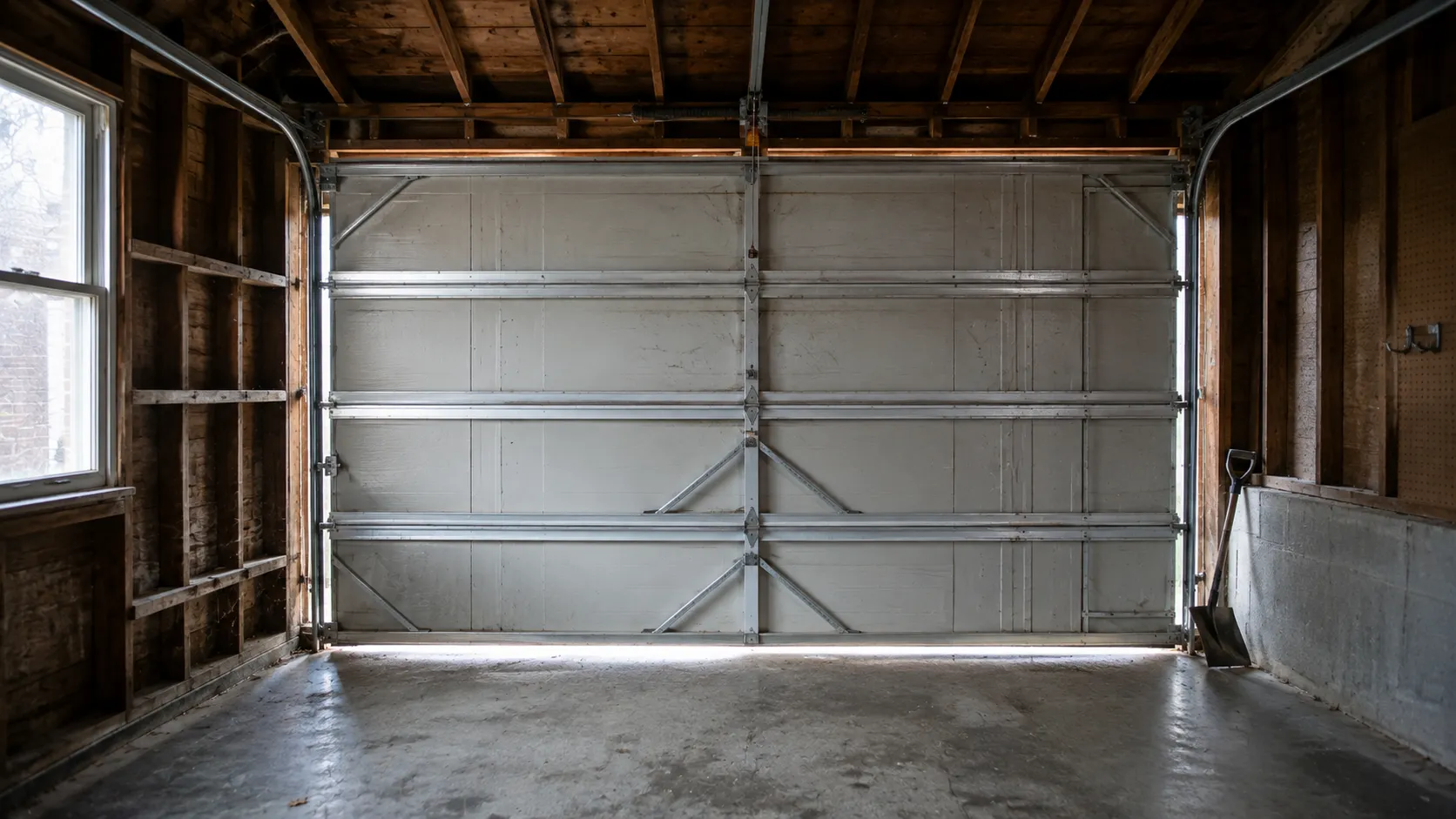
The real problem isn't the power cut itself - it's that a lot of openers in this area were never matched to the door they're running. A home built in the 1970s with a heavier original door sometimes ended up with a lighter-duty opener during a later swap, because nobody weighed the door against the motor's rated capacity. Under normal conditions that mismatch is invisible. Add a power interruption, a cold garage, and a homeowner trying to force a manual release on hardware that's fighting stiff cold-weather resistance, and something gives - usually the release mechanism or a stripped drive gear.
We won't tell you every opener failure is a home-run replacement job. Plenty of the calls we get are a $20 part or a reset. But we also won't pretend a 20-year-old chain-drive opener paired with a heavy insulated door is doing anyone favors during a cold outage. Sometimes the honest answer is that the opener has done its time and the smartest move is a unit rated for the door you actually have, not the one that happened to fit when it was installed.
How we work
Where People Go Wrong
The most common mistake is trying to power through a stuck door with the opener still engaged during an outage, instead of pulling the manual release first. That can bend the trolley arm or crack a plastic gear that would otherwise have been fine.
The second mistake is assuming a battery backup unit will perform the same in January as it did when it was installed. Backup batteries degrade with age and with cold, and a unit that held for an hour two winters ago might not manage ten minutes now. If you're relying on backup power for a door, it's worth checking that battery on a schedule, not just after it's already failed you.
The third is ignoring a mismatched opener-to-door setup because it hasn't caused a visible problem yet. Given how much of the housing here dates to the 1960s and 70s, with doors and openers from different decades bolted together, this mismatch is more common than people think. It usually surfaces at the worst moment - a cold morning, a power flicker, a door that won't cooperate either way.
Questions
Common questions
Why does my opener stop working during a power cut in winter but not summer?
Cold weather reduces battery capacity, so a backup battery that carries the door through an outage in warm months may not have enough charge in January. Grease in the rail also stiffens in the cold, making the door heavier to move, which draws more from whatever backup power is available.
How do I move my garage door if the power is out and the opener won't respond?
Locate the manual release cord, usually a red handle hanging from the trolley on the rail. Pull it down and toward the door to disconnect the trolley, which lets you lift the door by hand. Reconnect it by following the release lever back into position once power returns.
Is it worth replacing an old opener instead of repairing it?
Depends on the age and whether it matches your door's weight. A lot of homes in this area have openers from a different decade than the door itself, and if the mismatch is causing repeat failures, a properly matched replacement is usually the better long-term move than patching the same unit again.
Ready when you are
Need a garage door sorted in Naperville?
Naperville Garage Door Pros repairs and installs garage doors, springs and openers in Naperville, IL and the surrounding area.