
Guide
Detached and Attached Garages Need Different Doors in Naperville
Naperville's 1938-2003 housing mix means attached and detached garages face this area's cold winters differently - here's what that means for door repair and choice.
Local detail
What the Weather Here Does to It
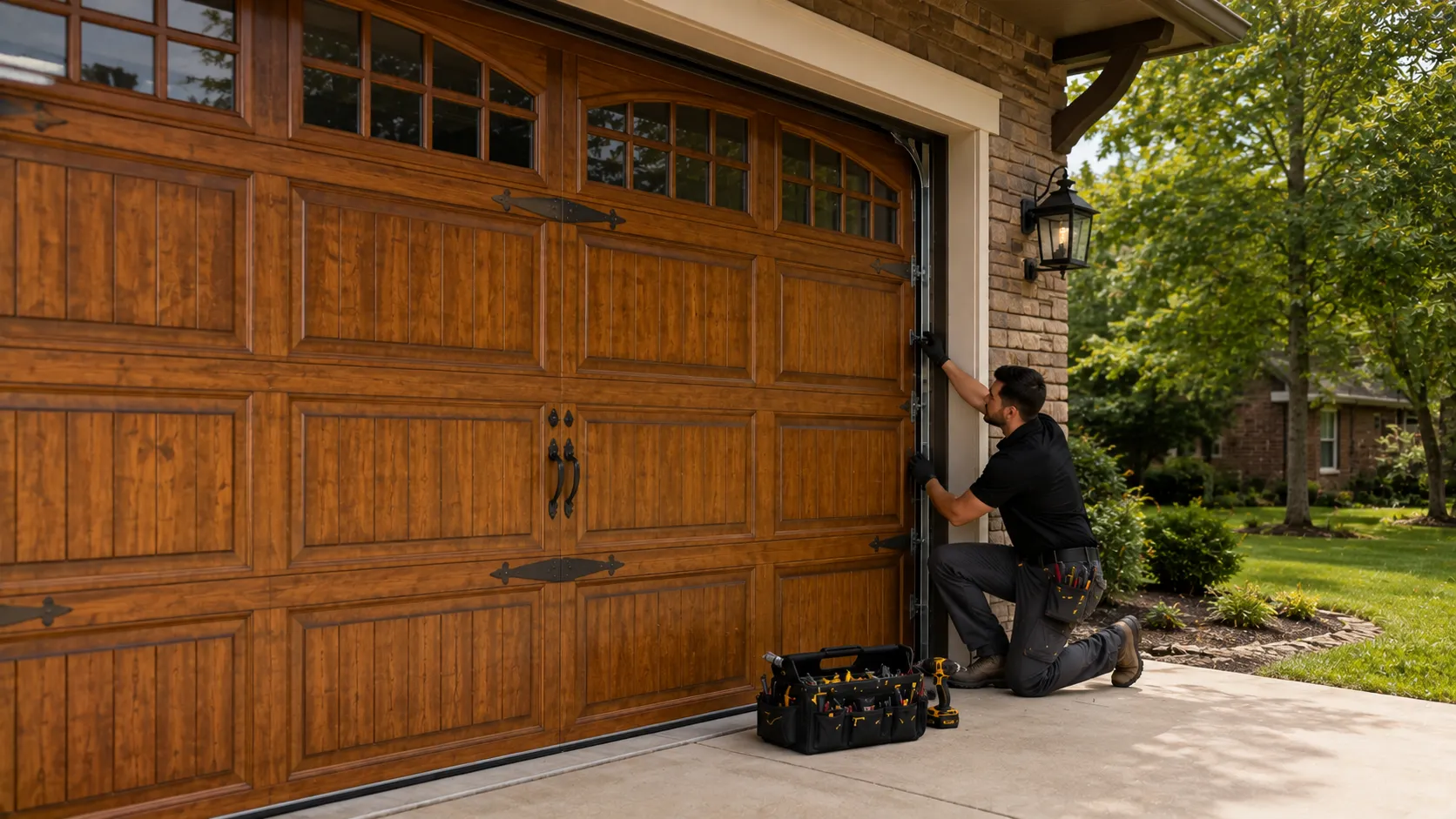
Naperville sits in a cold moderate climate band, and that matters more for a detached garage than an attached one. An attached garage shares at least one wall with the heated house, so it picks up a little residual warmth through that wall and through the ceiling if there's living space above. A detached structure gets none of that. It sits out there taking the full swing of a Naperville winter on all four sides, which means the torsion spring, the roller bearings, and any weatherstripping cycle through a wider temperature range every single day.
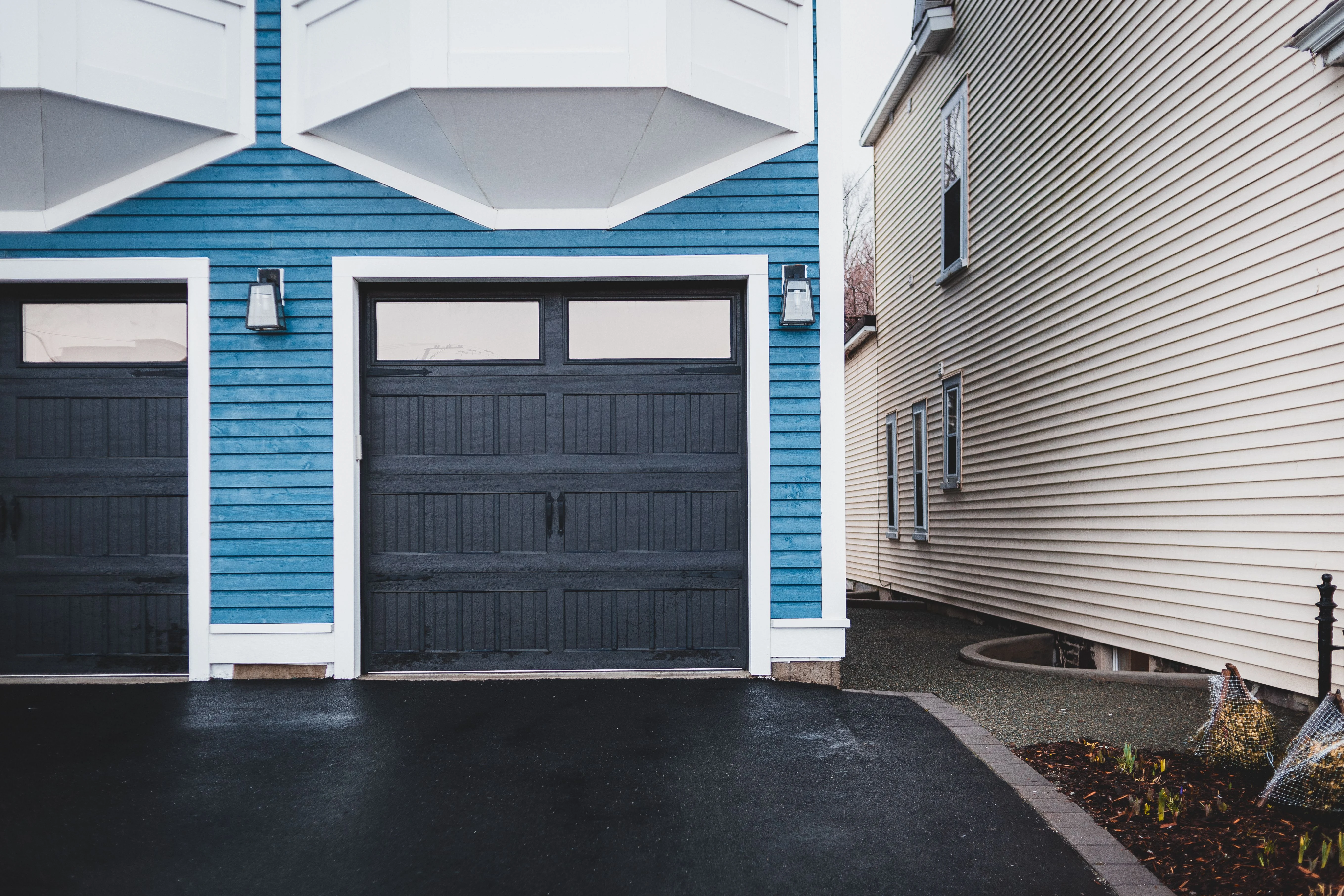
Most of the housing stock in this area went up between 1938 and 2003, with the median closer to 1976, and a lot of that 1960s-70s construction paired an attached garage directly to the house rather than setting it off as its own building. Detached garages tend to show up more on older lots or as later additions. If yours is detached, the steel in the door and the lubricant on the track are working harder than a neighbor's attached setup, even on the same block. Condensation is also more of an issue on a detached door with no adjoining heat source, and on older wood-panel doors from that same era it can mean swelling and sticking that an attached door of the same age just doesn't get.
The area
When to Call Someone
On an attached garage, watch for a door that starts binding near the top corner closest to the house. In homes from the 1960s and 70s stock common around here, minor foundation settling near that shared wall can throw the track out of square just enough to cause drag, and it usually shows up as a scrape or a hesitation right at that corner, not evenly across the door.
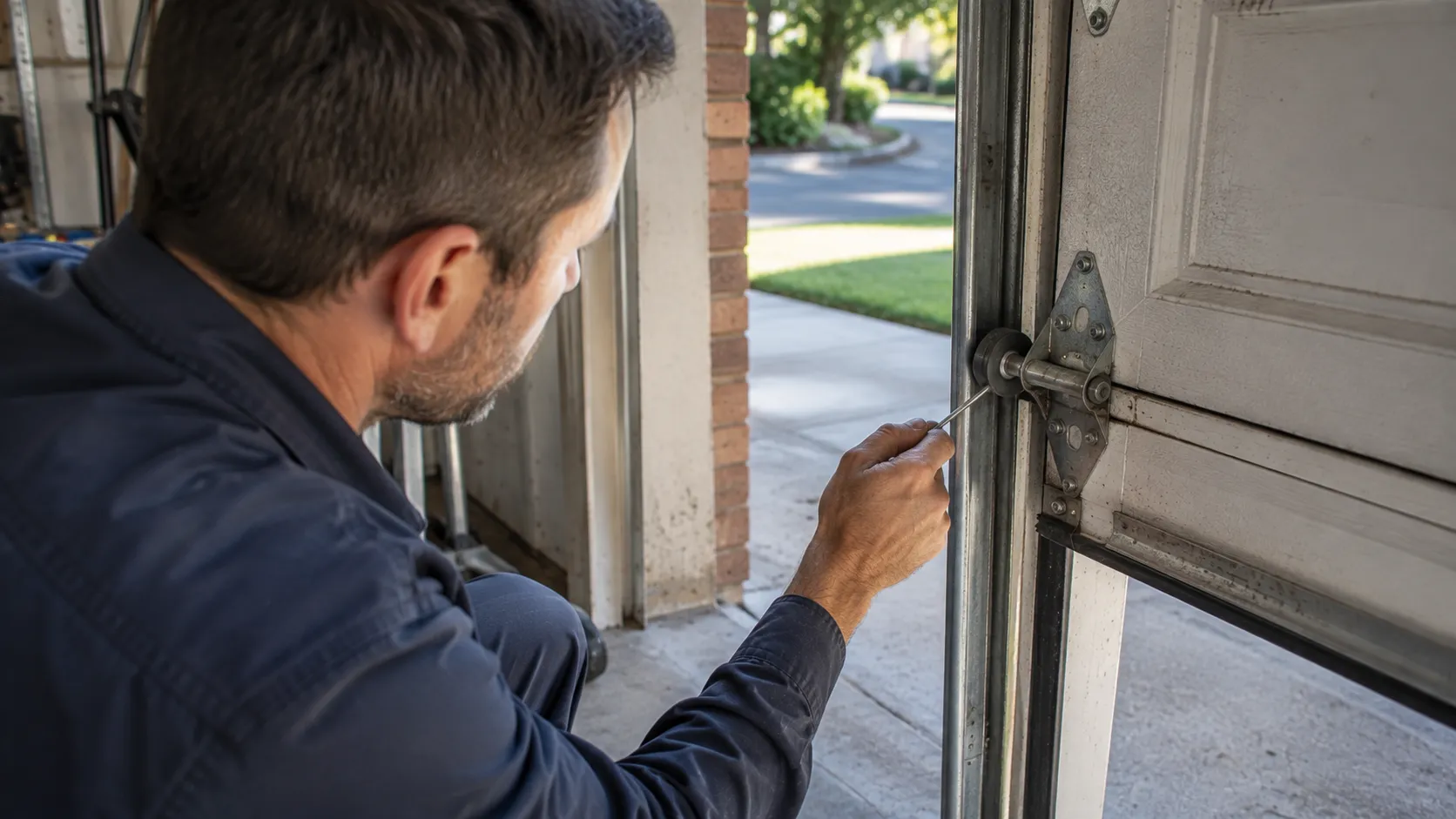
On a detached garage, the tell is different. Look at the bottom corners and the jamb where the door meets the frame. Because the structure isn't buffered by the house, moisture and cold hit those points hardest, and that's where rot, rust, and cable fraying show up first. If you're hearing a grinding sound low on one side rather than up top, that's consistent with a detached unit taking direct weather exposure the attached ones nearby aren't getting.
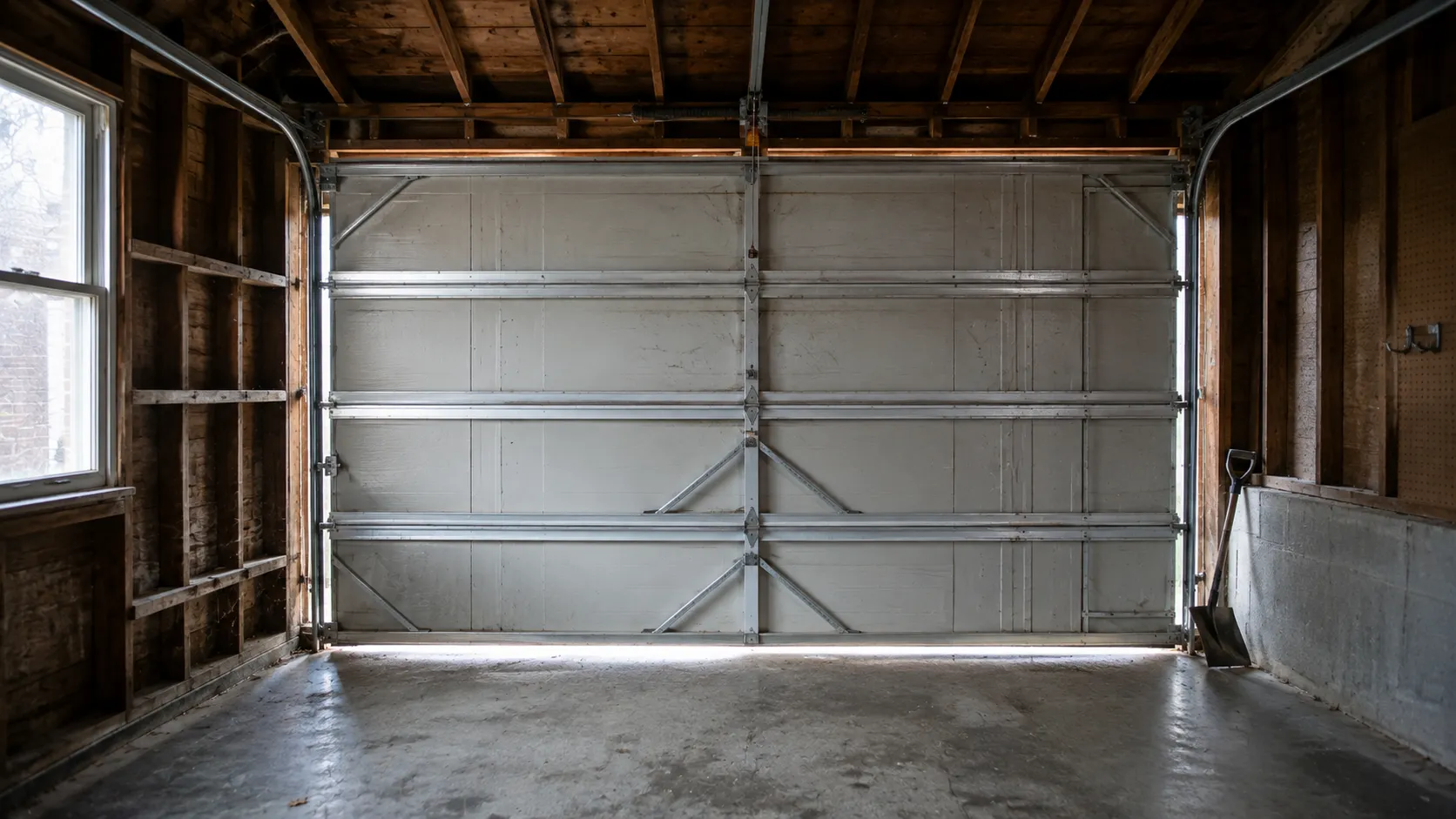
Either way, once a spring is visibly stretched, gapped, or making a popping noise when the door moves, that's a call-someone moment, not a wait-and-see one. A spring under this area's daily cold-to-warmer swings degrades faster than one in a mild climate, and it doesn't give much warning before it lets go.
What we find
The Problem
With housing here spanning 1938 through 2003 and clustering around a 1976 median, Naperville has both setups in real numbers - older attached garages built into the original house frame, and detached garages that came later on bigger or older lots. The problem is that most maintenance advice treats a garage door as one generic product, and it isn't, not once you account for exposure.
A detached garage door is doing a colder, harder job every winter than an attached one two doors down, even if both are the same brand and the same age. The spring tension that was correct when it was installed drifts differently depending on how much cold the unit actually sees, and a door that's fine on an attached garage can be overdue for adjustment on a detached one of the same vintage. Homeowners in this area often assume that because their neighbor's door is running fine, theirs should be too, without accounting for which kind of garage they actually have.
How we work
Where People Go Wrong
The most common mistake is applying one maintenance schedule to both types. People lubricate and inspect on a calendar they picked up from a general guide, not from how their specific garage sits relative to the house. A detached structure in this climate needs more frequent checks on hardware and weatherstripping than an attached one, and skipping that because "the door seems fine" is how a minor cable fray turns into a snapped cable.
The other mistake is over-insulating an attached garage door to try to solve a temperature problem that's actually coming from the shared wall or ceiling, not the door itself, while under-insulating a detached door that's carrying the full cold load on its own.
Here's the honest limit: if a detached garage is leaning, settling, or the framing around the opening has shifted, that's a structural issue, not a door issue, and it's outside what we handle. We can tell you when the door problem you're seeing is actually a symptom of that, but the framing and foundation work itself needs someone else. Fixing the door on a garage that's moving under it doesn't hold.
Questions
Common questions
Does a detached garage need a different spring than an attached one in Naperville?
Not a different spring by design, but the correct tension can drift differently. A detached garage takes the full range of this area's cold winters with no buffer from the house, so its spring and hardware cycle through wider swings and may need adjustment sooner than an identical door on an attached garage.
Why does my attached garage door bind near the house?
In homes from the 1960s-70s stock common in this area, minor settling near the shared wall can throw the track slightly out of square. That shows up as drag or scraping right at the corner closest to the house rather than an even problem across the whole door.
Do you fix a leaning detached garage?
No. If the structure itself is leaning or the framing has shifted, that's a foundation or carpentry job. We work on the door, opener, and hardware, and we'll tell you if what looks like a door problem is really a structural one underneath it.
Ready when you are
Need a garage door sorted in Naperville?
Naperville Garage Door Pros repairs and installs garage doors, springs and openers in Naperville, IL and the surrounding area.