Guide
What That Grinding or Banging Actually Means
In Naperville, where most garage doors date to the 1960s-70s or the 1938-2003 build years, a new noise usually points to a real part failing, not just an old house settling.
Local detail
What the Weather Here Does to It
Naperville sits in a cold moderate climate band, which means the freeze-thaw swing happens more than once a season, not just in January. Steel contracts in the cold and expands when the sun hits the panel face, and on a door installed anywhere from 1938 to 2003 - median year 1976 - the hardware holding it together has been through that cycle thousands of times. Track brackets loosen a sixteenth of an inch at a time.
Hinges wear oval instead of round. None of this shows up as a leak or a draft you'd notice walking past the door. It shows up as sound: a pop when the door starts moving, a squeal partway up, a shudder when it seats at the floor.
On the 1960s-70s stock that makes up most of the housing across this area, the springs and rollers are original-spec replacements at best, sized for a lighter door than some owners have since put in. Cold makes lubricant stiffen and metal shrink at the same time, which is exactly when a marginal part quits. A door that's been noisy all fall and gets loud in December isn't reacting to the cold - the cold is just when the slack finally runs out.
The area
When to Call Someone
A dry squeak that goes away after you spray the hinges isn't a call. A metallic bang when the door closes, a grinding sound that only happens on the way up, or a rhythmic thump that lines up with one spot on the track - those are calls. If the noise is new since a hard freeze, that timing matters: it usually means something that was already loose finally moved. Don't run the opener again once you hear a loud pop and the door drops even an inch unevenly - that's a spring or cable, and running it again risks the other side failing too.
I'll say plainly what I won't do over the phone: guess which part it is. A grinding noise can be a bad roller bearing, a bent track, or a spring that's about to go, and those are three different jobs at three different costs. What I can tell you without seeing it is whether it's safe to keep using the door until someone gets there, and that's worth the call by itself.
What we find
The Problem
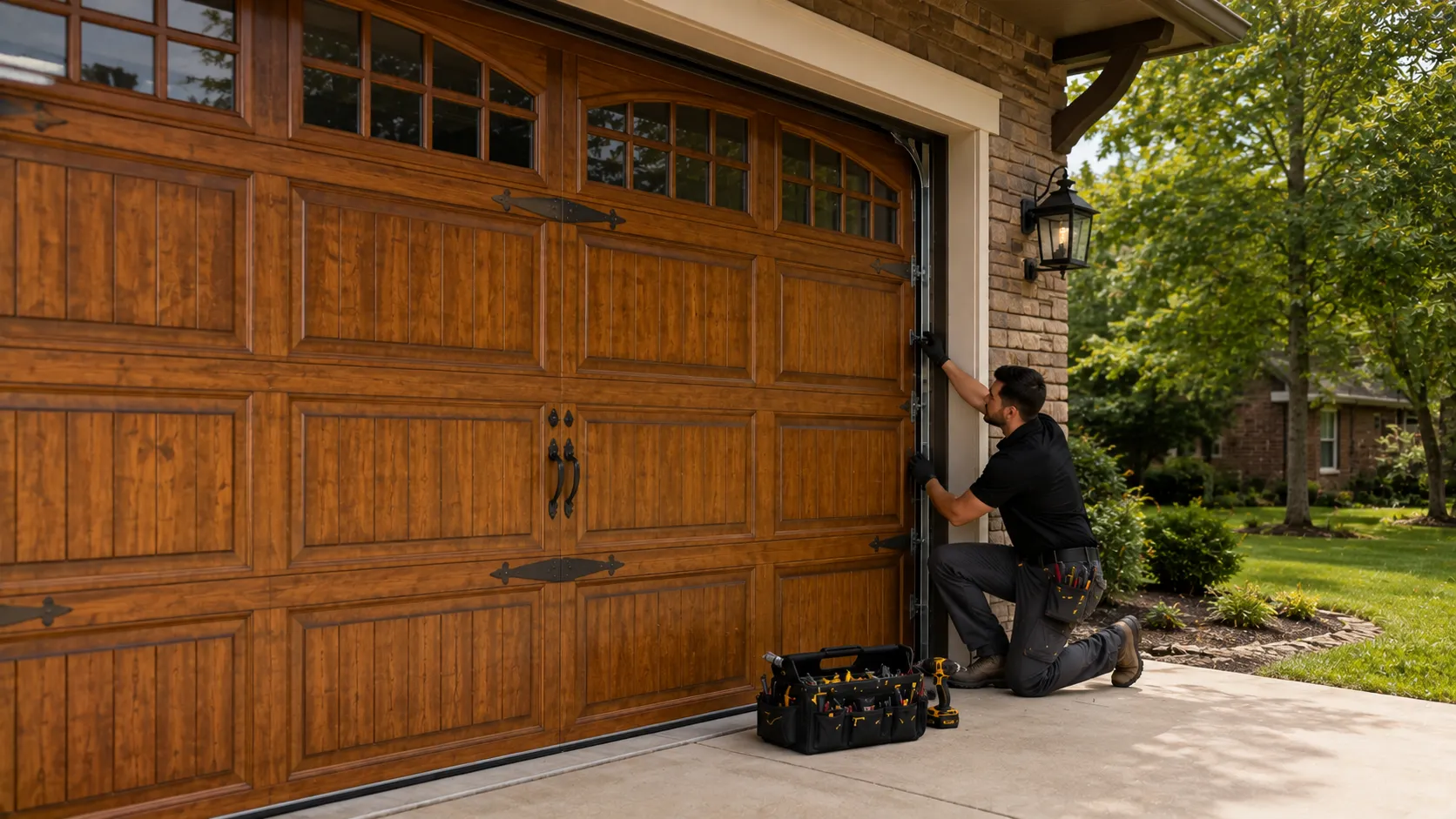
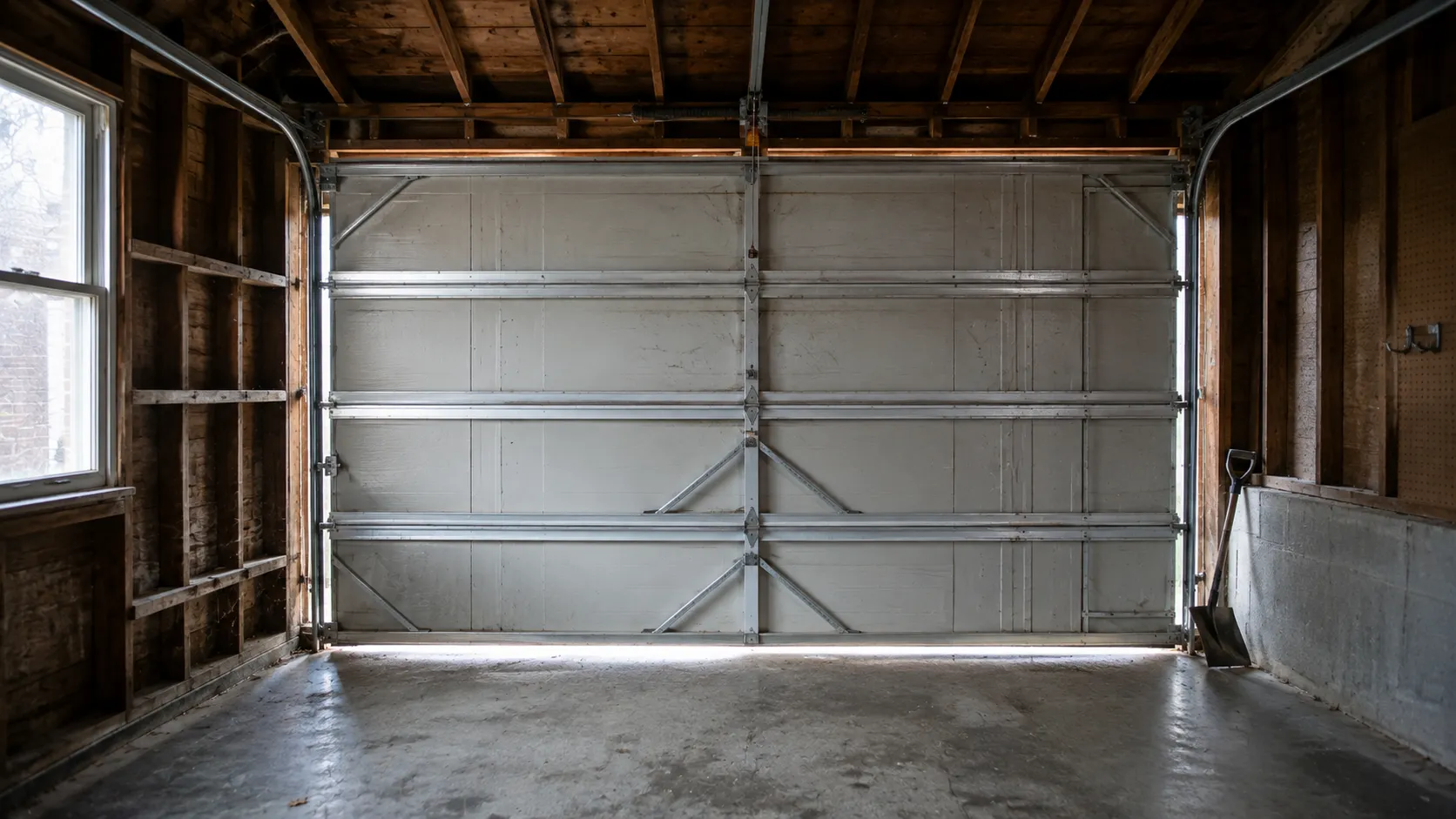
Most of the doors I get called on in this area were installed when the house was built or shortly after - which for a lot of Naperville streets means original hardware from somewhere in the 1960s-70s stretch, occasionally older toward the 1938 end of the range. Steel track and stamped rollers from that era were built for a lighter door and a slower duty cycle than what runs today, especially in households now running the opener multiple times a day. The noise you hear is usually the first honest signal that a part is out of spec, not a sign the whole system is failing. A grinding sound at one point in the travel is almost always a flat spot on a roller.
A rattle along the whole run is a loose track bracket. A single loud bang, followed by the door feeling heavier to lift by hand, is a spring. The hard part isn't diagnosing any one of these - it's that homeowners often hear the noise, decide it's just an old door being an old door, and let three problems stack up before anyone looks at it.
How we work
Where People Go Wrong
The mistake I see most is treating every noise as a lubrication problem. Spraying WD-40 on a hinge quiets a dry squeak for a week and does nothing for a bearing that's actually worn out - it just muffles the sound long enough for the part to fail somewhere less convenient, like mid-lift with a car underneath. The other mistake is the opposite: assuming any noise means the whole door needs replacing.
On a lot of the housing stock here, from the 1976 median build year on down, the door itself is often fine - it's one bracket, one roller, one spring that's carrying more cycles than it should. Given the median household income across this area sits well above $99,000, I understand the instinct to just replace the whole unit and be done with worrying about it, but that's not always the right call, and I'll tell you when it isn't. Replacement makes sense when the track is bent from the door coming off its rollers, or when the panels themselves are rusted through at the bottom - not just because something's making noise.
Questions
Common questions
My garage door only makes noise in the winter - is that normal?
It's common on older hardware, but not something to ignore. Cold makes metal contract and lubricant stiffen, so a part that's slightly worn will announce itself in cold weather before it fails outright. On houses built in the 1960s-70s range, which covers most of this area, that's often the first sign a roller or hinge needs replacing, not just oiling.
Is a loud bang always a broken spring?
Usually, yes, especially if the door feels noticeably heavier to lift by hand afterward. A torsion spring failing makes a sharp, single bang, different from the rattle of a loose bracket. Don't run the opener again once that happens - call and ask before you try to open it.
Can I just oil the noisy parts myself?
You can, and it's worth doing as routine upkeep - hinges and rollers, not the springs. But if oiling doesn't fix the noise within a day or two, the part is worn, not dry, and lubricant won't solve that. It just delays the day it fails.
Ready when you are
Need a garage door sorted in Naperville?
Naperville Garage Door Pros repairs and installs garage doors, springs and openers in Naperville, IL and the surrounding area.