Guide
What a Service Call Actually Covers in Naperville
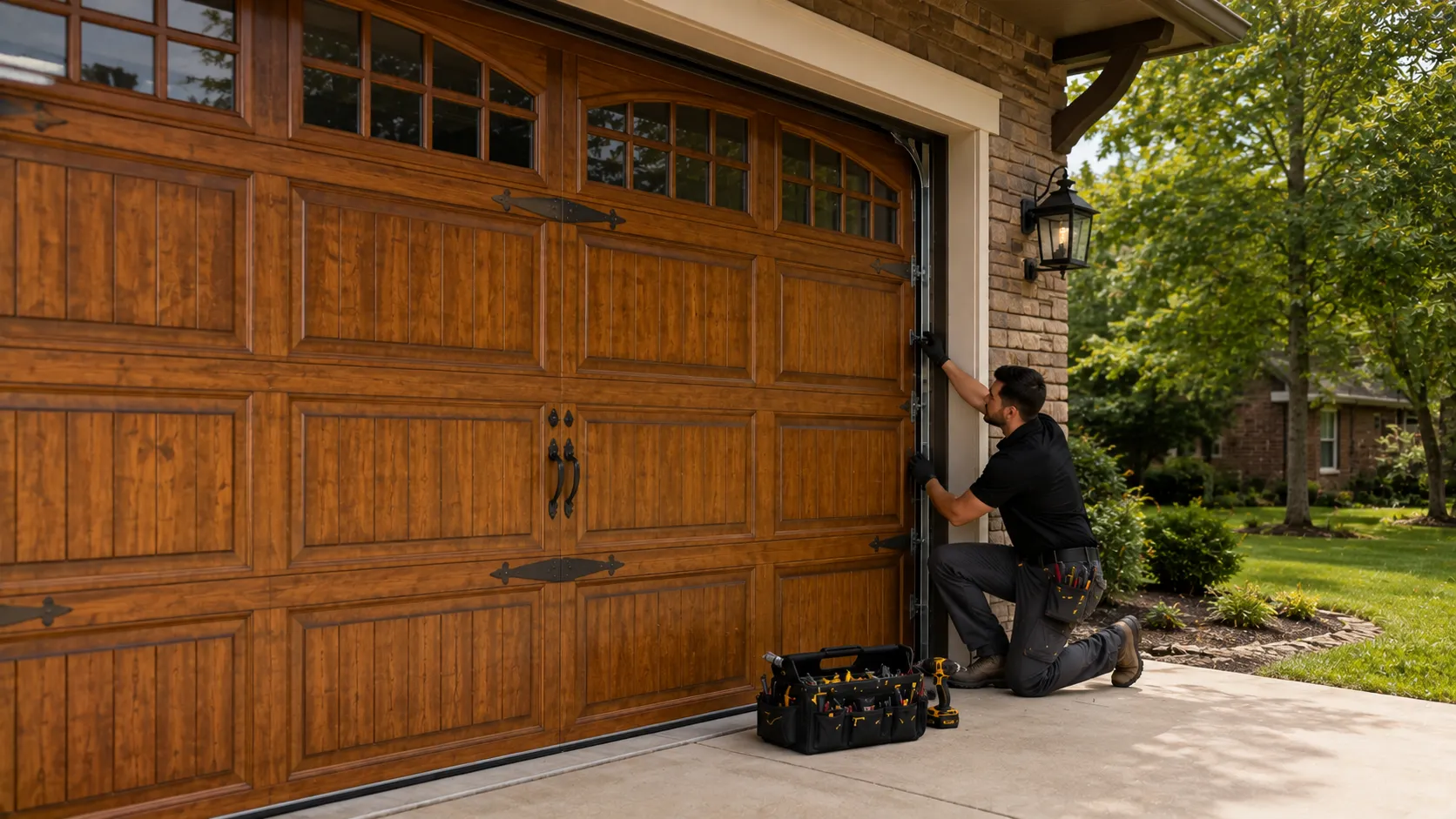
A service call in Naperville checks springs, cables, tracks, rollers, and opener parts most likely to fail on homes built 1938-2003 in a cold climate band.
Local detail
What the Weather Here Does to It
Naperville sits in a cold-moderate climate band, which means the door in your garage isn't just sitting there - it's cycling through a real freeze-thaw pattern every winter. Steel contracts in the cold, grease thickens, and a spring that was already fatigued from age gets the extra stress of moving a heavier, stiffer door on a January morning. That's the door most people call about first: it worked fine in October and now it groans, hesitates, or won't open past a foot.
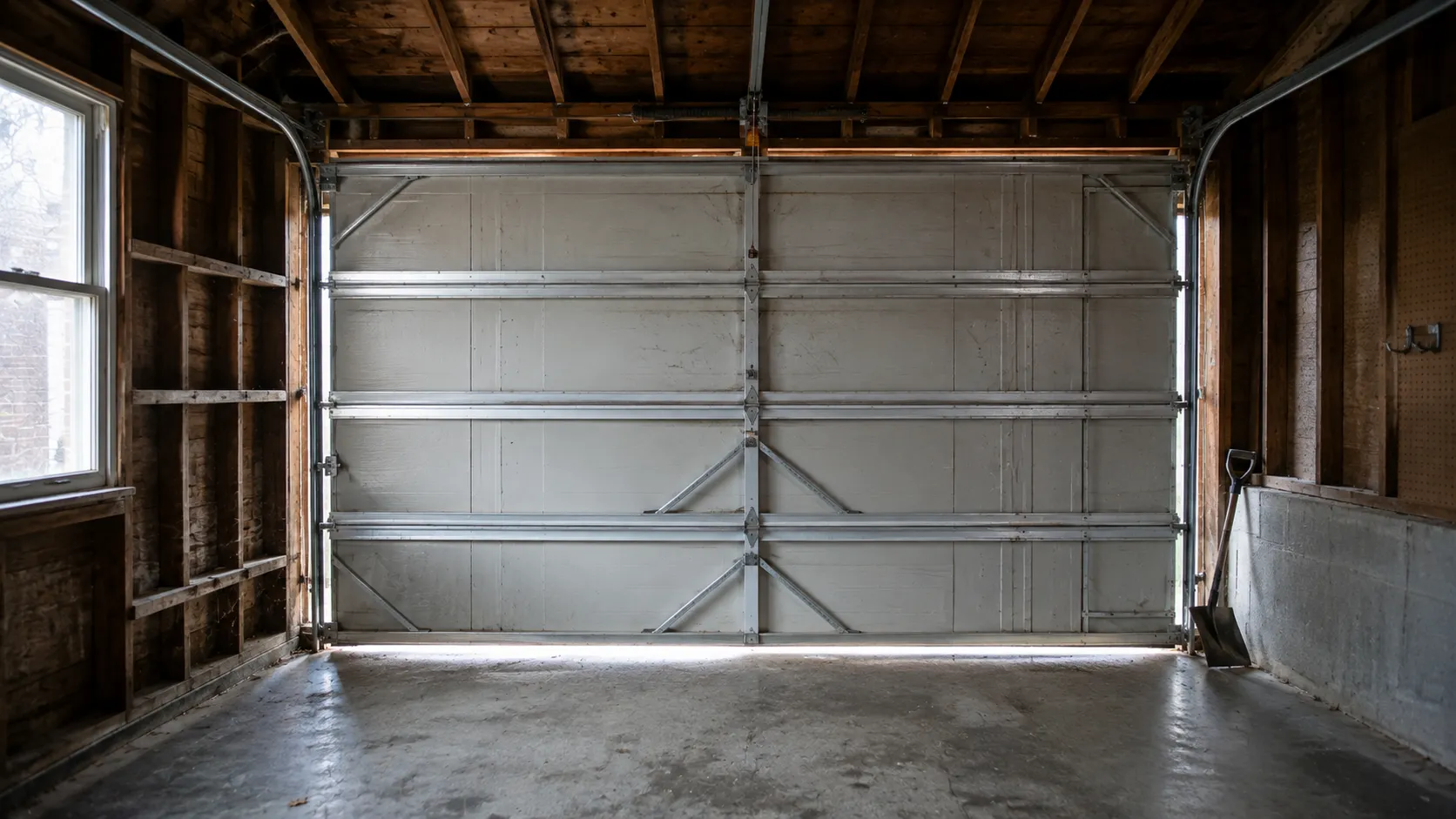
Most houses in this service area went up between 1938 and 2003, with the bulk of the stock - across roughly eighty named subdivisions - dating to the 1960s and 1970s. That matters because a door and opener installed or replaced decades ago wasn't built for today's insulated panels or heavier sections. When cold tightens up old hardware that's already carrying more weight than it was sized for, something gives. A service call on a house like that isn't a generic tune-up - it's checking whether the spring, drum, and cable are still matched to each other after forty or fifty winters of that cycle.
We don't pretend every door needs the same fix. Some just need lubrication and a cable swap before the cold makes it worse.
The area
When to Call Someone
Call before the door fails all the way, not after. If a door on a 1960s or 1970s Naperville house starts closing crooked, drops the last two feet on its own, or the opener strains and reverses, that's a spring or cable issue, not an opener issue - and it's worth a look before a cold snap turns a slow failure into a door stuck shut with the car inside.
A loud bang from the garage, especially on a cold morning, is very often a torsion spring letting go. That's not a DIY moment. A stretched or broken cable on an older side-mounted setup can whip when it fails, and a door on original 1960s-70s hardware doesn't have the safety cable retrofits that newer installs carry.
If the door is heavy to lift by hand with the opener disconnected, the spring is already doing less than it should, even if the opener is masking it. That's the point to call, not the point to wait and see if it gets worse - with the housing stock in this area running fifty-plus years old in a lot of neighborhoods, spring fatigue is already baked into the timeline, and cold weather just picks the day it shows up.
What we find
The Problem
The core issue in Naperville isn't that garage doors break - it's that a lot of the doors and openers still in service were matched to houses built decades before today's door weights and code expectations became standard. With median construction around 1976 and a heavy concentration of 1960s and 1970s stock, a large share of doors in this service area are original or first-generation replacements running on hardware sized for a lighter panel.
Across the roughly 244,587 owner-occupied houses in this service area, it's consistently the older wave that calls about hardened lubricant, rusted rollers, and torsion springs that were never upgraded when the door itself got swapped. Somebody replaces a warped panel in 1995 and keeps the 1972 spring because it still works - until a cold morning it doesn't.
The honest limit here: not every old door is worth saving. If the track is bent, the panels are delaminating, and the opener is original to a 1970s build, patching one part just moves the next failure a few months down the road. Sometimes the service call itself is the diagnosis that replacement costs less over time than another repair.
How we work
Where People Go Wrong
The most common mistake is treating a spring adjustment like a lubrication job. WD-40 on a squeaking roller is harmless. Loosening or winding a torsion spring without the right bar and the door's actual weight in mind is how people get hurt - that spring is holding the full weight of a door that, on an older Naperville house, may be heavier than the original hardware was ever rated for.
The second mistake is guessing at parts. A homeowner five miles over in Lisle or Woodridge has the same builder-grade steel door from the same era, and swapping in a spring sized for a lighter modern door onto that old drum and cable setup doesn't fix the problem - it just fails again, usually sooner.
The third is waiting until the door won't move at all before calling. A door that's straining, groaning, or closing unevenly is telling you the spring or cable is partway through failing, not fully failed. Catching it there is a smaller job than catching it after the cable snaps or the opener motor burns out trying to lift a door it can't.
Questions
Common questions
Why does my garage door act up more in winter?
Naperville sits in a cold-moderate climate band, so metal parts contract and lubricant thickens every winter. A spring that's already worn from age has to work harder to move the door in the cold, which is why failures cluster in winter even though the wear happened all year.
My house was built in the 1970s - does that matter for a repair?
Yes. A lot of the housing stock in this service area dates to the 1960s and 1970s, and doors from that era often run on original or first-generation hardware sized for lighter panels than what's common now. A service call checks whether the spring and drum still match the door's actual weight.
Is it ever not worth repairing?
Sometimes. If the track is bent, panels are delaminating, and the opener is original to an older build, another repair just delays the next failure. On houses from the earlier end of the 1938-2003 range, replacement can end up costing less over a few years than repeated patch jobs.
Ready when you are
Need a garage door sorted in Naperville?
Naperville Garage Door Pros repairs and installs garage doors, springs and openers in Naperville, IL and the surrounding area.