Spot worn steel rollers
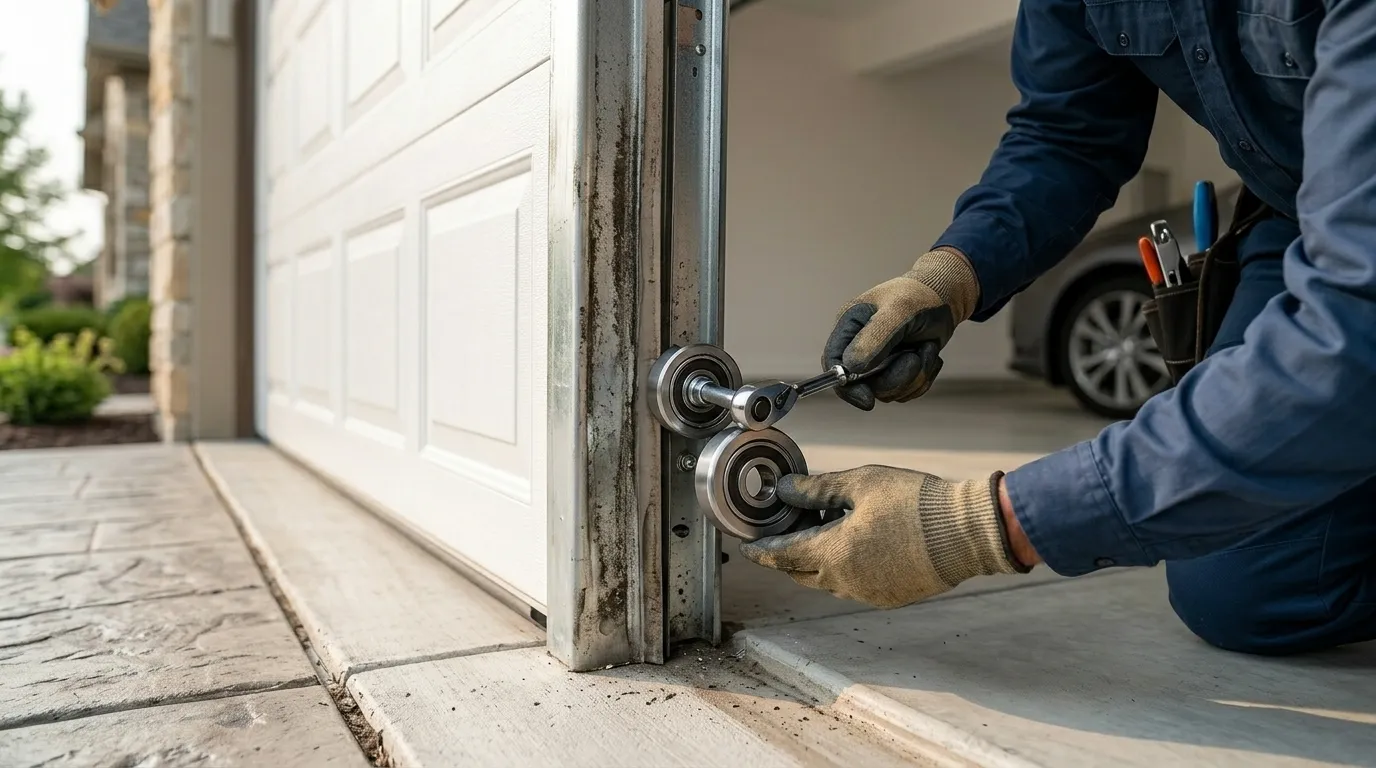
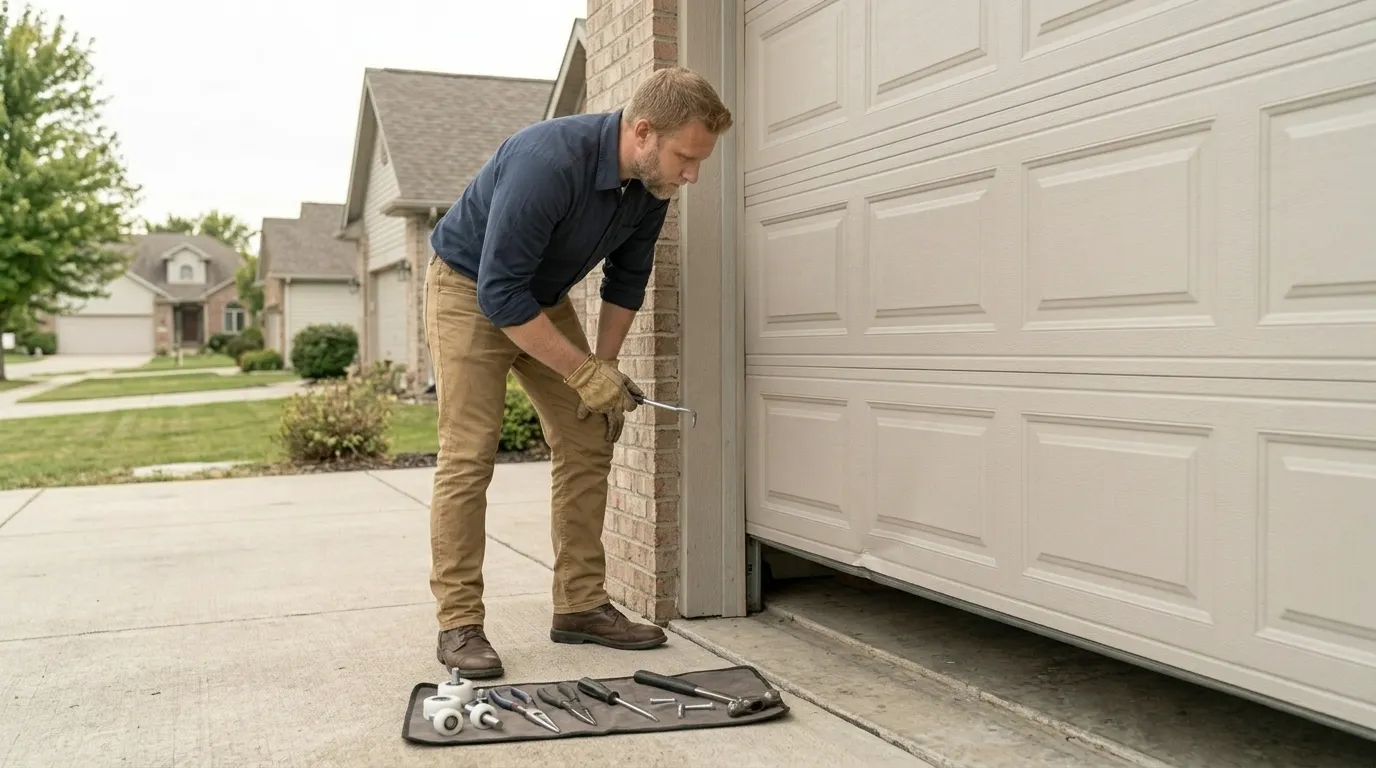
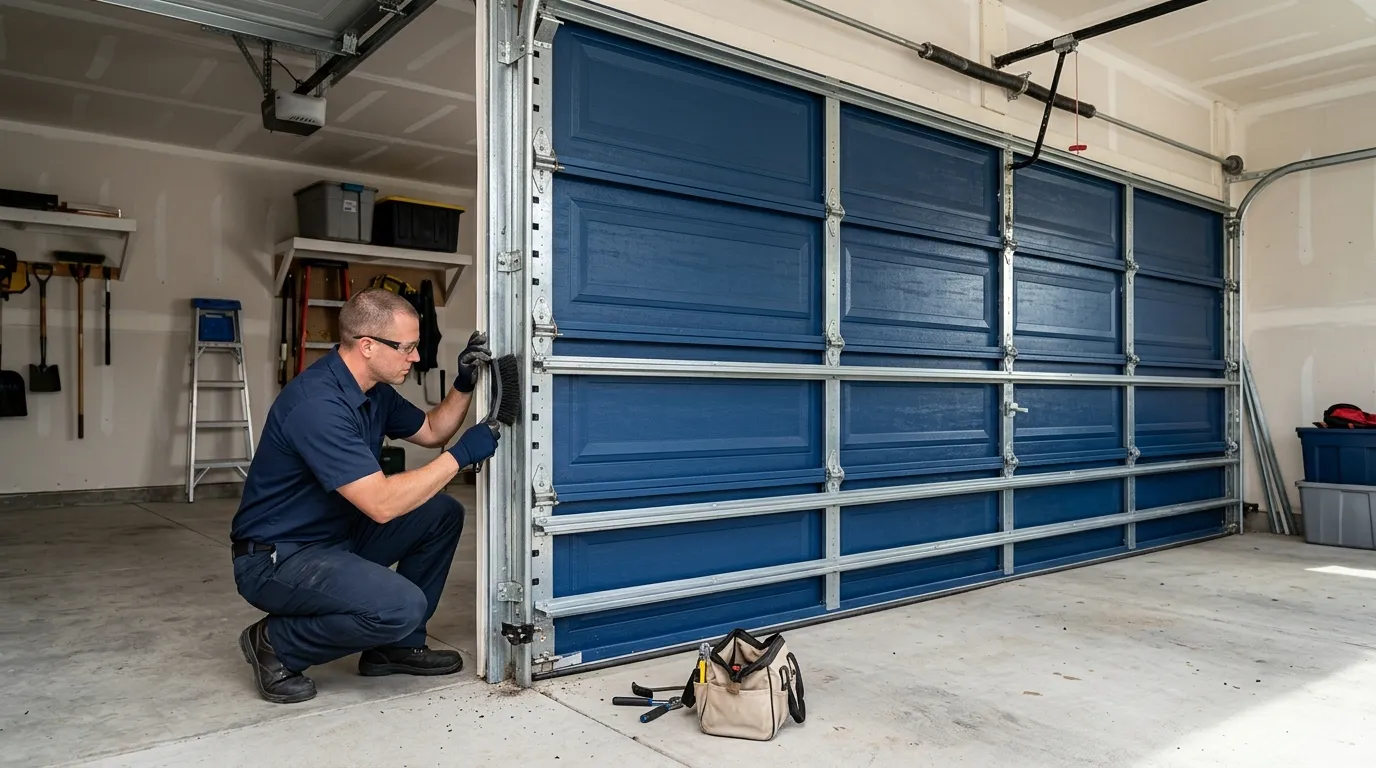
Open the garage, look at the rollers riding in the vertical track near eye level, and give one a wiggle. If it's steel and worn, you'll see a flat spot or hear a grind when the door moves.
Elmhurst, Naperville
Elmhurst's 1964-median housing runs steel rollers on original track hardware. Naperville Garage Door Pros swaps them for sealed nylon rollers that hold up.
Job timing
A straight roller swap on a door that's still tracking true is a short job - pull the old steel rollers, set new ones, check the track for square, run the door a few times to settle it in. What stretches the clock in Elmhurst is the hardware underneath. A lot of the housing here was built around 1964, and the median for the town sits right in that range, so we're often working with original side-mounted track that was never designed around today's sealed nylon rollers. That means extra time spent shimming a bracket or re-setting a track bolt that hasn't moved since the house was framed.
We don't pad the estimate, but we also don't rush a track that's slightly out of plumb just to hit a number. With 16,863 households in Elmhurst and a good share of them sitting on original hardware, we've learned the job is rarely just "rollers in, rollers out." Plan for us to check the whole track run, not just the ten rollers riding in it.
Booking
We run this job out of Naperville, about 15 miles from Elmhurst, so we schedule roller replacements as full appointments rather than quick drop-ins. Tell us the door's age and whether it's still on steel rollers or has already been upgraded - that alone changes what we load on the truck before we head out. If you're not sure, a photo of the roller where it meets the track usually tells us enough.
We don't keep a branch or drop-off counter in Elmhurst itself, so every visit is a scheduled trip from Naperville. That's not a knock on the town - it's just how the service area works, and it means booking ahead gets you a tighter window than a same-day call. See the Elmhurst service area page for what else we cover on that side of the map.
DIY or pro
You can check your own rollers without touching the door, and spotting wear early is easy — the harder call is knowing when a roller swap crosses into spring or cable territory that isn't a DIY job, especially on a two-piece track from the 1964-era build style.
Open the garage, look at the rollers riding in the vertical track near eye level, and give one a wiggle. If it's steel and worn, you'll see a flat spot or hear a grind when the door moves.
Chipped nylon is easier to spot — the roller looks gouged or the wheel has gone oval instead of round. Either sign means the roller is due for replacement before it starts damaging the track itself.
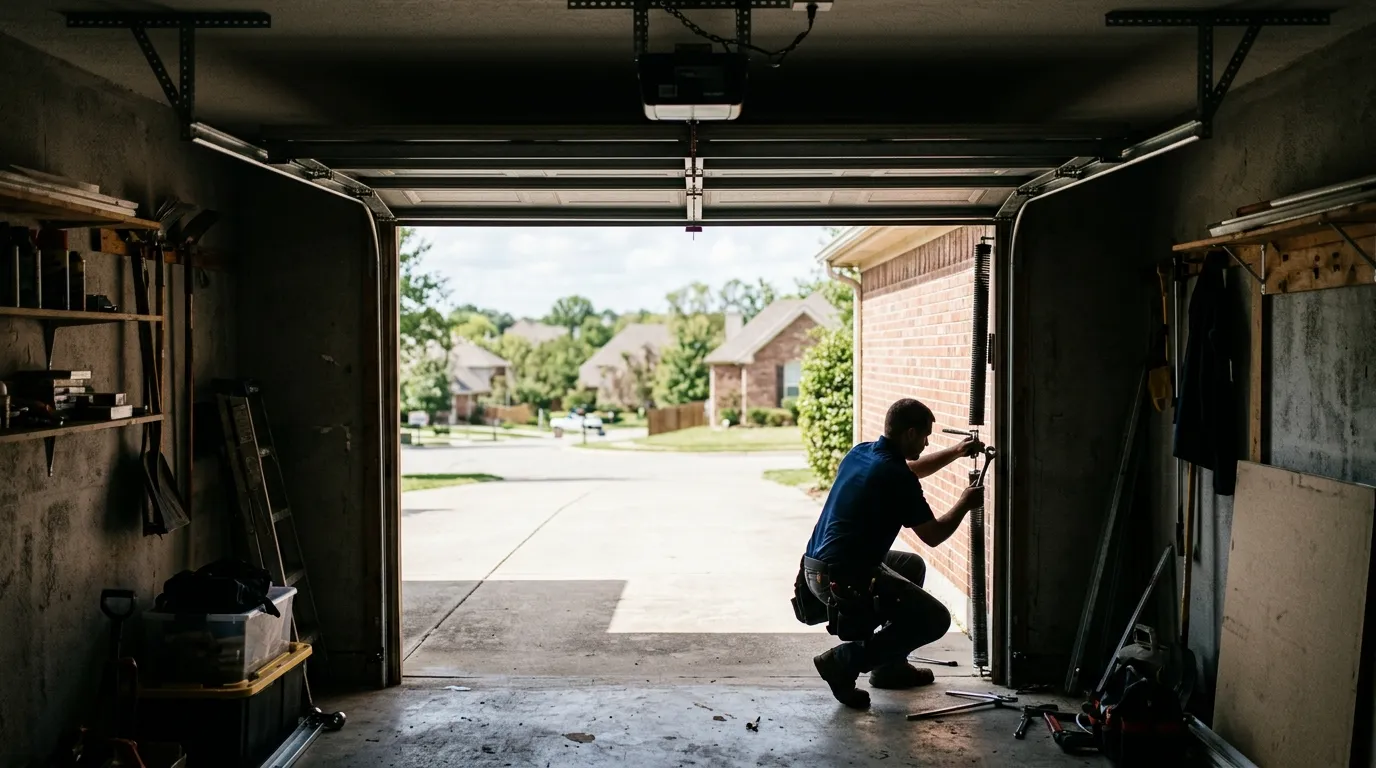
What we don't recommend is swapping rollers yourself if the door has a broken spring or the cables look frayed — that's a different job with real risk, and rollers are the wrong place to start troubleshooting a door that won't move at all.
If your door is on a two-piece track from the 1964-era build style, the roller can also be holding tension against a bent section you can't see from below, and pulling it can let the section drop.
Local causes
Elmhurst sits in the same cold-moderate climate band as the rest of the area, and steel rollers don't do well with decades of freeze-thaw cycling on the bearing — that, plus a housing stock centered on 1964, produces a specific and repeatable pattern of wear.
Steel rollers don't do well with decades of freeze-thaw cycling on the bearing. Add in a housing stock with a median build year around 1964 — squarely inside the wider 1938-2003 range this area's homes span — and you get original steel rollers, worn wheel wells, and track sized narrower than current nylon rollers.
Owners here also tend to have upgraded openers and springs over the years without ever touching the rollers, since a roller doesn't fail loud the way a spring does — it just gets noisier and slower to close.
With Elmhurst's median household income running well above the wider service area's $99,525 figure, we also see more owners choose sealed, lubrication-free rollers outright rather than the cheaper unsealed steel replacement, since it's a smaller cost difference relative to the household budget here.
Our process
We pull worn rollers one at a time and check the surrounding hardware before setting anything new, because on original 1960s track a roller swap alone doesn't fix a problem that's actually in the bracket or the track itself.
We pull the worn rollers one at a time and check the roller stem for wear against the bracket hole before setting anything new. That check catches wear that isn't visible just by looking at the roller wheel.
We check the track section each roller rides in for flare or dents. On original 1960s track, that check matters more than usual — a track that's been holding a slightly bent shape for sixty years won't correct itself just because the roller in it is new.
We use sealed nylon rollers with ball bearings rather than steel, since they run quieter and don't need the periodic lubrication steel rollers do. That swap alone cuts most of the grinding noise older doors develop.
If a bracket is stripped or a track section is bent past what a roller swap will fix, we'll say so before we start rather than force new rollers into hardware that needs more than that.
Watch-outs
The job stops being a simple roller swap when the track itself is bent, not just worn. On a lot of the older Elmhurst stock, the bottom roller bracket has been carrying stress for decades, and once that bracket flexes, a new roller in a bent track wears out again within months - you've paid for a fix that didn't fix anything.
The other place it goes sideways is when a panel has warped enough that the roller stem doesn't sit straight in the bracket no matter how new the roller is. At that point we'll tell you plainly that roller replacement isn't the right job - the panel or the whole section needs to come off first. We'd rather flag that up front than sell you rollers twice.
Questions
Rollers cause a grinding or squealing noise as the door moves, and the door still travels the full distance. Springs cause the door to feel heavy, hang unevenly, or not move much at all when the opener tries. If the door won't budge or looks crooked when it's halfway open, that's spring or cable territory, not rollers.
Not on their own - steel rollers were standard on houses built around 1964 and can run for years. The problem shows up as wear: flat spots, grinding, or a roller that's gone oval. If yours are quiet and round, there's no reason to replace them early just because they're original.
Standard nylon rollers are stock items we carry. If your track hardware turns out to be a nonstandard size - more common on original 1960s installs - we may need to confirm the fit before the visit, which we'll flag when you book.
Explore more
Ready when you are
Naperville Garage Door Pros repairs and installs garage doors, springs and openers in Naperville, IL and the surrounding area.