Installing a Garage Door That Fits a Naperville Home in Naperville

Naperville, IL

Installing a Garage Door That Fits a Naperville Home

New garage door installation for Naperville homes built between 1938 and 2003, matched to our region's cold winters and the load specs older openings need.

Serving Naperville, ILBackground-checked techsHonest, upfront pricingFast local response
1938–2003
Typical build years of local homes
1976
Median year homes were built
Cold winters
Climate that shapes door wear

Local causes

What Causes It Around Here

Most of the housing in this stretch of the collar counties went up between 1938 and 2003, with the median build year sitting around 1976. That means a huge share of garage doors on the road right now are original or close to it, and they're all aging out around the same time. A door built for a 1976 opening was almost never insulated the way current code expects, and the track hardware from that era wasn't sized for the heavier, thicker panels sold today.

On top of the age problem, Naperville sits in a cold-moderate climate band. A single-layer steel door with no foam core does fine in a mild climate. Here, it lets cold air sit against the wall that backs onto a bedroom or laundry room, and condensation forms on the inside skin all winter. That's not a defect - it's just a door built for a different climate doing what an uninsulated door does. Once a homeowner adds a heated garage, finishes a room above it, or just gets tired of a door that won't seal at the bottom, installation stops being optional and starts being the fix. We see this pattern across the older neighborhoods built in that 1960s-through-70s wave more than anywhere else in the area.
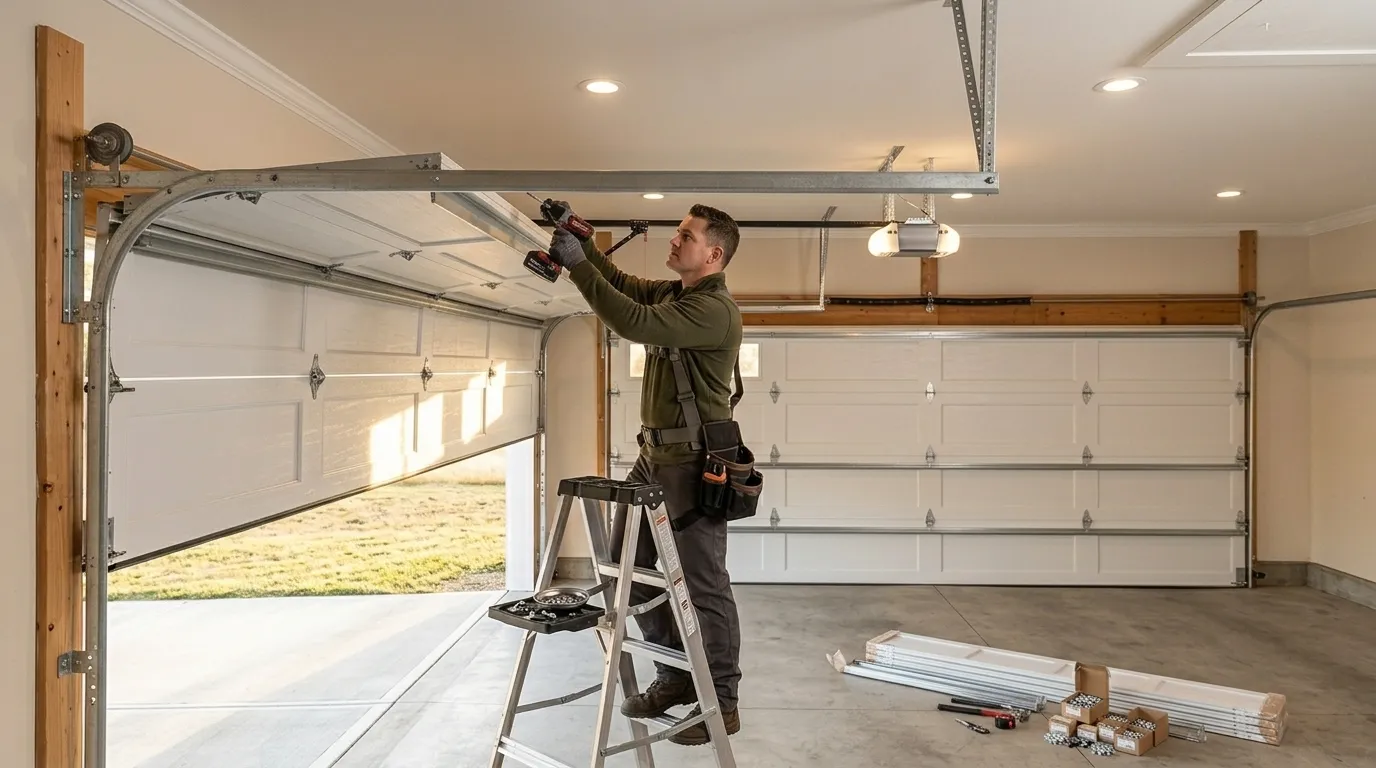
What Causes It Around Here

Booking

Booking a Visit

Installation isn't a same-day counter sale, and knowing your address and the age of your opening upfront helps us plan the visit right. Here's how we cover the area and what actually happens once we're measuring your door, before anything gets ordered.

  1. We cover roughly a 14-mile radius

    We work out of Naperville and cover the towns nearby - Lisle and Warrenville about five miles out, Woodridge at six, Winfield and Darien at nine, and further out through Glen Ellyn, Batavia, Montgomery, Lemont, and the rest of that ring up to about fourteen miles. If you're inside that radius, we can come look at the opening, measure it, and talk through door options before anything gets ordered.

  2. We measure the opening and check clearance

    Installation isn't a same-day counter sale - we measure the rough opening, check the header and track clearance, and talk through insulation level given how hard our winters actually are on an uninsulated door each year.

  3. We'll flag framing issues before quoting

    If your house falls into that common 1960s-70s build era, there's a decent chance the framing needs a small adjustment to take a modern door properly, and we'll flag that before we quote anything, not after. We'd rather tell you up front what the opening needs than surprise you mid-install.

  4. Reach out through the site to schedule a look

    Reach out through the site and we'll set a time to come take a look at the opening, measure it properly, and walk you through door options before you commit to anything, so there are no surprises once the crew shows up.

Warning signs

How It Shows Up

In houses from this area's dominant build era - that 1938 to 2003 span with most of the stock clustered in the 60s and 70s - the signs are pretty consistent. Here's what shows up most, and why none of it means the door is unsafe to use.

Cracked weatherstrip and a visible gap

The bottom weatherstrip has usually hardened and cracked from years of Illinois winters, so there's a visible gap at the slab even with the door shut. Panels on the older single-layer steel doors tend to oil-can or dent inward because there's no insulation backing to hold their shape.

Drafts, frost, and a cold wall

Cold shows up as a draft along the bottom edge or as frost forming on the inside of the door on the coldest mornings - a direct result of that cold-moderate climate band we sit in. If the garage backs onto living space, you'll often hear about it as a cold wall or a room that never warms up, which traces straight back to the door rather than the insulation in the walls.

Not unsafe, just underperforming

None of this means the door is unsafe to use day to day. It means it's doing less than a homeowner in this climate should expect from it, and replacement usually solves problems that patching never does.

DIY or pro

Doing It Yourself

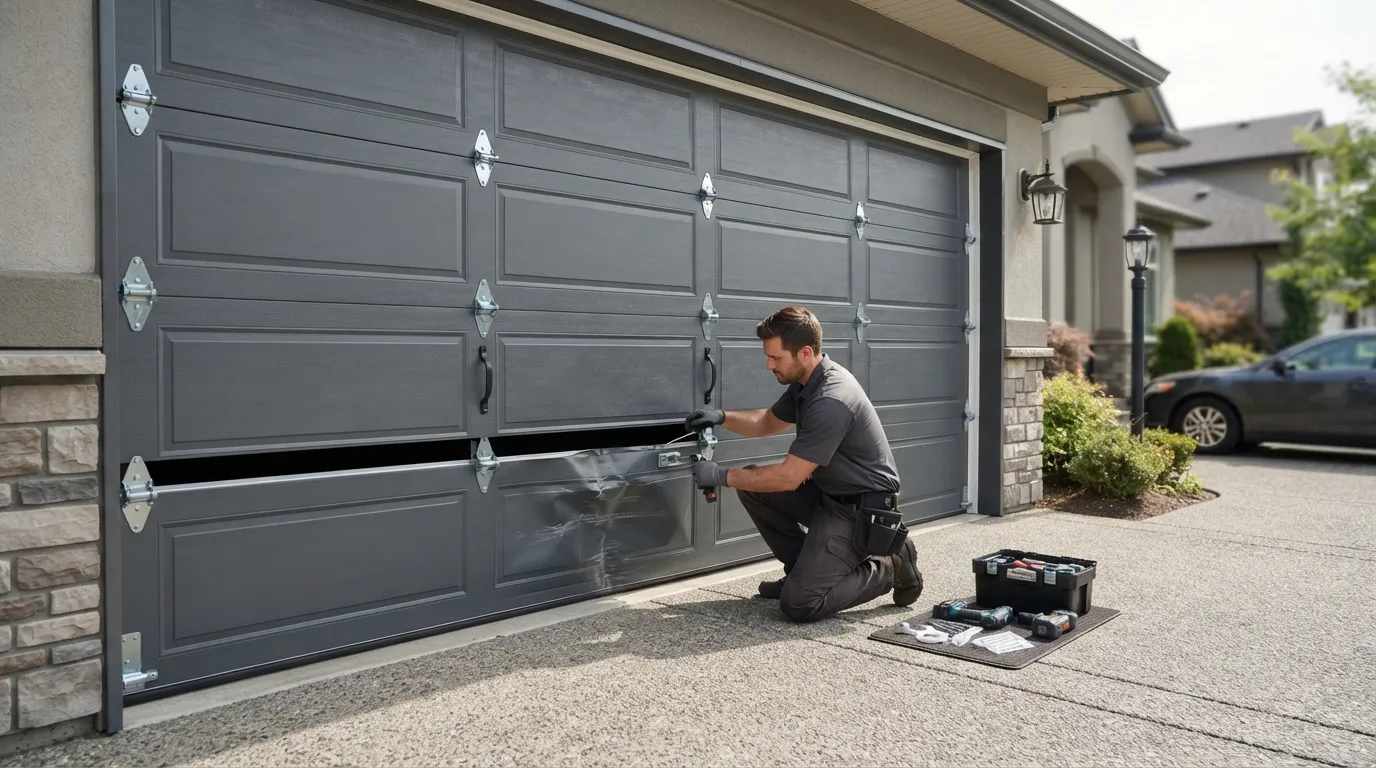
A garage door install looks like a weekend project on paper - track, panels, opener, done. In practice, the torsion spring carries enough stored force to break a bone or worse if it's wound wrong, and getting things plumb on an older opening isn't intuitive.

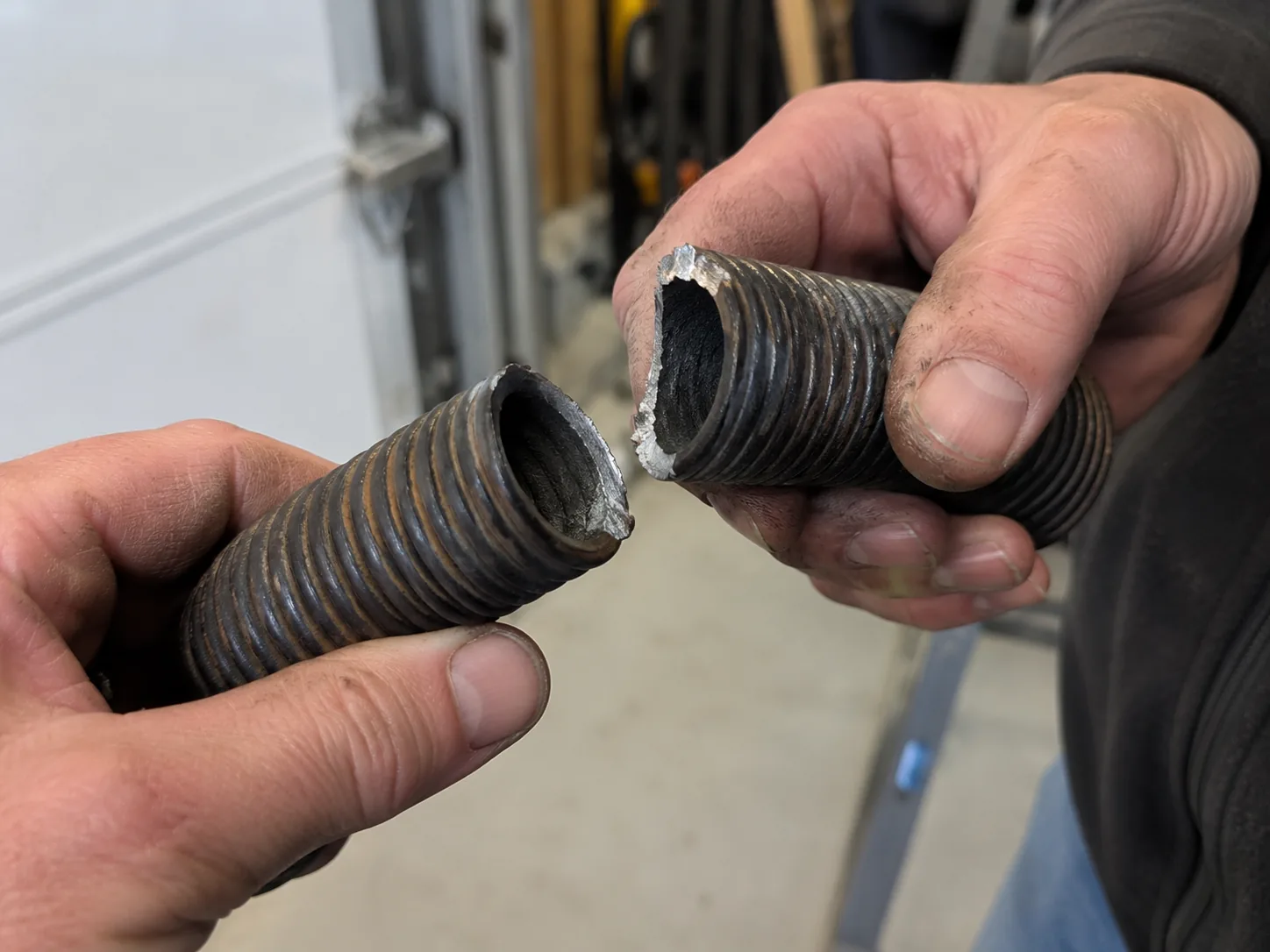
Torsion spring risk is real

In practice, the torsion spring carries enough stored force to break a bone or worse if it's wound wrong, and getting the header height and track plumb right on an opening built to 1970s-era framing standards is not intuitive if you haven't done it before.

Shelving and weatherstrip are fair DIY

We won't talk anyone out of hanging their own shelving or replacing weatherstrip themselves. That's reasonable DIY work, and it doesn't carry the same risk as touching a spring under tension or resetting the track.

Non-standard openings can turn into framing work

Full door installation is a different category. We can't always match an exact opening size on the spot if your house has a non-standard rough opening from that older construction era, and sometimes a job that looks like a straight install turns into a framing adjustment once we're inside the wall.

We flag it rather than pad every estimate

That's not something we pad into every estimate - it's something that shows up on a fraction of the older homes in this area, and it's worth knowing about before you commit to doing it yourself over a weekend.

Questions

Common questions

How do I know if my garage door needs replacing instead of repair?

If the door is original to a house built in that common 1960s-70s wave around here, and you're seeing a gap at the bottom, panel warping, or cold coming through on winter mornings, replacement usually makes more sense than another repair. A single-layer steel door from that era was never built to the insulation standard we'd install today.

Do you install garage doors outside Naperville?

Yes. We cover towns within roughly a fourteen-mile radius, including Lisle, Warrenville, Woodridge, Winfield, Darien, Glen Ellyn, Batavia, Montgomery, Lemont, and the rest of that ring. If you're unsure whether your address falls inside that area, reach out and we'll confirm.

Can I install a garage door myself?

You can, but the torsion spring carries enough force to cause serious injury if it's wound incorrectly, and older rough openings from this area's 1970s-era construction don't always match modern door dimensions cleanly. We'd rather you know that before you start than after the spring is under tension.

Ready when you are

Need a garage door sorted in Naperville?

Naperville Garage Door Pros repairs and installs garage doors, springs and openers in Naperville, IL and the surrounding area.

Call Now(331) 297-2514