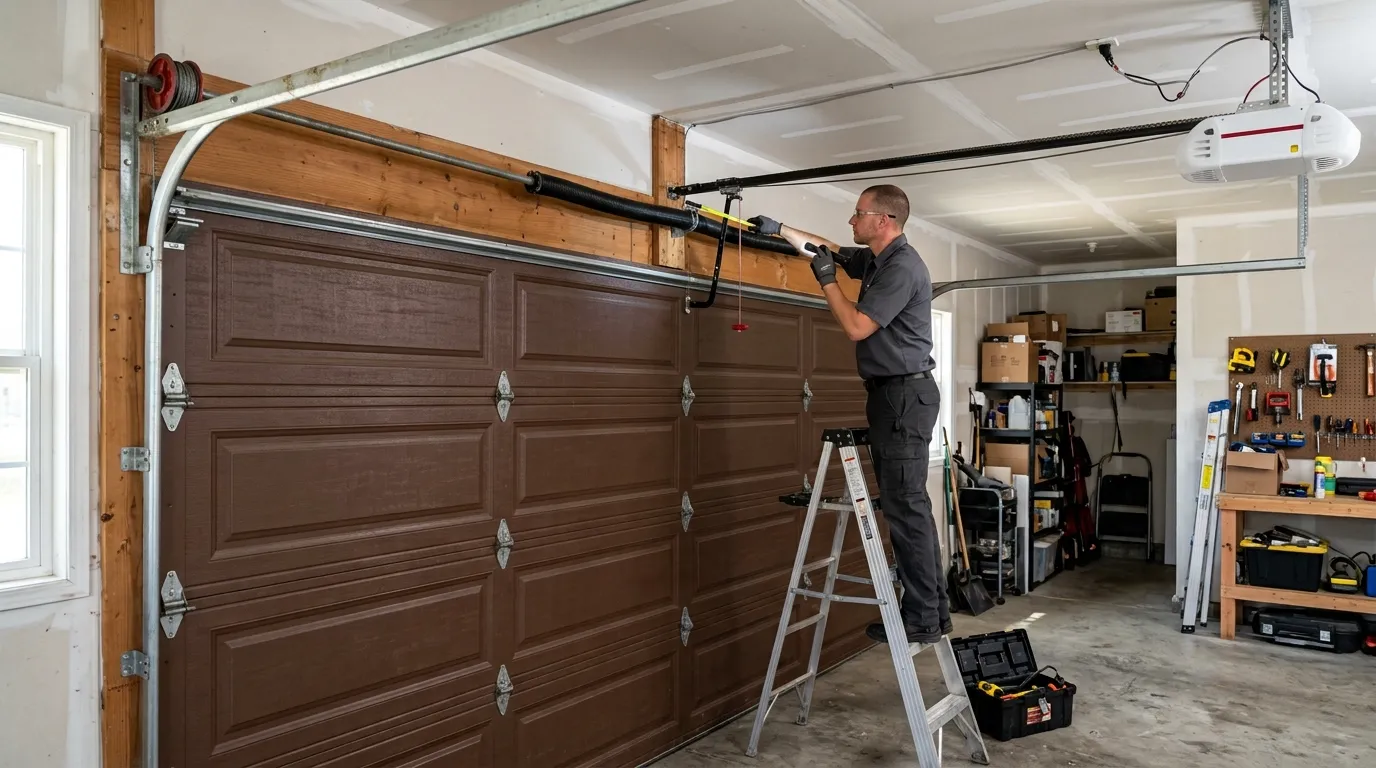
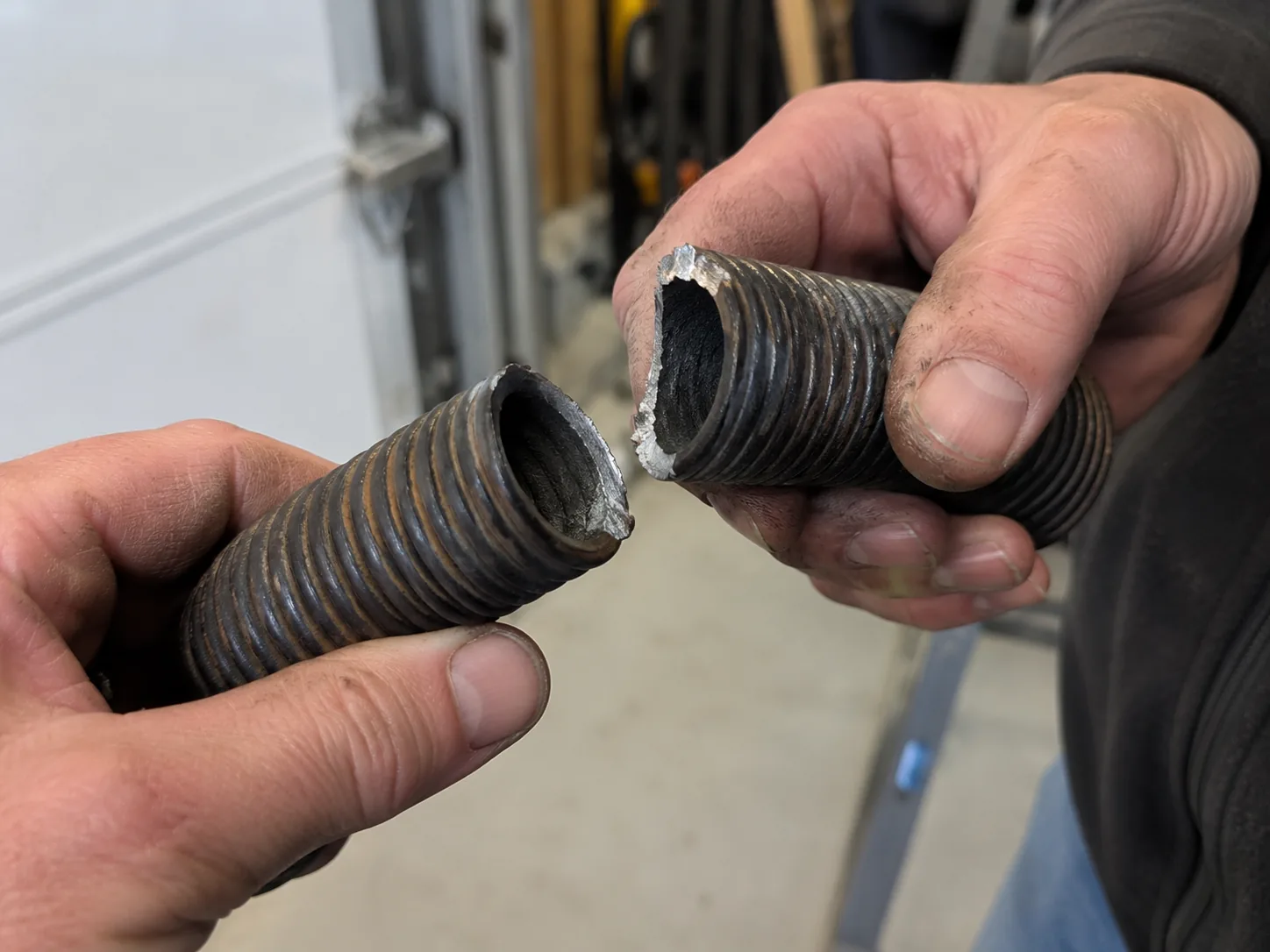
Most of the trouble we see traces back to the age of the house, not bad luck. Naperville housing runs from 1938 to 2003, with the median build year sitting at 1976, and a lot of the surrounding stock across the wider area dates to the 1960s and 70s. That means a huge share of doors in town are on their second or third opener and original torsion springs that were never rated for the cycle count they've now put in.
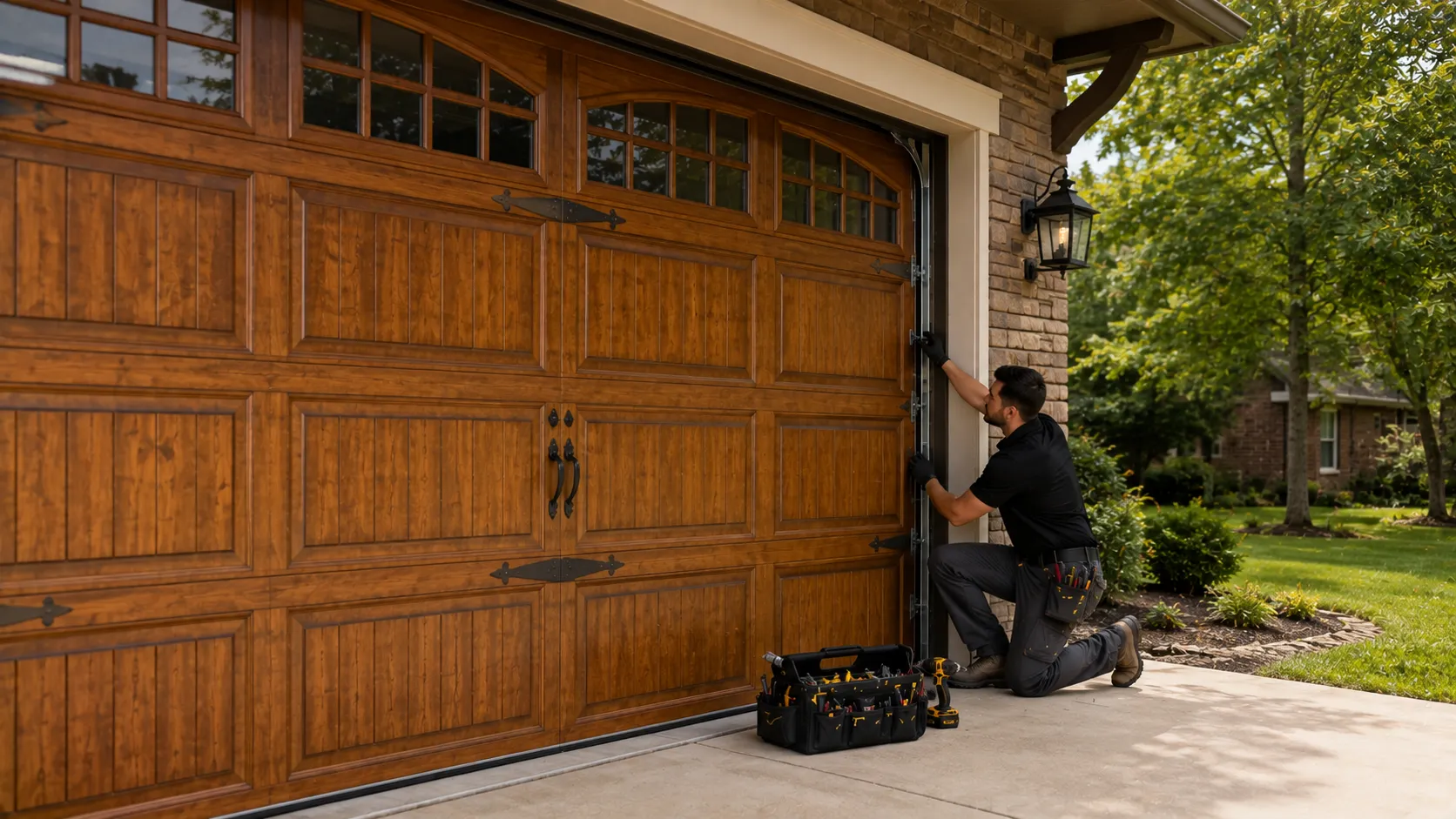
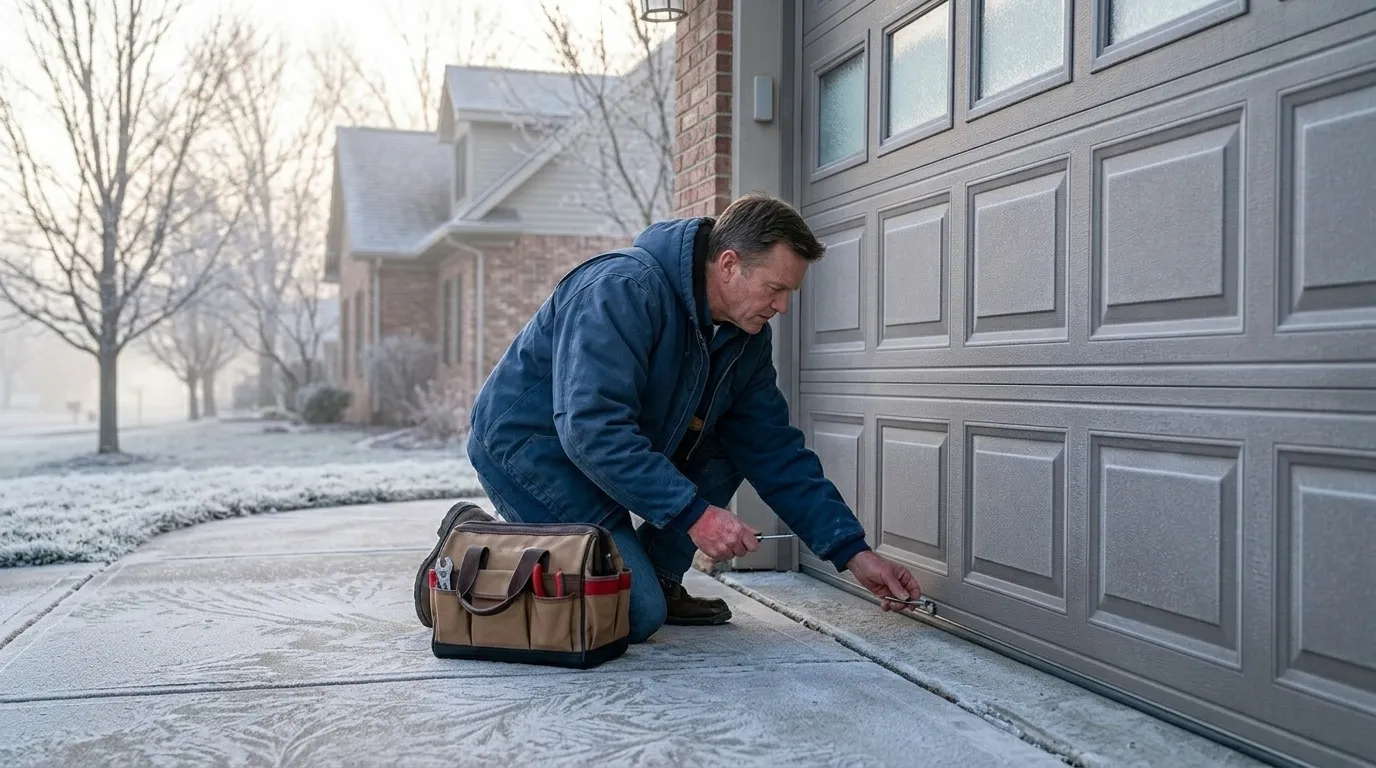
Cold is the other half of it. This area sits in a moderate-cold climate band, which means steel contracts and expands through a real winter, not a mild one. Torsion springs lose tension faster in repeated cold snaps, nylon rollers crack instead of wearing evenly, and steel tracks pull loose at the brackets when a slab shifts with the frost. None of that is dramatic on its own, but it stacks up on a 1976-vintage door faster than it would on something built in the last ten years.
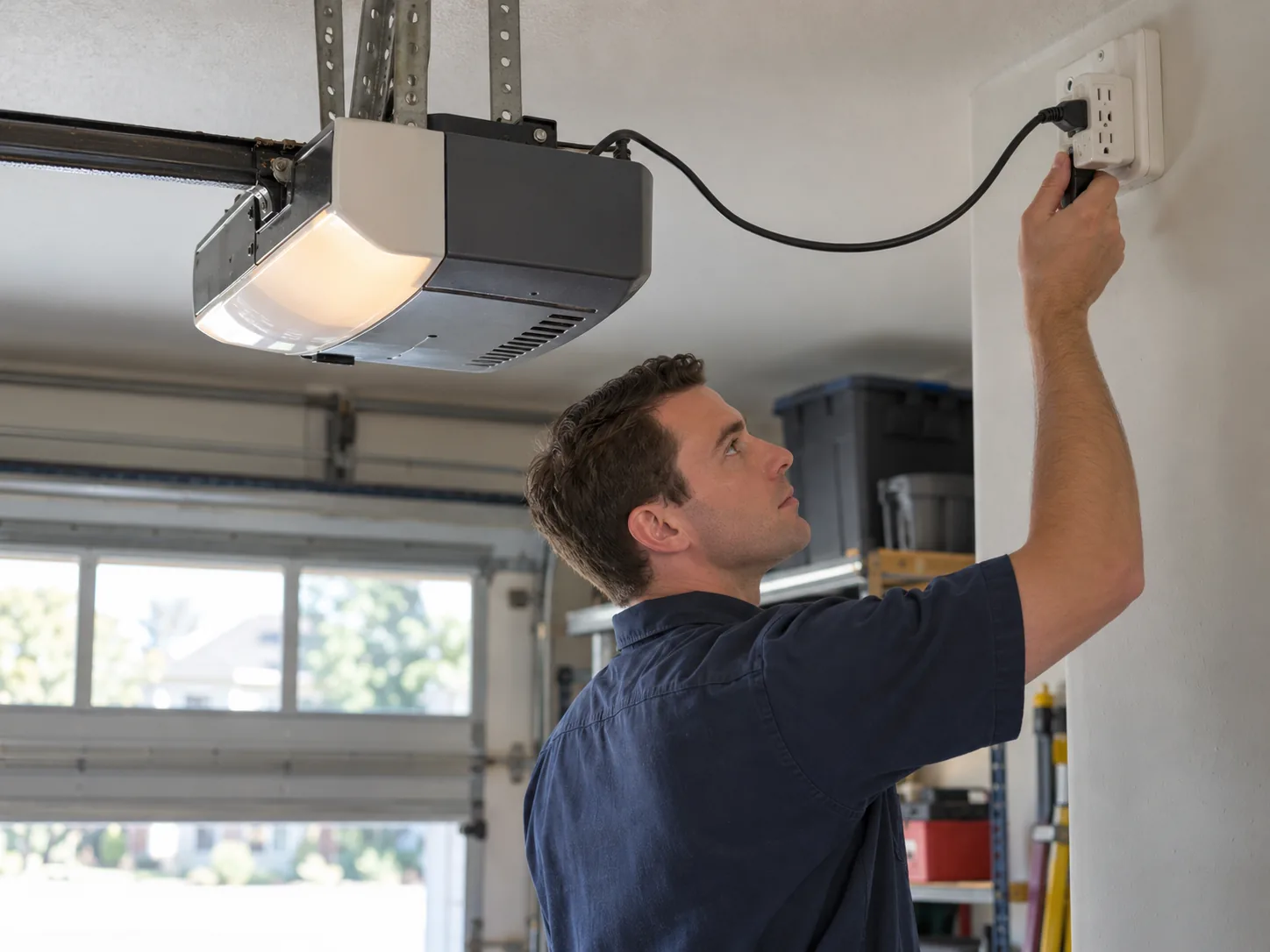
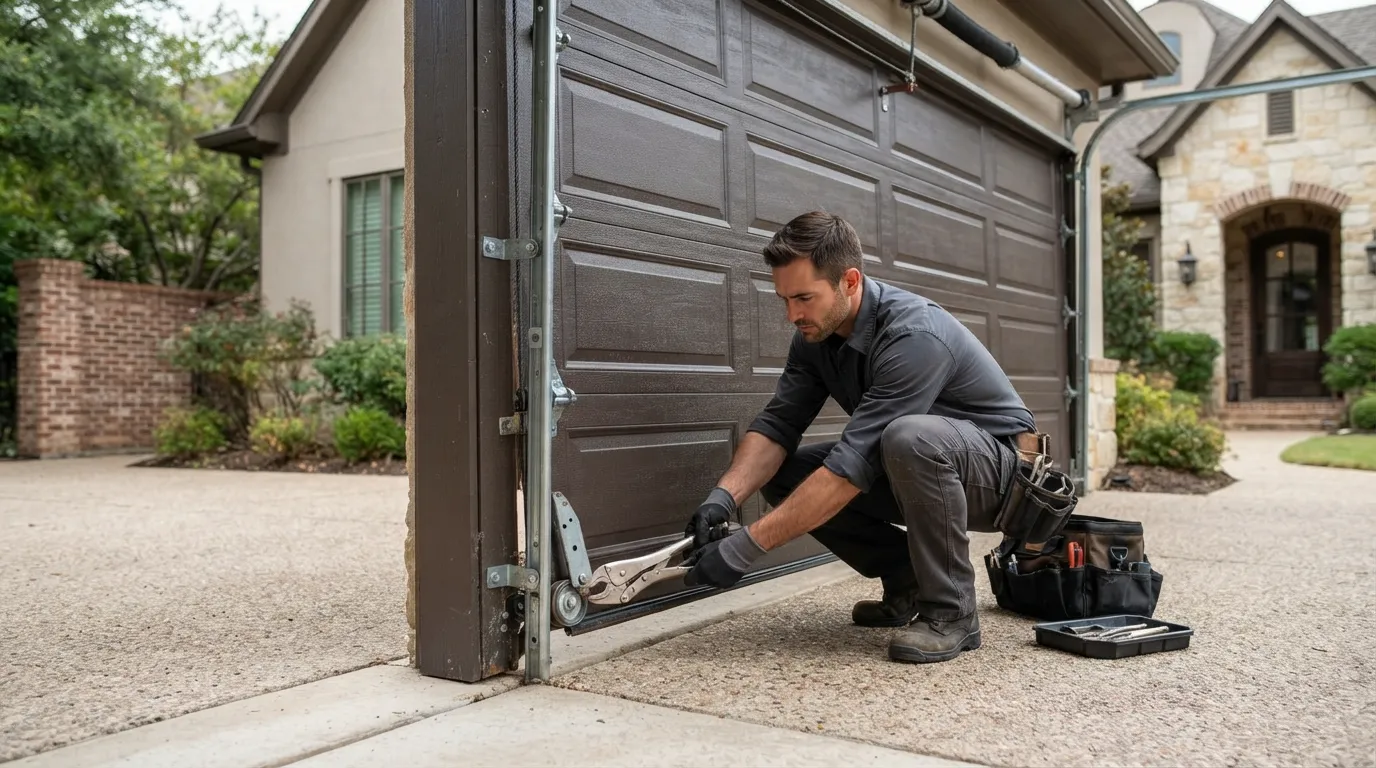
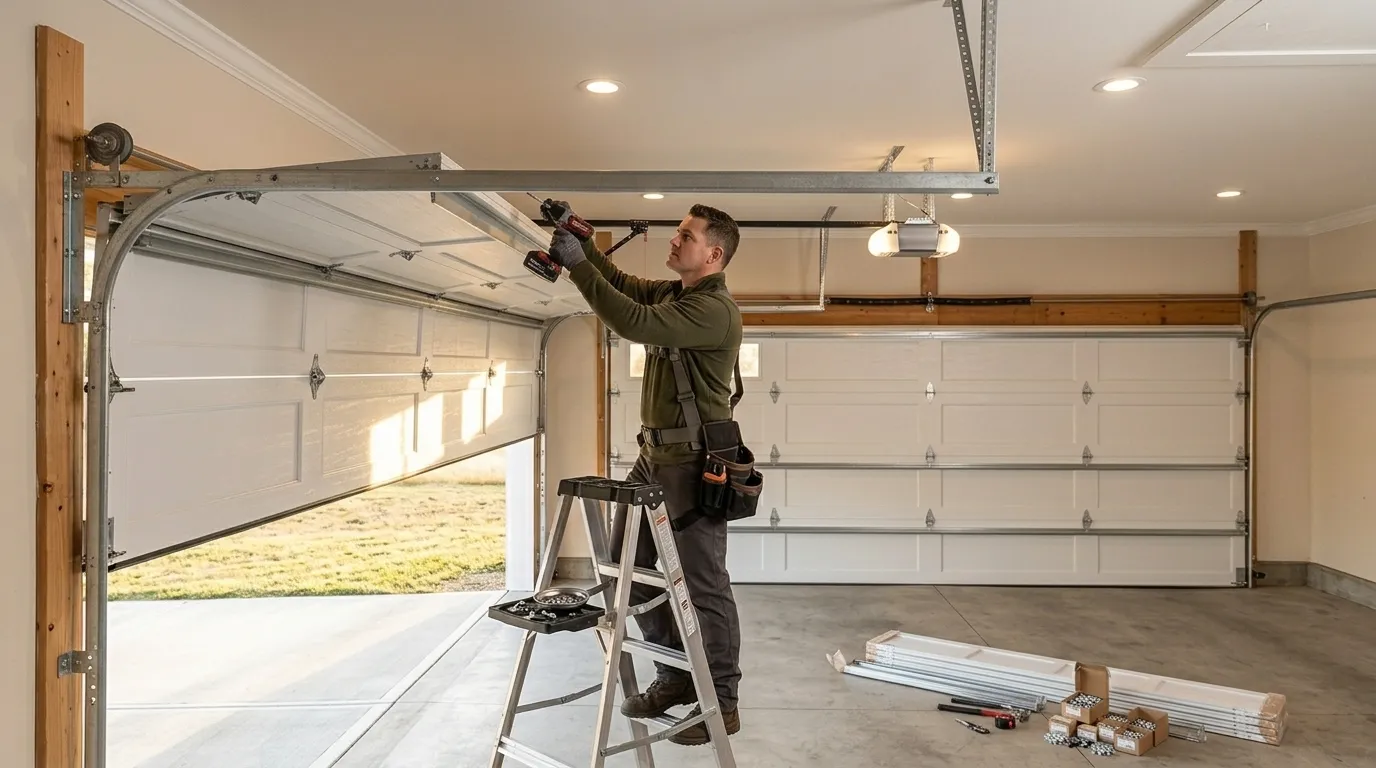
We also see a fair number of openers that were swapped once in the 80s or 90s but never paired with newer safety sensors, which is its own kind of service call. The fix isn't always full replacement - a lot of the time it's a spring, a set of rollers, or a track realignment. But if we're out at your place and the door is closer to 1938 than to 2003, we'll tell you honestly what's worth fixing and what isn't.