Garage Door Opener Repair Across the Naperville Area in Naperville

Naperville, IL

Garage Door Opener Repair Across the Naperville Area

Opener repair for Naperville-area homes built 1938-2003, where cold winters and aging drive systems wear out belts, gears, and circuit boards the same way, year after year.

Serving Naperville, ILBackground-checked techsHonest, upfront pricingFast local response
Local
Crews that work this area daily
Same-day
Response for most repair calls
Upfront
Pricing agreed before we start
Insured
Background-checked technicians

Local causes

What Causes It Around Here

Most of the housing stock in this service area went up between 1938 and 2003, with a median build year around 1976 and a heavy concentration of 1960s-70s construction spread across roughly 80 named subdivisions. That matters for openers because a house built in that window has usually gone through at least one opener swap already, and often the wiring, the wall button, and the safety sensors are a mismatched patchwork from different decades.

The other piece is climate. This is a cold-moderate zone, and that means the opener's gears, belt, or chain live through a real freeze-thaw cycle every winter. Grease inside the drive unit stiffens in the cold, which makes the motor work harder to start the door moving. Over a few winters that extra strain is what burns out a capacitor, strips a plastic gear, or cooks a circuit board. It's not bad luck - it's the predictable wear pattern for an aging opener in this climate, on a garage that was never insulated to modern standards.

Households here also tend to run two-car garages with heavier insulated doors than the openers were sized for decades ago, which adds load the original motor wasn't built to carry long-term.
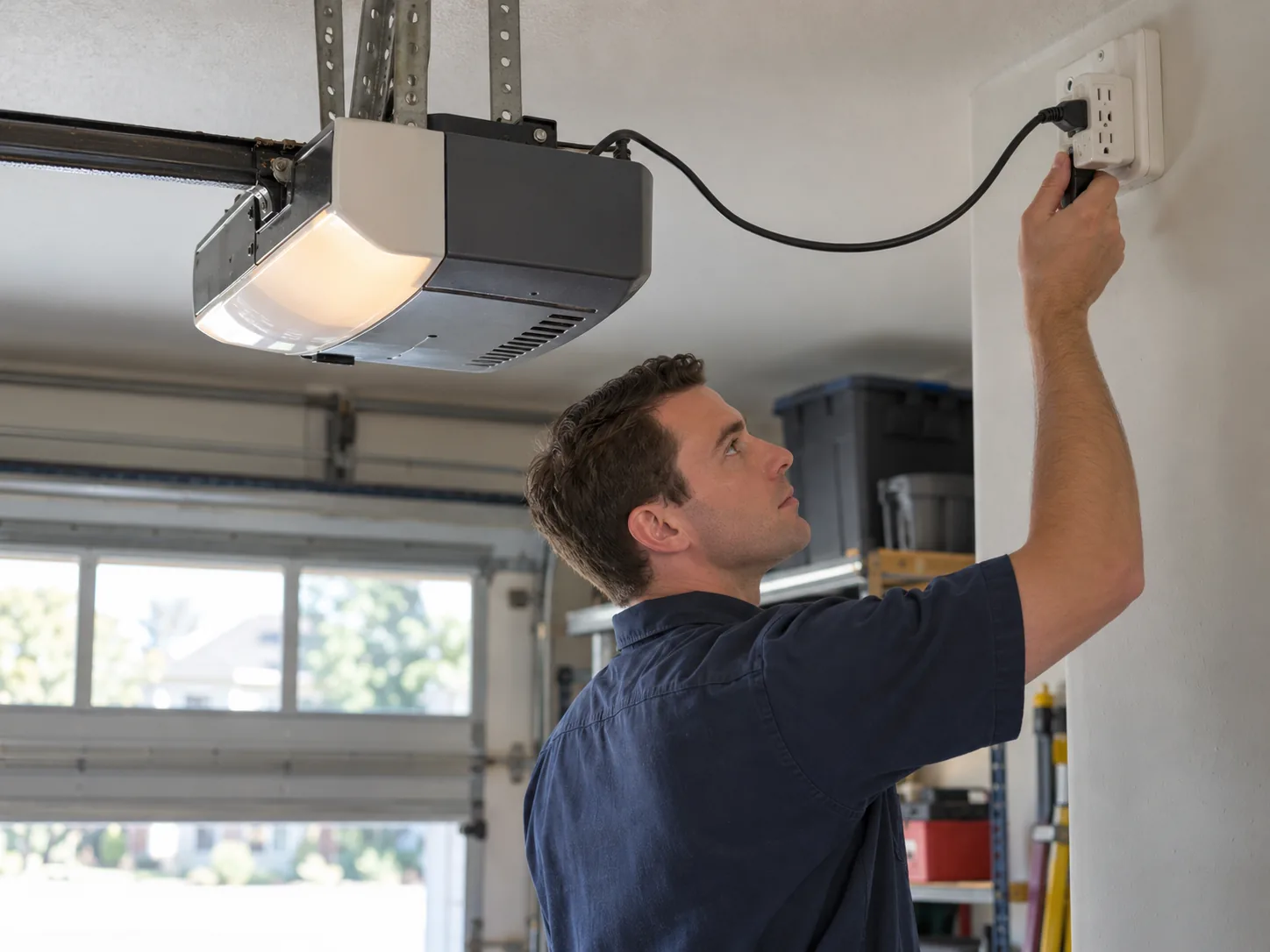
What Causes It Around Here

Booking

Booking a Visit

When you call, expect to be asked what the opener is doing right now, since that narrows down the failure fast. Here's the information that helps us bring the right parts on the truck the first time, instead of guessing at the diagnosis over the phone.

  1. Describe what the opener is doing

    When you call, expect to be asked what the opener is doing right now: does it hum but not move, does it move partway and reverse, does the light blink a set number of times, does the remote work but the wall button doesn't. Chain-driven versus belt-driven matters too, since parts and failure points differ between the two.

  2. Tell us the opener's age or the house's build era

    We also ask the age of the opener if you know it, or the rough era the house was built, since that lines up with the wear patterns common to this service area's older housing stock. If you don't know the model, a photo of the motor unit label is enough for us to bring the right parts on the truck instead of guessing.

  3. Older chain-drive boards can mean a lead time

    One honest limitation: if the opener is an older chain-drive unit and the logic board is dead, we sometimes can't get an exact replacement board same-day. Manufacturers phase out boards for discontinued models, and depending on the unit we may need to order the part or recommend replacing the opener outright rather than chasing a part that's hard to source.

Warning signs

How It Shows Up

The most common call is a door that won't respond to the remote or wall button at all. Here's the handful of patterns that cover almost everything we see, and what each one usually points to before we even open the housing.

Dead remote or wall button

The most common call is a door that won't respond to the remote or wall button at all - usually a dead capacitor or a fried board, not the motor itself. Close behind that is a door that starts up, gets partway, then reverses on its own; that's often the travel limits drifting out of adjustment as gears wear, which happens faster in a drive unit that's been fighting cold-stiffened grease for years.

Runs but the door barely moves

The opener runs but the door doesn't move, or moves slower than it used to. That's usually a stripped gear inside the housing, common on units that have logged a decade or more of Illinois winters. Flashing lights with no motor response almost always point to the safety sensor circuit, which is sensitive to the same age and wiring issues found across the older homes in this area.

Sudden silence after a storm

If your opener suddenly goes silent after a storm or a power flicker, check the breaker and the wall switch before assuming the unit itself failed - that's a five-minute check that saves a service call.

DIY or pro

Doing It Yourself

A few things are worth trying before you book anyone, and most of them take five minutes with tools you already have. Here's what to check yourself, and where troubleshooting turns into a job for us.

Check and clean the safety sensors

Check that the safety sensors near the floor are aligned - a solid light on both, not blinking - since a bumped sensor is the single most common cause of a door that won't close. Vacuum dust and cobwebs off the sensor lenses too; dirt alone can block the beam.

Reset the remote before blaming the opener

Reset the remote by following the learn-button sequence in the manual, and swap the remote battery before assuming the receiver is bad. If the wall button works but the remote doesn't, that's almost always the remote, not the opener.

Leave the motor housing and spring system alone

What you shouldn't do yourself is open the motor housing to replace an internal gear or board, or touch anything near the high-tension spring system while troubleshooting the opener. Those repairs involve either warranty-voiding disassembly or genuine injury risk, and they're not a fair trade for the money saved. If the basic checks above don't fix it, the problem is inside the unit, and that's a call, not a project.

Questions

Common questions

Why does my garage door opener struggle more in winter?

Cold stiffens the grease inside the drive unit, so the motor works harder just to get the door moving. In a climate band like this one, that extra strain each winter is what eventually burns out a capacitor or strips a gear, especially in an opener that's already a decade or two old.

Is it worth repairing an old opener or should I replace it?

If the motor and gears are sound and it's just a board, capacitor, or sensor, repair usually makes sense. If the unit is an older chain-drive model with a failed board that's hard to source, replacement is often the more practical call - we'll tell you which situation you're in before doing any work.

My opener light blinks but the door won't move. What's that mean?

Blinking codes almost always point to the safety sensor circuit - either a misaligned sensor, a dirty lens, or a wiring fault. It's rarely the motor itself. Check sensor alignment first; if both lights are solid and it still won't move, the fault is likely internal.

Do you service openers outside Naperville itself?

Yes, we cover the wider area including towns like Lisle, Warrenville, Woodridge, and others within roughly a 10 to 14 mile radius. Each of those towns has its own page with local detail; this page covers opener repair across the whole service area.

Ready when you are

Need a garage door sorted in Naperville?

Naperville Garage Door Pros repairs and installs garage doors, springs and openers in Naperville, IL and the surrounding area.

Call Now(331) 297-2514