What the Weather Here Does to It
Naperville sits in a cold-moderate climate band, which means the door on your house goes through real freeze-thaw cycles every winter, not just a cold snap or two. That cycling is hard on anything with moving metal parts. Steel tracks contract in January and expand back in a March thaw, and if the door isn't insulated, the temperature swing inside the garage itself can be twenty or thirty degrees between morning and afternoon on a sunny winter day. If you're buying new, that argues for an insulated steel or composite door rather than a single-layer panel, and for weatherstripping rated for the swing, not just the cold. A door built for a mild coastal climate won't hold up the same way here. This isn't a scare story - it's just what cold-moderate means for a garage that isn't a heated, finished room. If your current door is a bare single-panel steel door with no thermal break, you'll feel the difference in the garage and often in the room next to it once you upgrade.
When to Call Someone
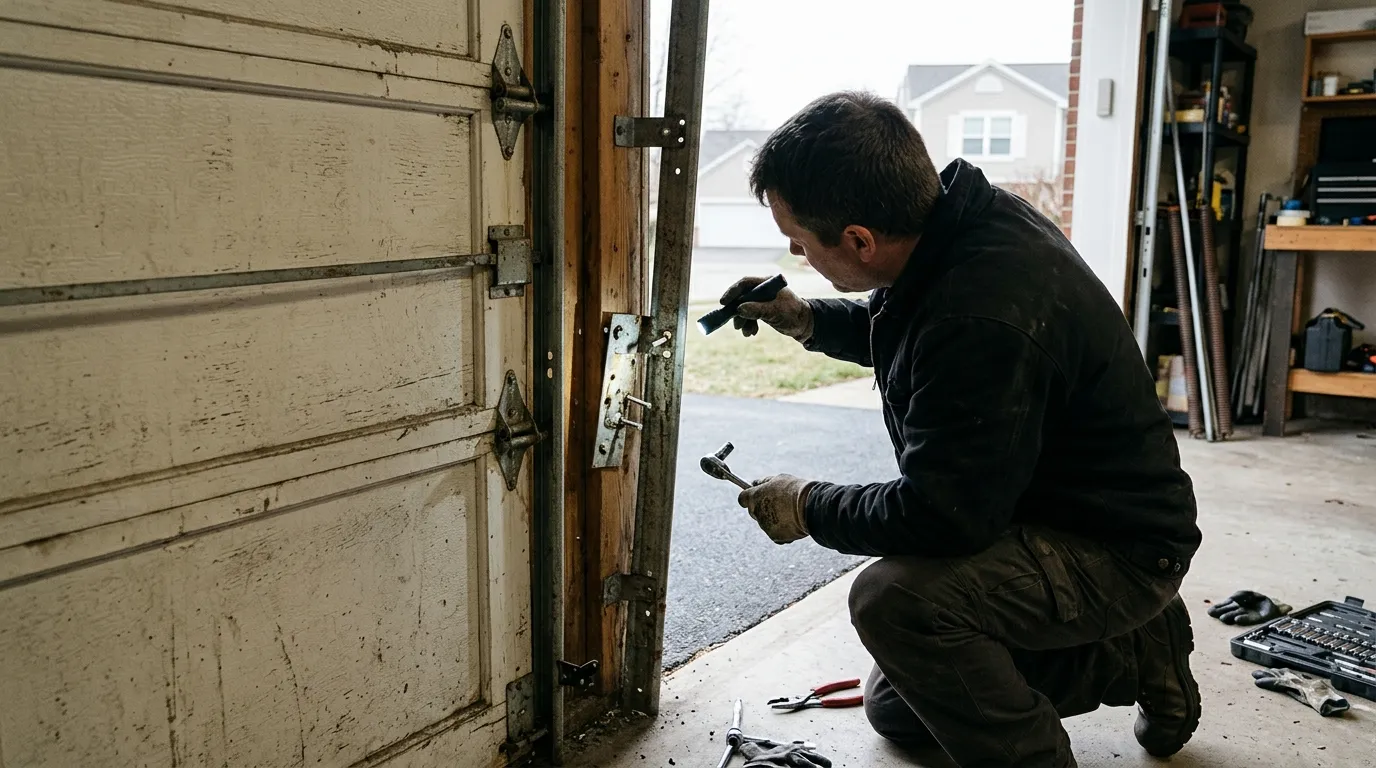
If your house was built anywhere in the 1938-2003 range that covers most of this area, with a lot of stock from the 1960s and 70s, there's a decent chance your door or opener predates a couple of code and safety changes. A door that's original to a 1968 build, for instance, is old enough that finding matching panels or hardware isn't realistic - replacement beats repair once you're at that point. Call someone before you buy anything if the door is original to the house, if a spring has already broken once, or if you're not sure whether what's installed is even sized right for the opening. A measurement mistake on a replacement order costs more than the visit. We don't stock every trim kit for every era of house, so if yours is an unusual opening size, expect a short lead time on the order rather than a same-day swap.
The Problem
The core issue with buying a replacement door here is that Naperville's housing isn't uniform - homes across this service area were built between 1938 and 2003, with a median around 1976, and openings, track types, and header clearances vary by decade and by the roughly 80 named areas that make up the wider region. A door that's a perfect fit for a 1970s ranch may not clear the header on a house built in the 90s, and vice versa. Buying off a size chart without an actual measurement of your opening and headroom is how people end up with a door that doesn't seal at the bottom or an opener bracket that has to be rebuilt on install day. There's no shortcut around measuring the actual house you have.
Where People Go Wrong
The most common mistake is treating the door as a cosmetic decision first and a mechanical one second. People pick a style off a brochure, then find out the track and spring system that comes standard with it doesn't match what their opener can handle, or that the insulation rating they picked doesn't do much given how the garage is used. Given the cold-moderate winters here, an uninsulated or thin-insulation door on an older opening is going to underperform no matter how it looks. The other common error is ignoring the age of the surrounding hardware - a new door bolted onto 1970s track and a tired opener is a mismatch that shows up as noise, uneven closing, or a spring that fails within a year or two. Match the door to the house you actually have, not the one on the showroom card.
Talk to a local pro
Garage door trouble in Naperville?
Same-day service with honest, upfront quotes.