Garage Door Maintenance Built Around Naperville's Housing Stock in Naperville

Naperville, IL

Garage Door Maintenance Built Around Naperville's Housing Stock

Naperville homes built 1938-2003 carry hardware that ages fast in cold-climate swings. Seasonal maintenance keeps springs, rollers and openers working before they fail.

Serving Naperville, ILBackground-checked techsHonest, upfront pricingFast local response
Local
Crews that work this area daily
Same-day
Response for most repair calls
Upfront
Pricing agreed before we start
Insured
Background-checked technicians

Local causes

What Causes It Around Here

Most of the doors we service sit on houses built between 1938 and 2003, with the bulk of that stock going up in the 1960s and 70s across the roughly 80 named subdivisions we cover between Lisle and Bloomingdale. That's a wide spread of hardware ages under one roof style. A door installed when a 1970s split-level went up has had five decades of temperature swings to work on its springs, and a door from a 1990s build is entering the stretch where torsion springs and nylon rollers start giving out without warning.

The cold-moderate climate here is the other half of the problem. Steel contracts in winter and expands in summer, and that cycle works on the weak points first: spring coils losing tension, track brackets loosening from repeated freeze-thaw movement, and lubricant on rollers and hinges thinning out or gumming up depending on the season. None of this is dramatic - it's slow wear that shows up as a five-minute annual check would have caught, but a skipped year lets it turn into a stuck door or a snapped cable on a cold morning.

Houses from the older end of that 1938-2003 range are more likely to still have original hardware nobody's touched, which is exactly the hardware most due for a look.
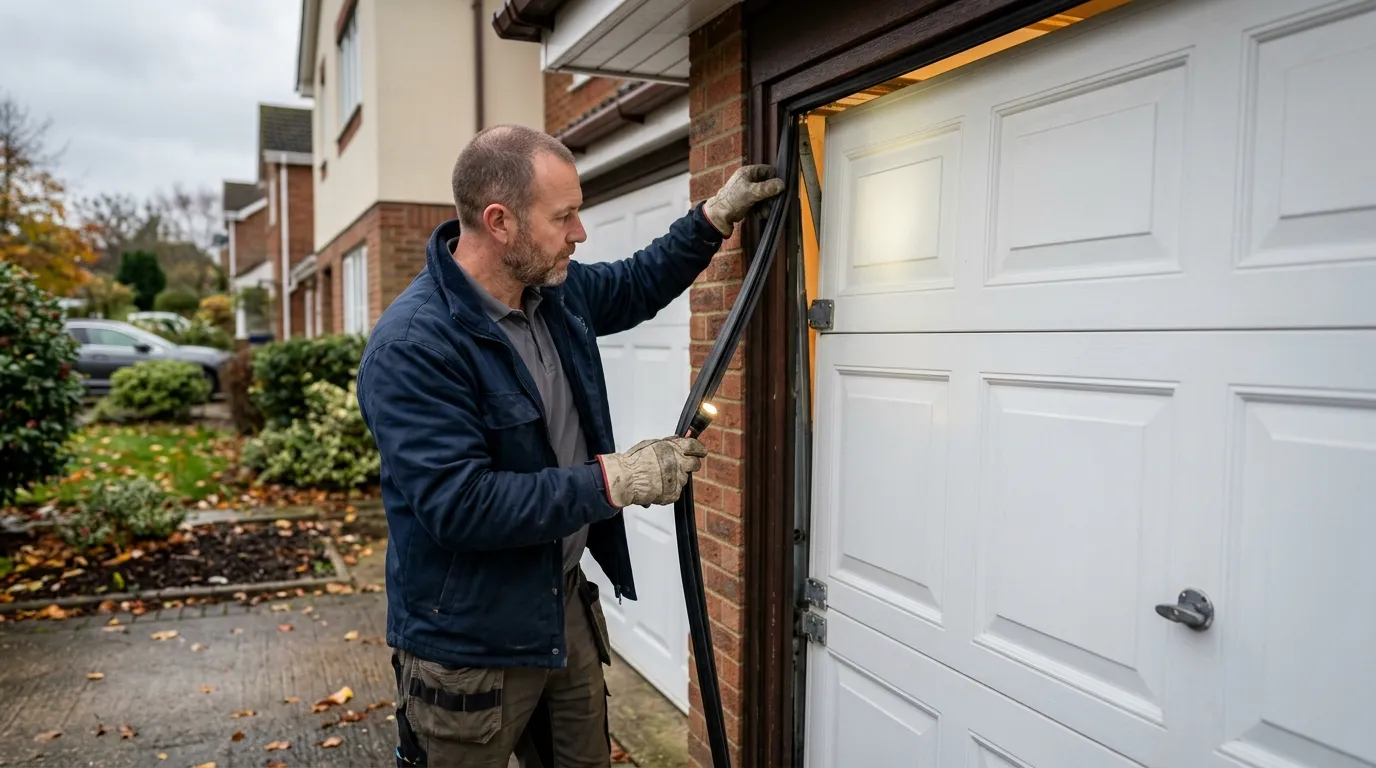
What Causes It Around Here

Booking

Booking a Visit

We work the towns inside roughly a 5 to 14 mile ring around Naperville because that's the stock of housing we know best - mostly 1960s-70s builds, with older and newer outliers on either side of that range. Here's what a maintenance visit actually covers once you're booked in.

  1. We cover roughly a 5-14 mile ring

    We work the towns inside roughly a 5 to 14 mile ring around Naperville - Lisle, Warrenville, Woodridge, Winfield, Glen Ellyn, Batavia, Geneva, and the rest of the area listed on our home page - because that's the stock of housing we know: the 1960s-70s builds that make up most of it, and the older and newer outliers on either side of that range.

  2. We check spring tension and cables

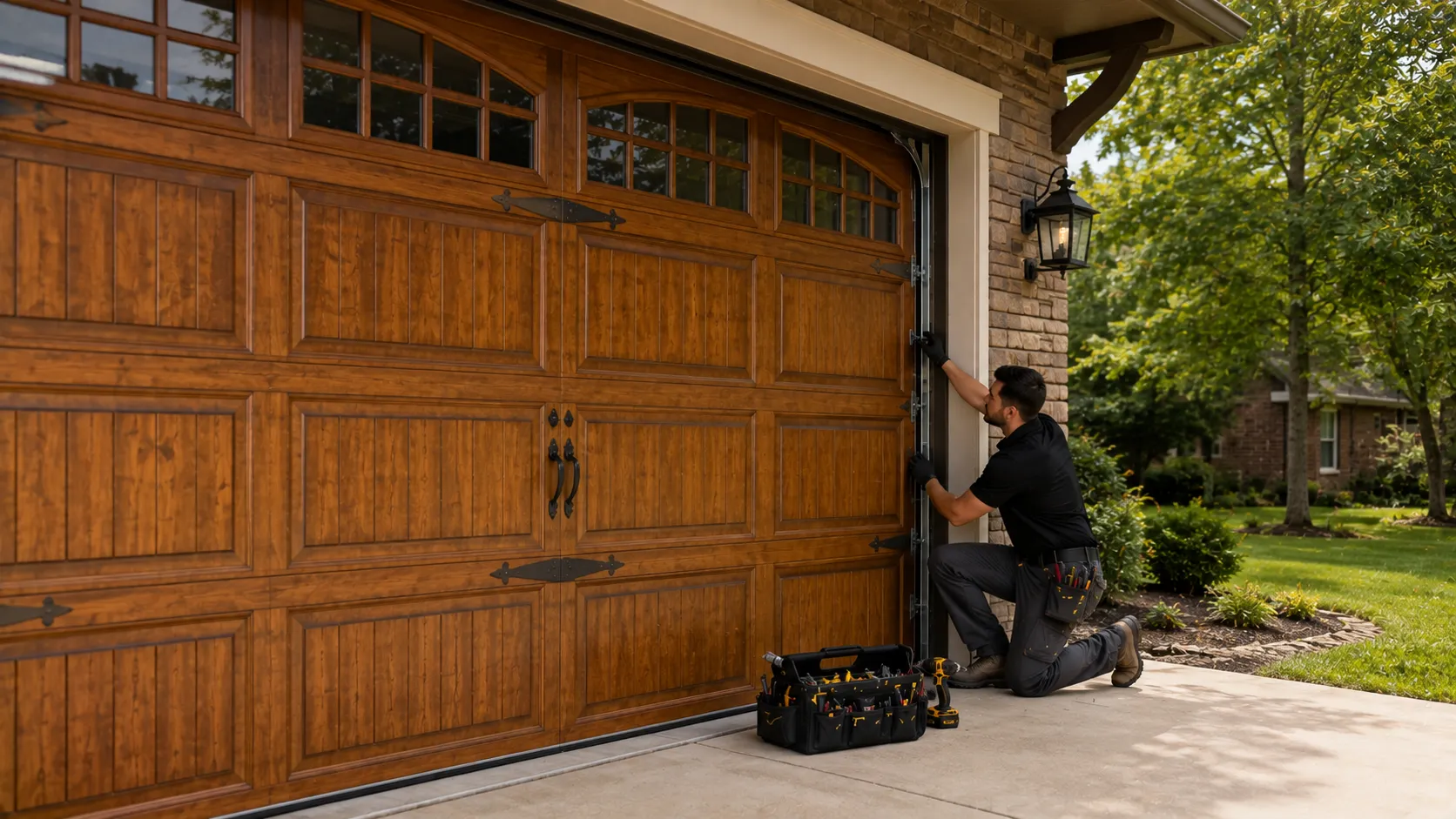
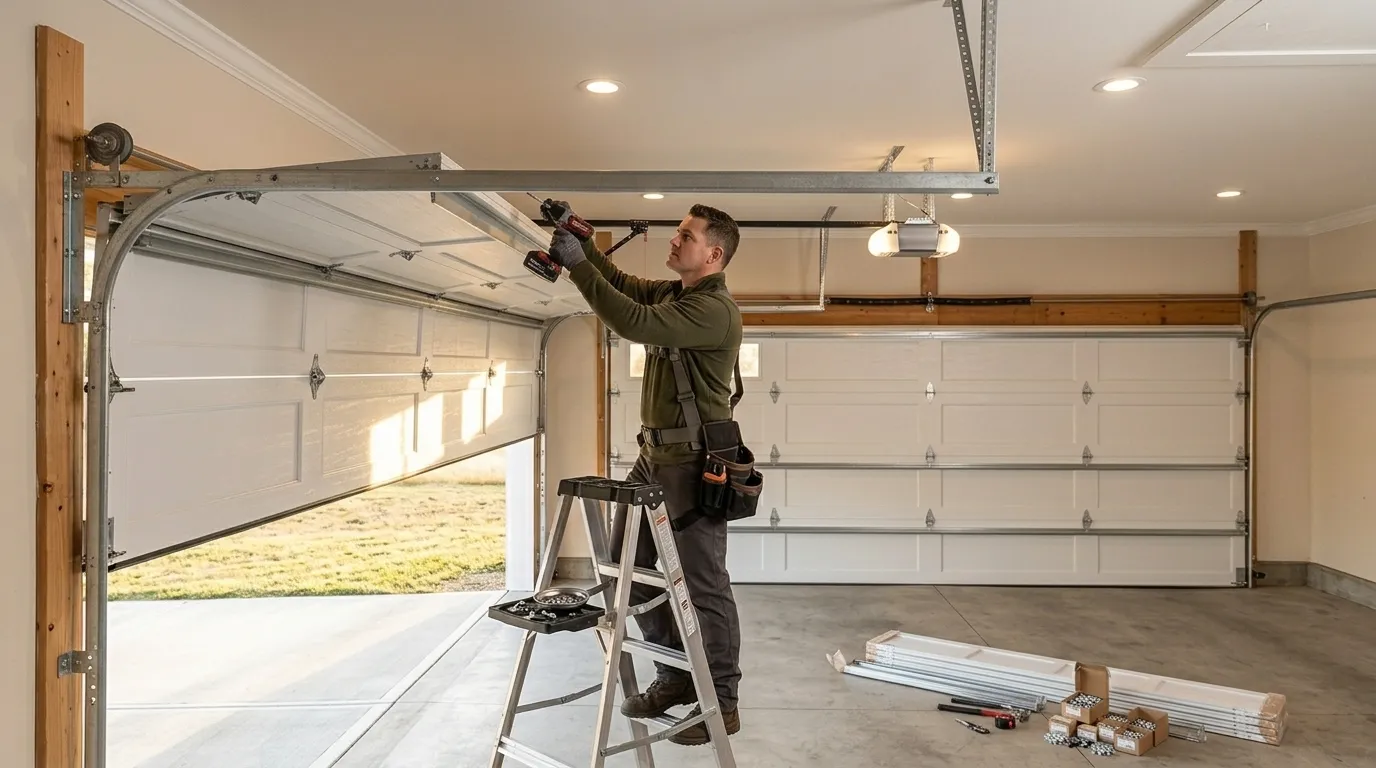
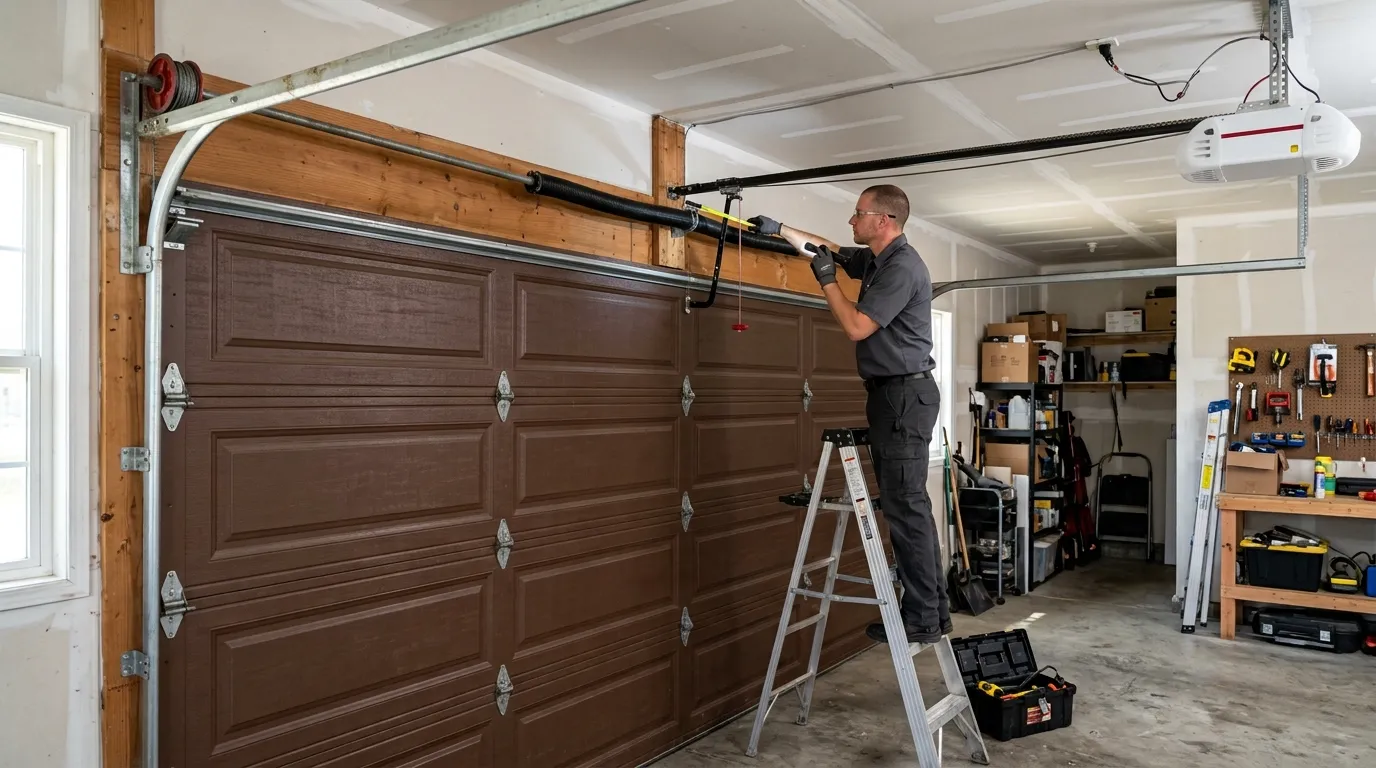
    A maintenance visit is straightforward: we check spring tension, inspect cables and rollers, test the opener's force and travel settings, lubricate moving parts, and tighten hardware that's worked loose so nothing rattles free between visits.

  3. We'll flag anything close to failing

    If something's close to failing, we'll tell you honestly rather than wait for a mid-winter service call when it's harder to schedule and more likely to strand you with the door stuck. Book through the site and we'll get you scheduled.

Warning signs

How It Shows Up

On a door with worn hardware, you'll usually notice one of a few patterns first before anything actually breaks. Here's what those early warning signs look like, and why catching them early usually means an adjustment instead of a replacement.

Slower, stuttering, or uneven closing

On a door with worn hardware, you'll usually notice one of a few patterns first: the door starts slower or stutters partway up, the opener strains or reverses on its own, or you hear a grinding or popping sound from the spring side of the header. On older homes in the 1938-2003 range, a common one is a door that closes unevenly - one side dropping faster than the other, which points to uneven spring tension or a roller that's worn through its bearing.

Cold mornings make it loud

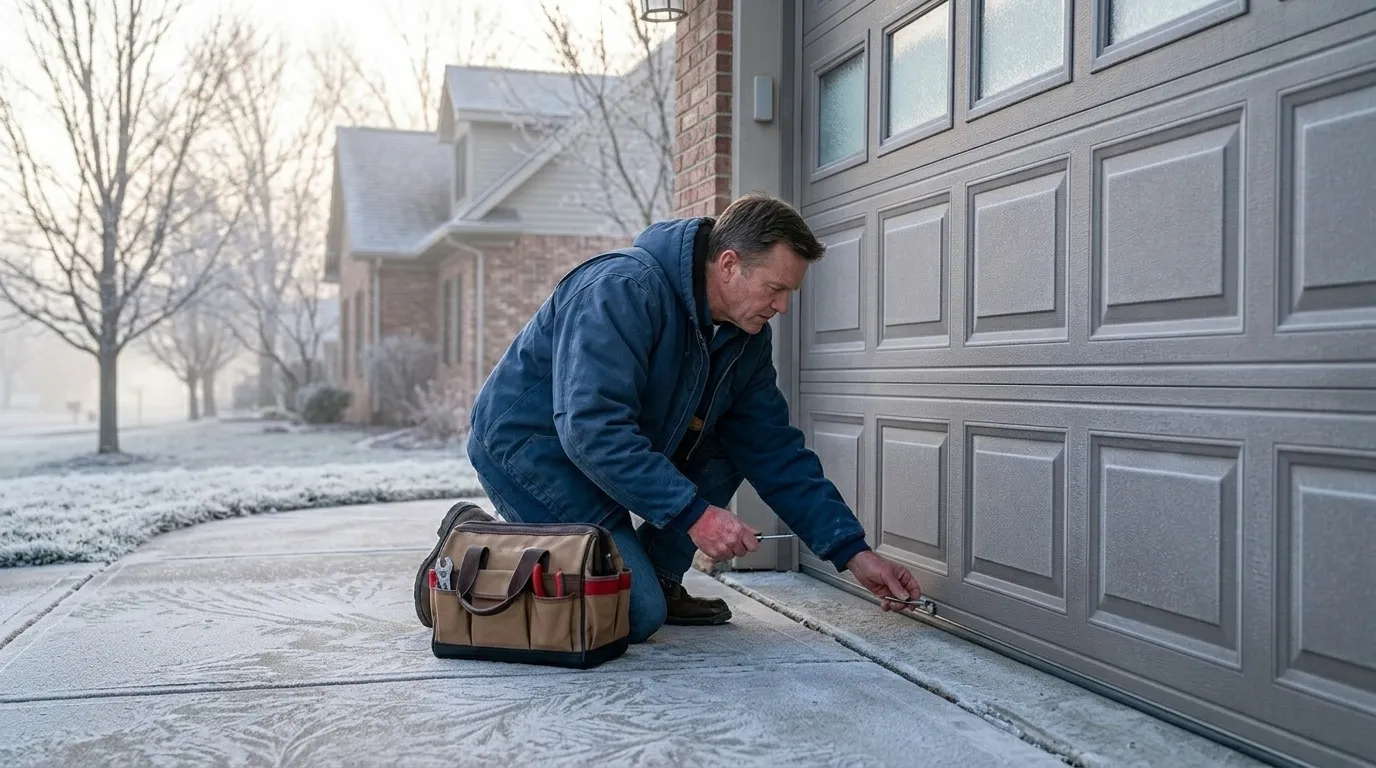
Cold mornings are when this stuff gets loud. A spring that's been losing tension all year will make itself known on the day it finally can't lift the door's weight, and that's almost always a January or February call, not a July one. Rollers that were fine in warm weather can bind up once the grease thickens in cold air, so a door that was quiet in October can start groaning in December with no other change made to it.

DIY or pro

Doing It Yourself

There's real maintenance a homeowner can do without calling anyone, and doing it regularly covers a lot of the slow wear that cold-climate cycling causes. Here's what's safe to handle yourself, and where the line sits before it becomes a job for us.

Lubricate rollers and hinges twice a year

Wipe down and lubricate the rollers and hinges twice a year, check that the door reverses properly when it hits an obstruction, tighten visible bolts on the track brackets, and clear debris from the tracks. That covers a lot of the slow wear that cold-climate cycling causes.

Never touch the torsion spring yourself

What you shouldn't touch is the torsion spring itself. It's under enough tension to cause a serious injury if it's adjusted or removed wrong, and that's true whether the door's spring is original to a 1970s build or a replacement from five years ago.

A stretched or gapped coil means call us

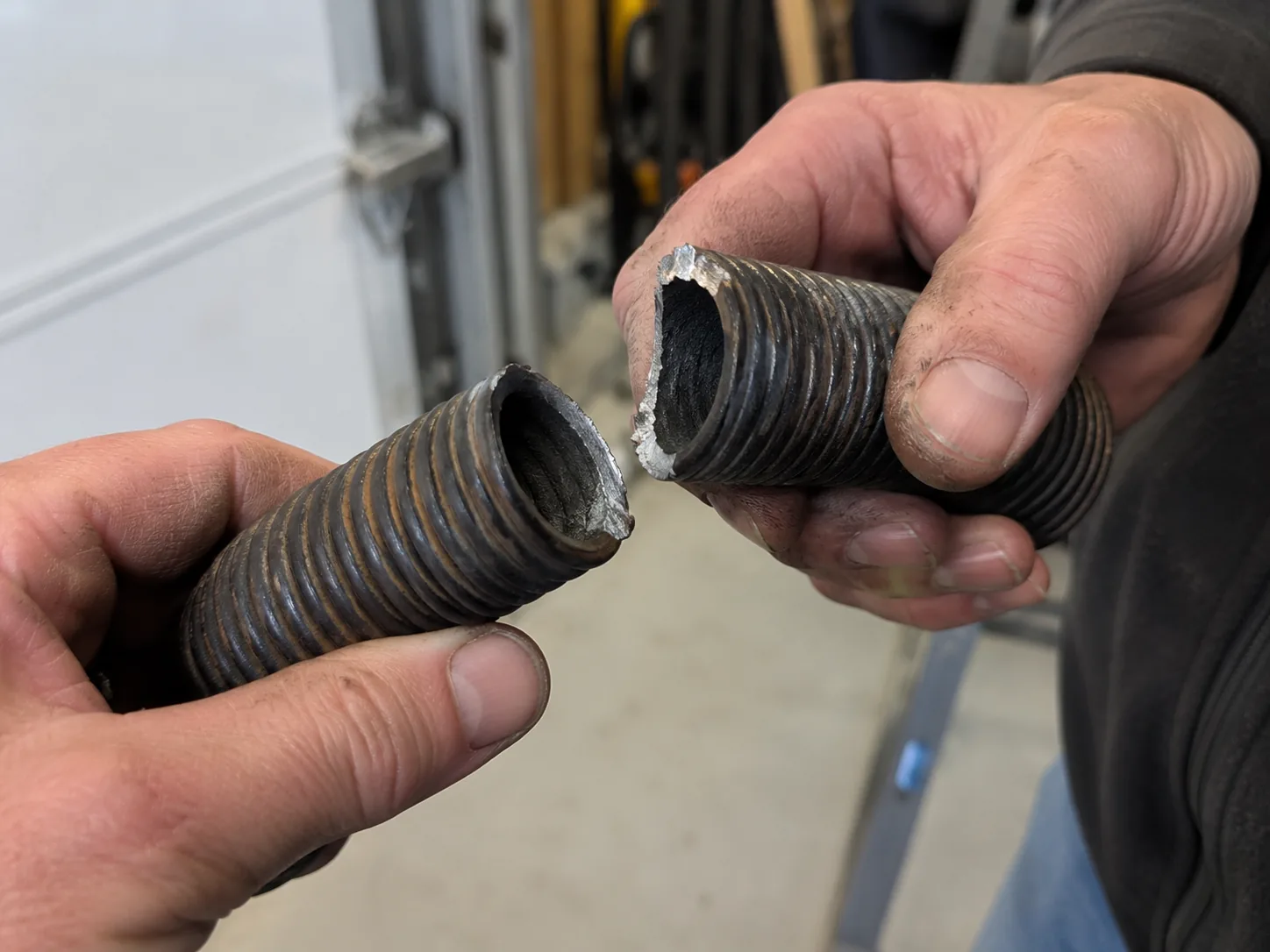
If a spring looks stretched, rusted, or has a visible gap in the coil, that's a call, not a DIY project. We'd rather you skip a step you're unsure about than end up needing us for something worse.

Questions

Common questions

How often should I get my garage door serviced in Naperville?

Once a year is enough for most doors, ideally before winter since cold-moderate temperature swings are what stress springs and hardware most. If your house is on the older end of the 1938-2003 range with original hardware, twice a year is worth the extra visit.

Why does my door act up more in winter?

Steel hardware contracts in cold weather and grease thickens, so springs that were already losing tension and rollers that were already worn tend to fail in the coldest months rather than mild ones. It's wear that built up all year finally showing itself.

Do you cover towns near Naperville?

Yes, we service the area roughly 5 to 14 miles out, including Lisle, Warrenville, Woodridge, Glen Ellyn, Batavia, and the other towns listed on our home page, alongside Naperville itself.

Can I do maintenance myself?

Lubricating rollers and hinges, checking the auto-reverse function, and tightening loose track bolts are fine to do yourself. Leave the torsion spring alone - it's under enough tension to cause serious injury if handled wrong.

Ready when you are

Need a garage door sorted in Naperville?

Naperville Garage Door Pros repairs and installs garage doors, springs and openers in Naperville, IL and the surrounding area.

Call Now(331) 297-2514