Garage Door Spring Repair Around Naperville in Naperville

Naperville, IL

Garage Door Spring Repair Around Naperville

Torsion and extension spring repair for Naperville homes built 1938-2003, where cold winters and original hardware push springs past their rated cycles.

Serving Naperville, ILBackground-checked techsHonest, upfront pricingFast local response
1938–2003
Typical build years of local homes
1976
Median year homes were built
Cold winters
Climate that shapes door wear
Upfront
Price agreed before work starts

Local causes

What Causes It Around Here

Most of the housing stock in this service area went up between 1938 and 2003, with the median build year sitting around 1976 and the bulk of it dating to the 1960s and 70s across the 80 or so named subdivisions we work in. That matters for springs because a torsion spring is rated for a set number of open-close cycles, not a set number of years, and a lot of these houses are still running the spring that came with the original door or a direct swap from decades back.

The cold-moderate climate band this area sits in adds a second problem on top of age. Steel contracts in cold air, and a spring that's already near the end of its cycle life loses tension faster once temperatures drop for the winter stretch. That's why the calls cluster the way they do - a spring that was fine in September gives out in January because the metal is stiffer and the door is heavier to move on a cold morning.

Houses built in the 60s and 70s also tend to have single-spring setups on double doors, which was a common builder spec then and isn't up to current practice for a door that size. When that one spring goes, the door doesn't ease down - it drops.

What Causes It Around Here

Booking

Booking a Visit

Call and tell us the door won't open, won't stay open, or dropped suddenly - that's enough for us to know it's a spring call and not a track or opener problem. Here's what that means for the visit and how far out we travel.

  1. Describe how the door failed

    Call and tell us the door won't open, won't stay open, or dropped suddenly - that's enough for us to know it's a spring call and not a track or opener problem, and it changes what we bring on the truck.

  2. Don't force it with the opener

    A stuck door with a snapped spring is not a DIY fix and not something to force with the opener; forcing it can strip the opener gear or bend the track, turning a spring job into a bigger one.

  3. Check whether we cover your town

    We serve the area out to roughly Lisle, Warrenville, and Woodridge in the near ring, and further out toward Romeoville, Winfield, Boulder Hill, Darien, Glen Ellyn, North Aurora, Westmont, Batavia, Montgomery, West Chicago, Lemont, Clarendon Hills, Willowbrook, Carol Stream, Crest Hill, Oakbrook Terrace, Oak Brook, Glendale Heights, Burr Ridge, Hinsdale, Geneva, Lockport, Villa Park, Western Springs, Fairmont, Willow Springs, and Bloomingdale. If your town isn't in that list, ask us before you book so we can tell you straight whether we cover it.

Warning signs

How It Shows Up

A torsion spring failure is usually loud and sudden - a bang from the garage, and then the door won't budge or drops the last foot on its own weight. Here's how that compares to an extension spring failure, and the warning signs worth catching before either one lets go.

Torsion vs. extension spring failure

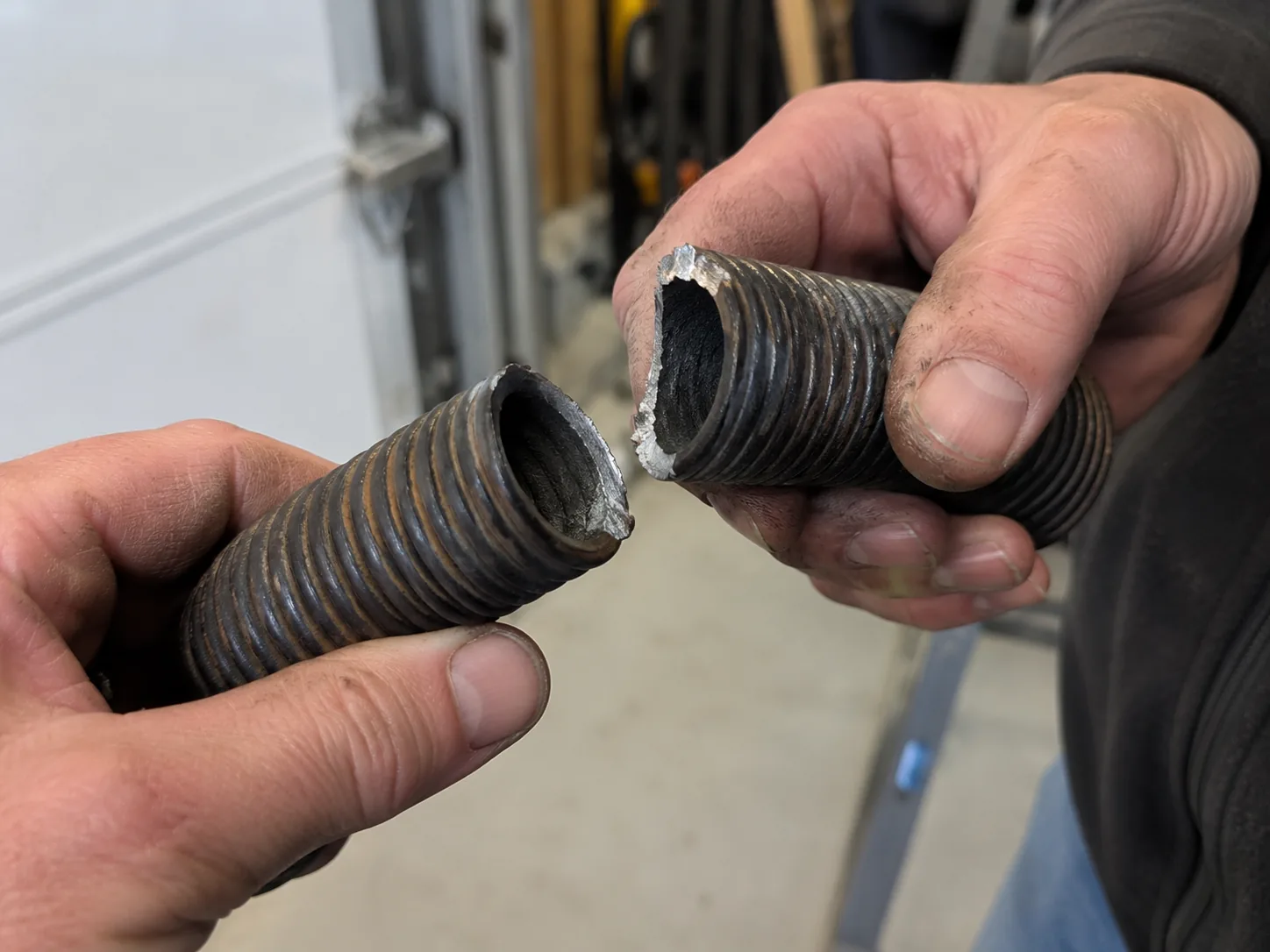
A torsion spring failure is usually loud and sudden - a bang from the garage, and then the door won't budge or drops the last foot on its own weight. An extension spring failure (the kind mounted along the horizontal tracks rather than above the door) tends to show up as one side of the door hanging lower than the other, because the two springs rarely give out at exactly the same time.
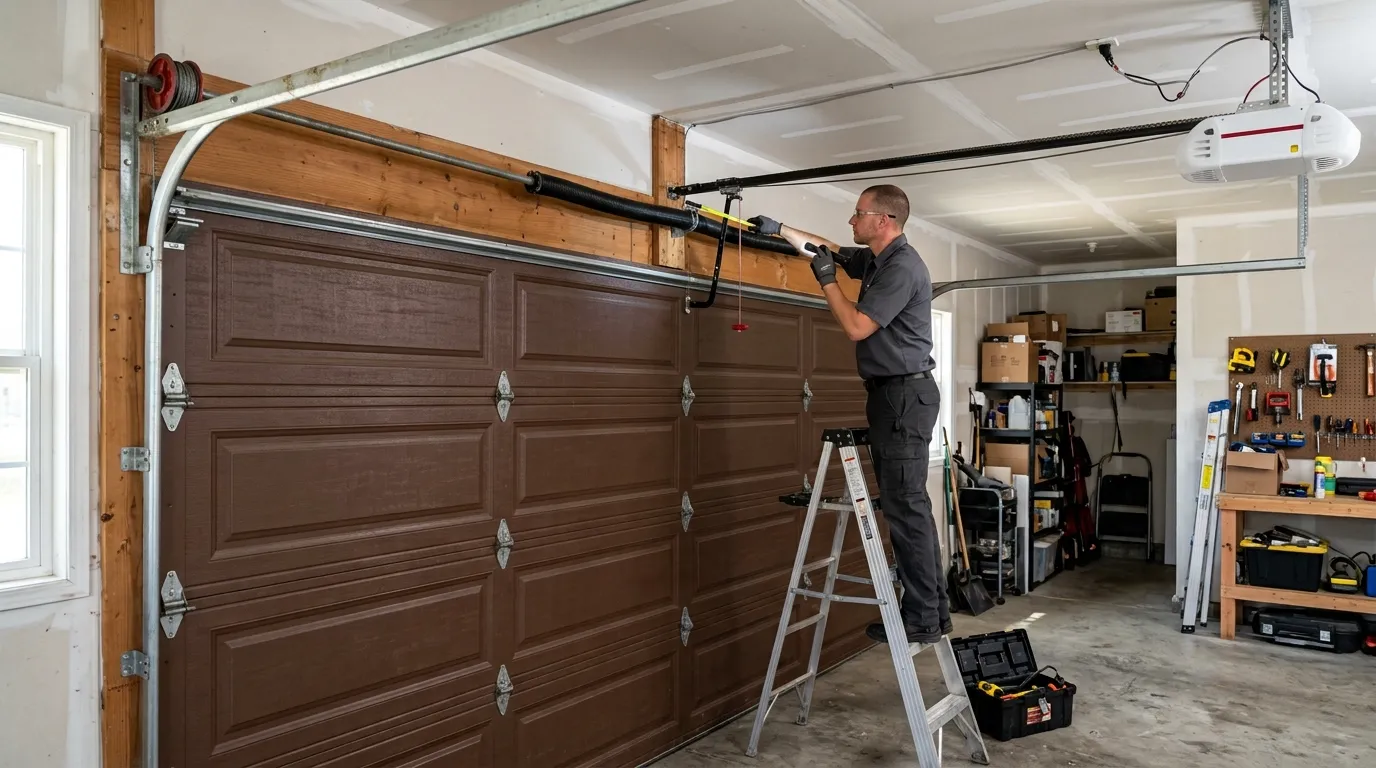
Warning signs before the full break

Before the full break, there are warning signs worth catching early: the door feels heavier to lift by hand than it used to, the opener strains and takes longer to get it moving, or you see a visible gap in the coil when you look up at the spring itself. Gaps in a torsion spring's coils mean it's already stretched past where it should sit.

A mismatched spring wears out faster

On the older stock in this area - the 60s and 70s builds especially - it's also common to find a spring that's simply the wrong size for the door, installed as a cheaper substitute at some point in the house's history. That kind of mismatch wears out faster than a correctly sized one and is worth flagging when we're out.

DIY or pro

Doing It Yourself

There isn't a safe DIY version of this repair, and we'll say that plainly rather than dance around it. Here's what's actually true about the risk, what you can safely check yourself, and the one honest limitation worth knowing before we arrive.

There's no safe DIY spring repair

There isn't a safe DIY version of this repair, and we'll say that plainly rather than dance around it. A torsion spring is wound under enough tension to break bones or worse if it slips while you're working on it, and the tools to wind and unwind it safely aren't something most garages have lying around.

What's safe to check before we arrive

What you can do yourself: check whether the door is binding on the track, listen for grinding versus a clean run, and note whether one side sags more than the other before you call. That information helps us diagnose faster once we're on site. What you shouldn't do is disconnect the opener and try to manually lift a door with a broken spring to see how bad it is - that's exactly the motion that causes injuries.

Uncommon spring sizes may need a new assembly

One honest limitation: if the spring size on your door isn't a common stock size, or the door itself is old enough that matching hardware is discontinued, the visit may turn into a conversation about replacing the spring assembly rather than a straight swap. We'll tell you which situation you're in before we start any work.

Questions

Common questions

How do I know if it's the spring and not the opener?

If the door won't move even when you disconnect the opener and try to lift it by hand, or if it drops suddenly instead of easing down, that's a spring problem. An opener issue usually lets the door move freely by hand but the motor won't engage or run it.

Why did my spring break in winter and not summer?

Cold makes steel stiffer and less forgiving, so a spring that's near the end of its cycle life is more likely to give out once temperatures drop. Given this area's cold-moderate climate, winter is when older springs tend to fail.

Do you replace one spring or both on a double door?

On most double doors with two torsion springs, we recommend replacing both even if only one broke, since they're usually close in age and wear. We'll walk you through the reasoning and the cost difference before we start.

How old does a spring usually get before it fails?

It comes down to cycle count more than calendar age, which is why houses built decades ago with original hardware - common across this area's 1960s and 70s housing stock - are the ones we see most often for this repair.

Ready when you are

Need a garage door sorted in Naperville?

Naperville Garage Door Pros repairs and installs garage doors, springs and openers in Naperville, IL and the surrounding area.

Call Now(331) 297-2514