Commercial Garage Door Service, Elmhurst, IL in Naperville

Elmhurst, Naperville

Commercial Garage Door Service, Elmhurst, IL

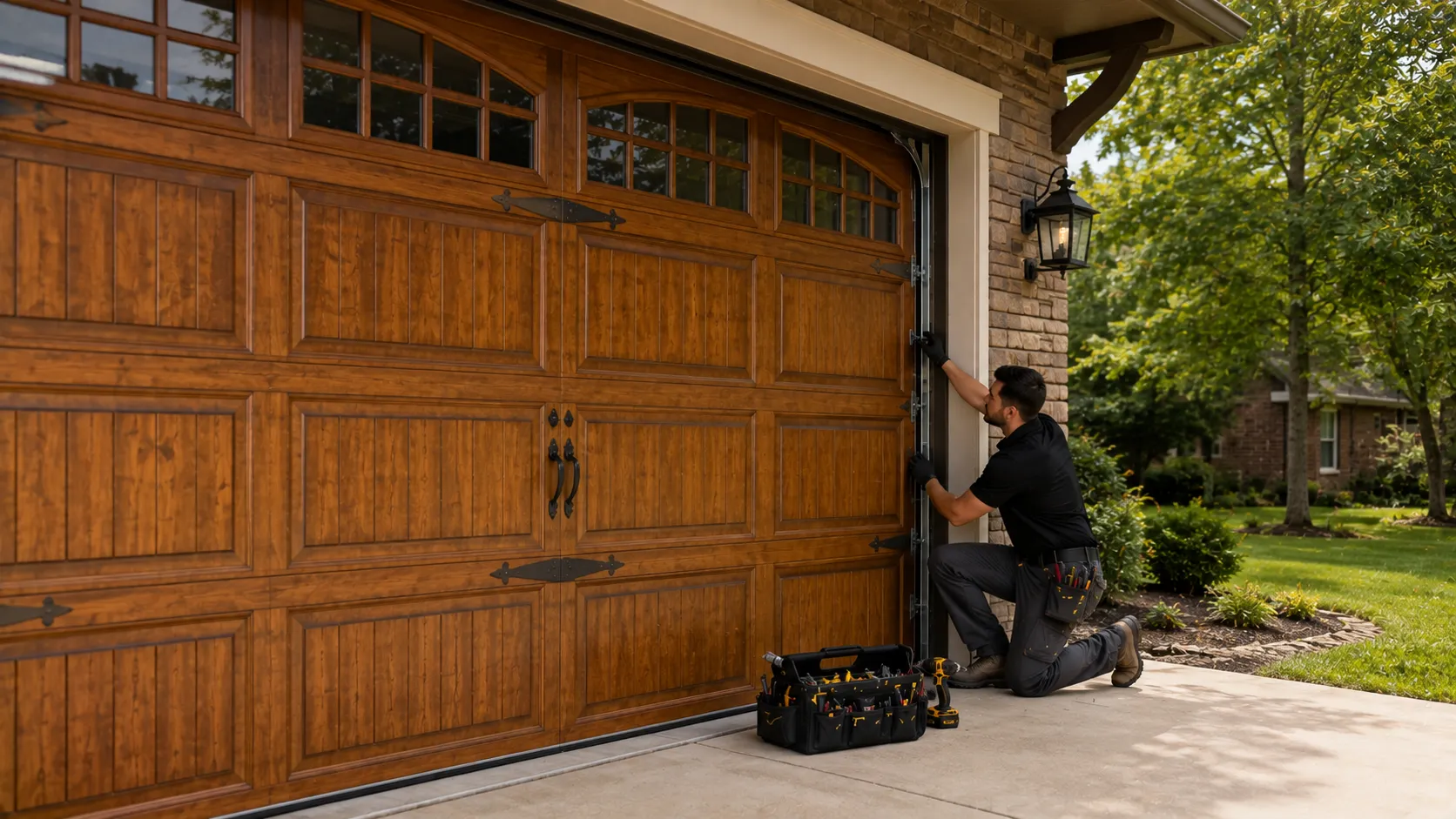
Commercial garage door repair in Elmhurst, IL, covered from Naperville. Built mostly in the 1960s, doors here show cold-climate wear and dated hardware.

Serving Naperville, ILBackground-checked techsHonest, upfront pricingFast local response

Job timing

Time on the Job

Elmhurst counts about 16,863 households, a small slice next to the roughly 488,532 households spread across the wider service area. That size matters for how commercial work shows up here: instead of a dense industrial park with a dozen bay doors on one lot, you get a standalone shop, a small warehouse behind a strip of storefronts, or a single loading door on a low-rise office building. Each call tends to be its own job, not one stop on a route through a cluster of identical units.

That also shapes what we find when we open the panel. Elmhurst's housing stock runs a median build year of 1964, and the commercial buildings that went up alongside those houses share the same era of hardware - heavier steel sections, torsion springs sized to older cycle-life standards, openers that have been swapped once or twice but tracks and drums that are original. None of that tells us how long any one repair takes before we're on site, but it does tell us what kind of failure we're usually walking into: fatigue in old steel, not a defect in something new.
Time on the Job
Booking a Visit

Booking

Booking a Visit

We run this out of Naperville, about 15 miles from Elmhurst, so there's no branch or truck staged in town. That's not a knock against the work - it just means an Elmhurst call gets scheduled rather than caught on the way past, and we're upfront about that rather than pretending otherwise.

For a business, that usually means picking a window that doesn't interrupt deliveries or open hours, especially if the door in question is the only one a warehouse or shop uses to move stock. Elmhurst's median household income of $145,374 is well above the wider area's $99,525, and in our experience that tracks with owners who'd rather book one solid repair or a full replacement than string along a door with a string of patch jobs. We work around your schedule, but we ask you to give us enough lead time to bring the right spring and drum sizes for a door built to 1960s spec, since that's not always what's sitting on the truck by default.

DIY or pro

Doing It Yourself

A commercial door is not a homeowner's garage door with a bigger motor — the springs are wound to higher cycle counts and higher tension, the doors are heavier, and older Elmhurst-era hardware often predates today's safety cable standards.

Track and sensor checks

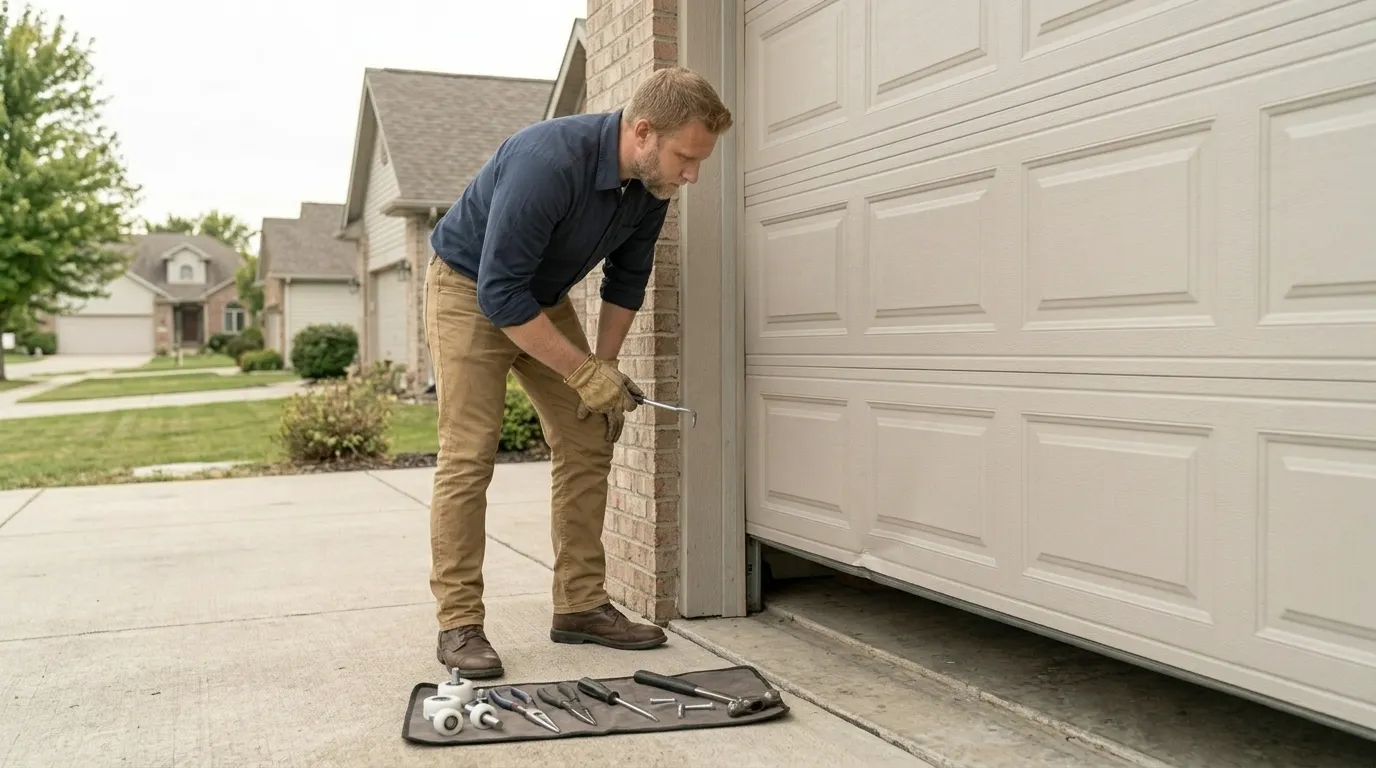
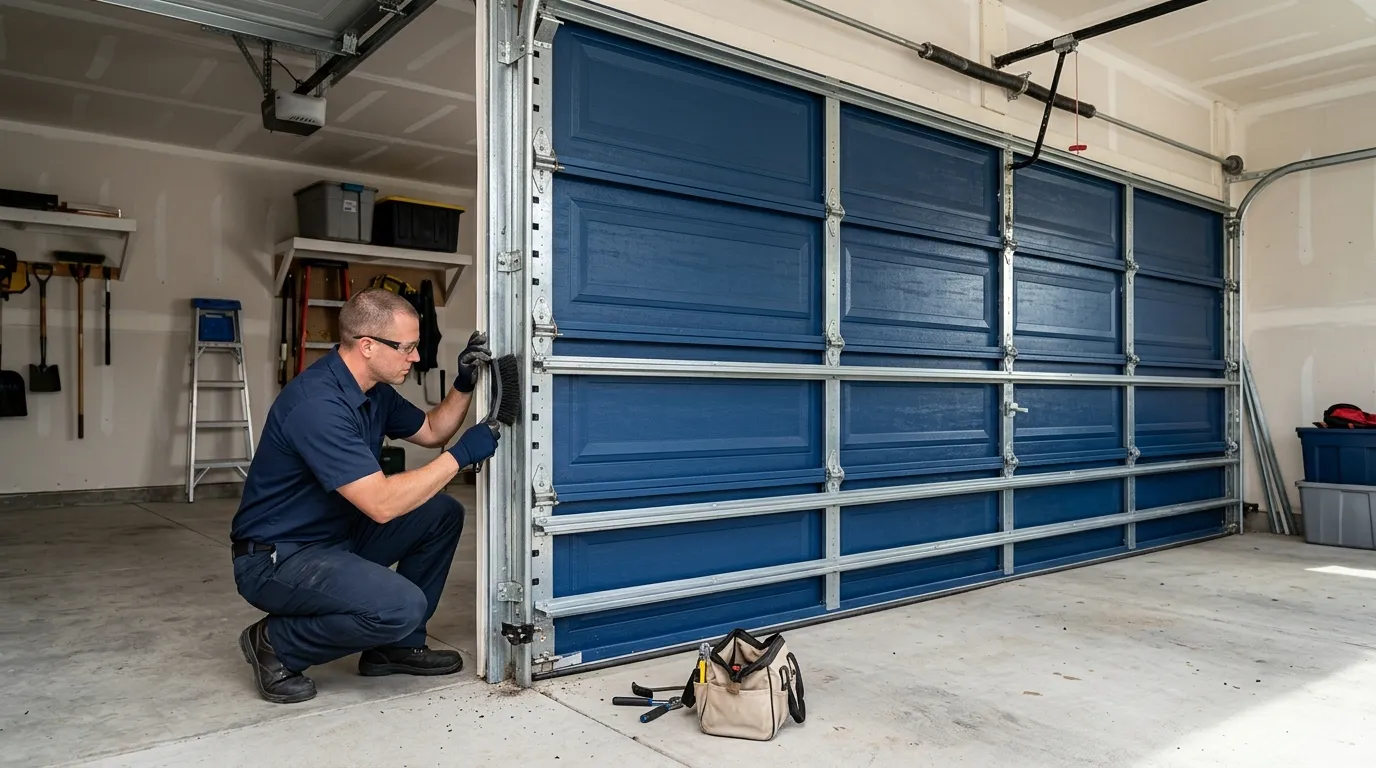
Keep the tracks clear of debris and check that the photo-eye sensors aren't caked with dust or knocked out of alignment. Both checks require nothing beyond a flashlight and catch a good share of nuisance faults before they turn into a stuck door.

Listen and look for wear

Listen for grinding that wasn't there last month and look at the cables for fraying near the drum. Catching cable wear early, before a strand fully lets go, is one of the few warning signs a business owner can spot without opening anything up.

Spring and drum work

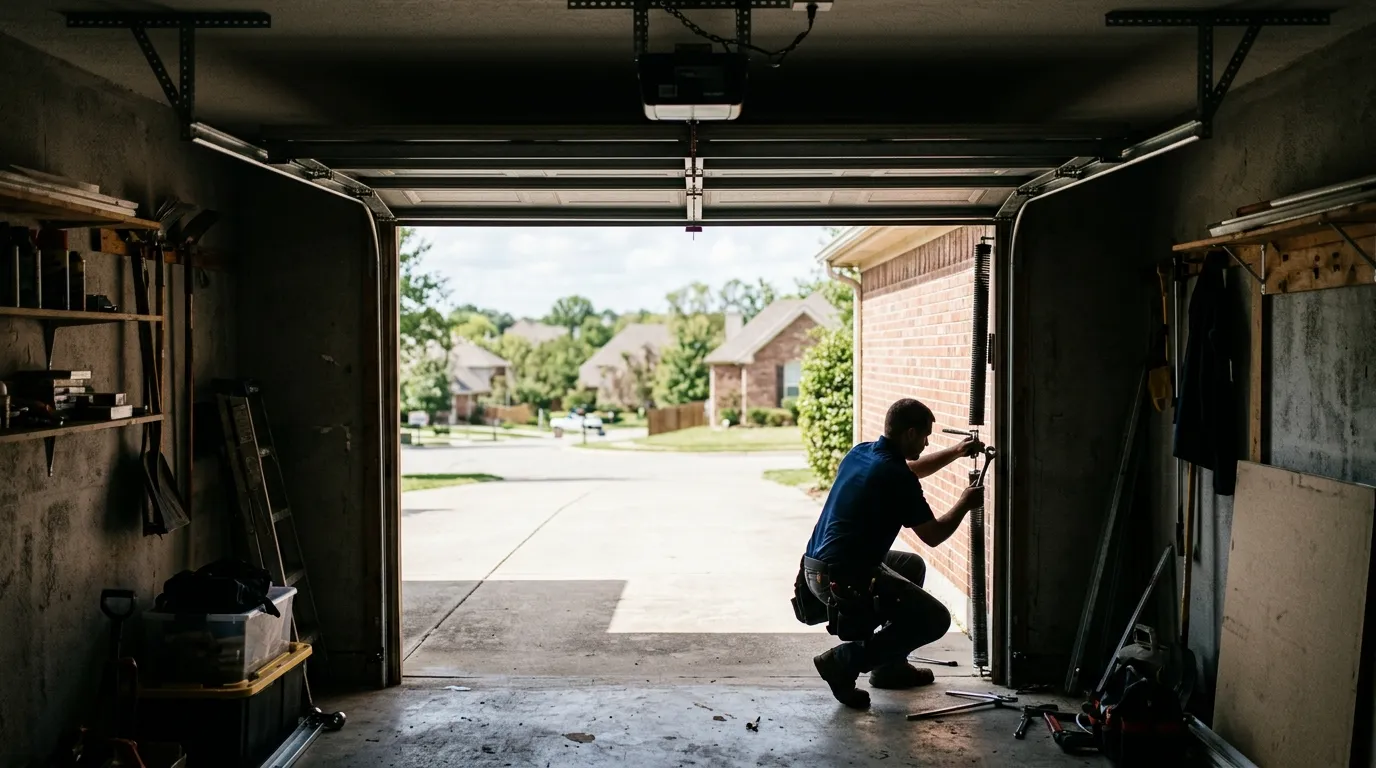
Adjusting spring tension or pulling a drum without the right bars and clamps is how people lose fingers, not a figure of speech. Anything involving the spring, the torsion bar, or the cable itself is a call, not a project, and a half-finished DIY attempt costs a business more in downtime than the service call would have.

Local causes

What Causes It Around Here

Elmhurst's building stock centers on 1964, which puts a lot of commercial doors and their openers past fifty years of cycling — and that age, combined with a cold moderate climate, drives a predictable set of failures rather than any one dramatic event.

Fifty years of cycling

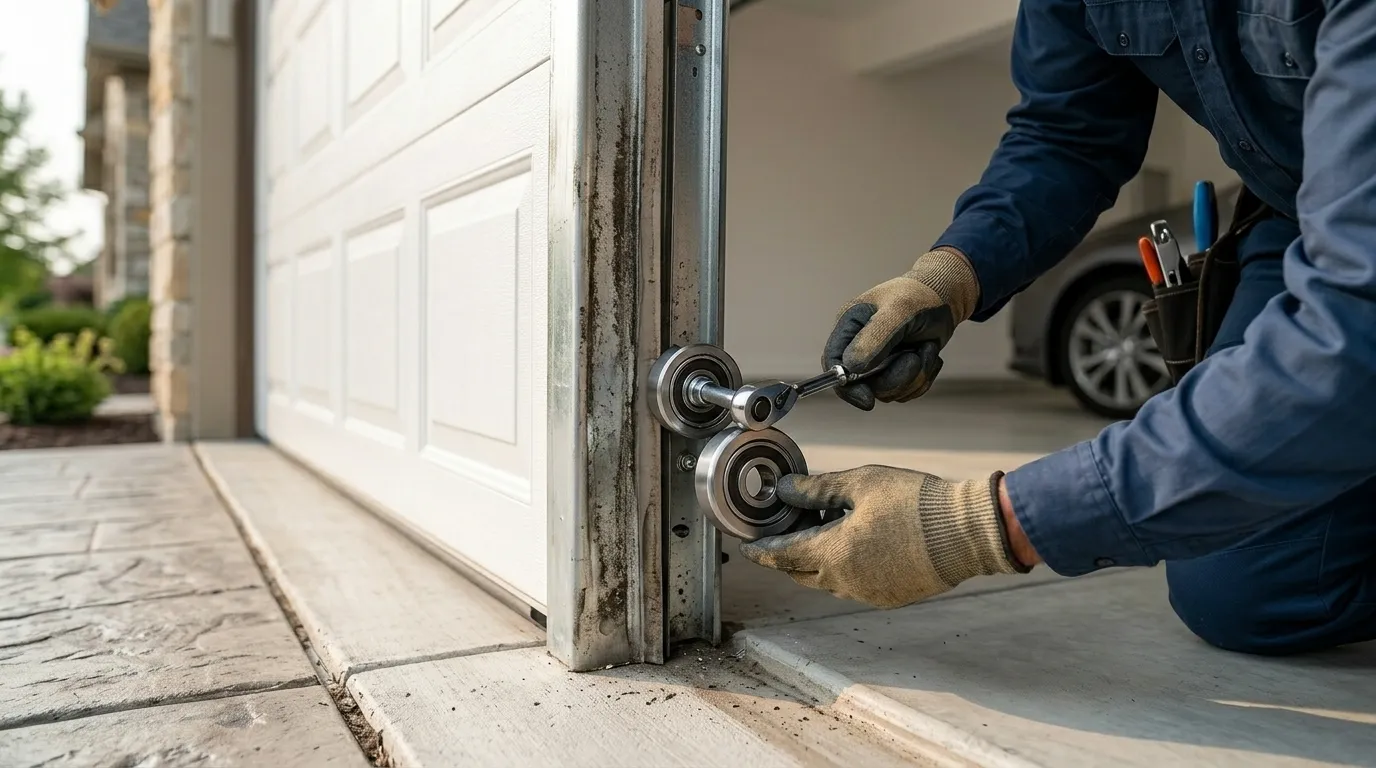
Elmhurst's building stock centers on 1964, which puts a lot of commercial doors and their openers past fifty years of open-close cycles. That's not a defect — it's just steel doing what steel does after that many cycles: cable strands fraying at the drum, spring coils losing tension unevenly, and roller bearings drying out and binding in the track.

Cold-climate wear on top of age

The region sits in a cold moderate climate band, and that adds its own wear pattern on top of age. Steel contracts in a hard cold snap, and a spring that was already fatigued from decades of use is more likely to snap on the first bitterly cold morning of the season than on a mild one.

A pattern across older stock

We see the same pattern across the older stock in this part of the service area — it's not unique to any one building, it's what 1960s-era commercial hardware does once it's been through enough winters of freeze and thaw.

Our process

How We Fix It

We start by matching the door to its era rather than assuming a modern off-the-shelf part fits, since a lot of commercial doors around Elmhurst are still running drums, tracks, and spring anchors sized to decades-old hardware standards.

  1. Match the door to its era

    We start by matching the door to its era rather than assuming a modern off-the-shelf part fits. A lot of the commercial doors around Elmhurst are still running drums, tracks, and spring anchors sized for hardware standards from decades ago.

  2. Source the right torsion spring

    A repair often means sourcing a torsion spring rated for the actual door weight and cycle load rather than grabbing whatever's closest on the shelf. Getting that match wrong is how a repair fails again within months instead of holding for years.

  3. Replace cable and roller pairs

    For cable and roller wear, we replace both sides even if only one has failed — on a door that's been cycling since the 1960s, the other side is close behind and due for the same failure soon.

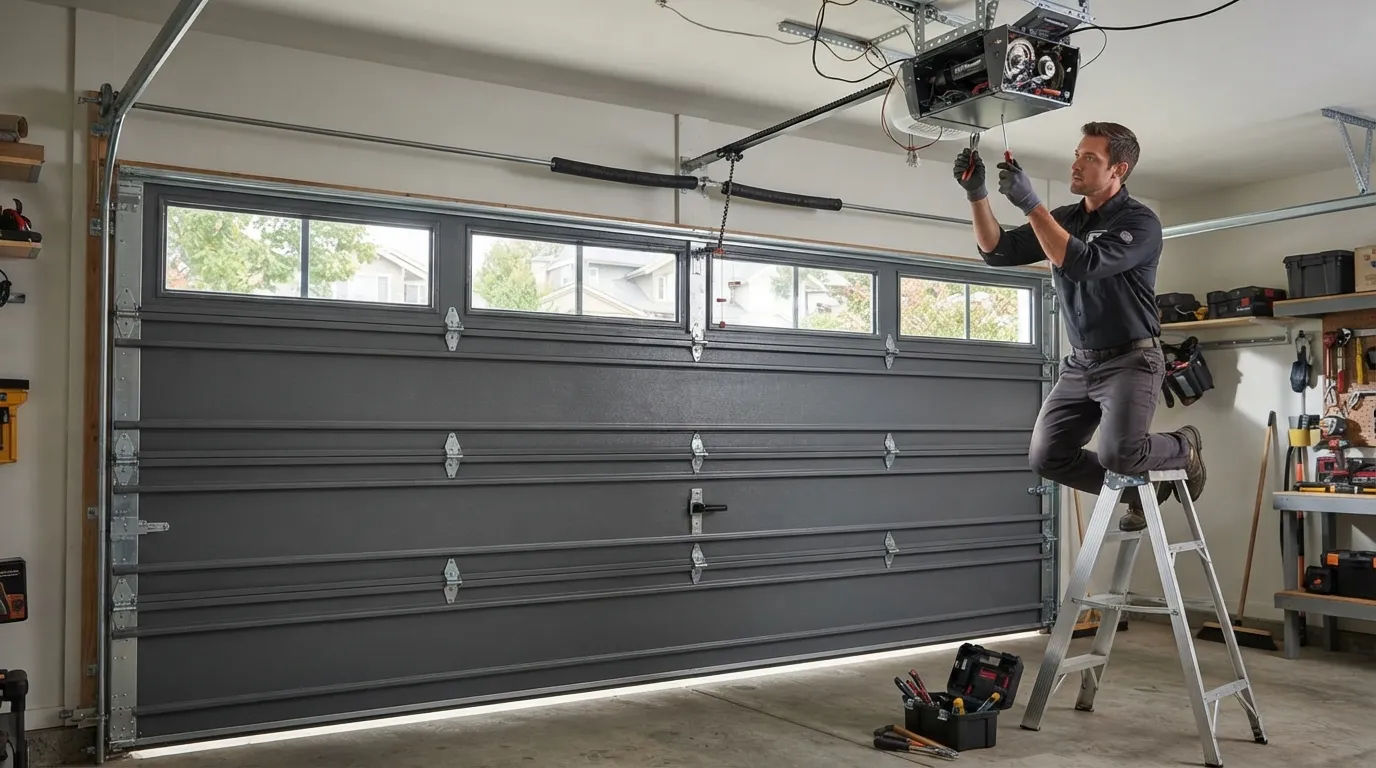
  4. Check the opener against door weight

    Openers get checked against the door's actual weight and balance, not just bolted back on, since a heavier commercial section on a mismatched opener is how you end up back at square one in six months.

  5. Flag warped frames honestly

    Where the frame or track has warped from decades of use, we say so before spending your money on a spring that won't fix the real problem — a warped track needs its own fix first, not a spring wound tighter to compensate.

Where This Job Goes Sideways

Watch-outs

Where This Job Goes Sideways

The honest limitation: on buildings from the 1964 era, we sometimes hit hardware that's been discontinued long enough that matching parts means a longer lead time than a same-week repair, especially for oversized commercial track or a drum size that isn't stocked anymore. When that happens, we tell you rather than jury-rig a mismatched part that fails again in a month.

The other place this goes sideways is when a door has been patched more than once already - a new spring on an old drum, a new cable on a warped track. At that point, given Elmhurst's income profile and what a second or third repair costs a business in downtime, replacement is usually the better math than another round of parts. We'll say so plainly if that's where your door is, rather than billing you for a fix that's only buying a few more months.

Questions

Common questions

Do you have a branch in Elmhurst?

No. We run Elmhurst calls out of Naperville, about 15 miles away. There's no local depot here, so we schedule visits rather than treating them as a quick add-on stop, and we ask for enough lead time to bring the right parts for older commercial hardware.

Why does the age of the building matter for a door repair?

Elmhurst's building stock centers on 1964, and doors from that era run heavier steel sections and older-spec torsion springs than what's common today. Matching those parts correctly, instead of forcing a modern replacement part onto old hardware, is what keeps the fix from failing again in a few months.

Is it ever better to replace than repair a commercial door here?

Once a door has already had a couple of patch repairs - a new spring on an old drum, for instance - replacement usually costs less over time than another round of parts. We'll tell you directly if that's where your door stands rather than billing for a short-term fix.

Can I do basic maintenance myself?

Yes, within limits. Keeping tracks clear, checking photo-eye sensors, and watching cables for fraying near the drum are fine to do yourself. Spring tension and cable or drum work on a commercial door take the right bars and clamps and aren't a DIY job.

Ready when you are

Need a garage door sorted in Naperville?

Naperville Garage Door Pros repairs and installs garage doors, springs and openers in Naperville, IL and the surrounding area.

Call Now(331) 297-2514