Spring Repair for Warrenville's 1980s Garage Doors in Naperville

Warrenville, Naperville

Spring Repair for Warrenville's 1980s Garage Doors

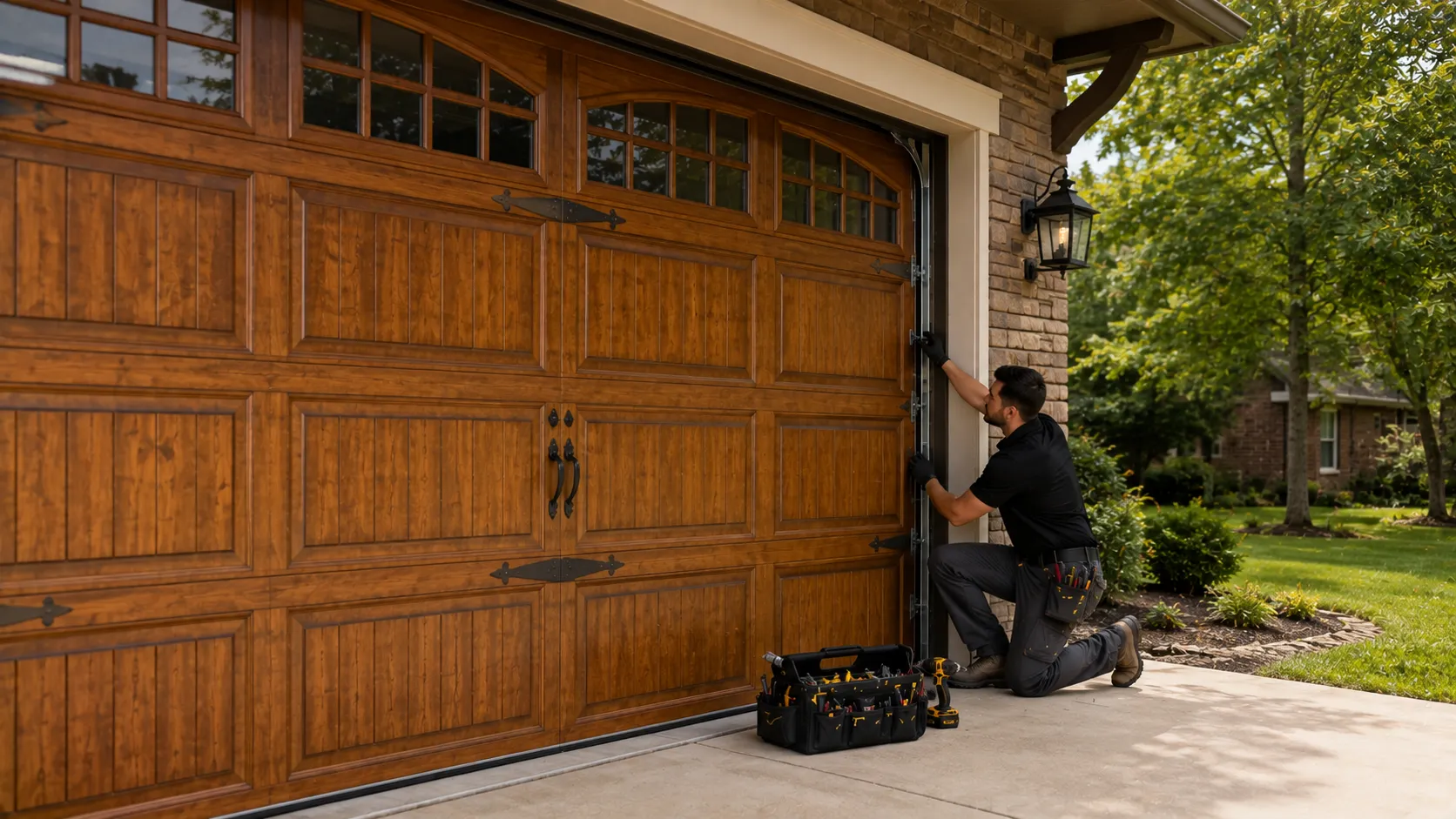
Warrenville homes built around 1980 are due for spring replacement now. Naperville Garage Door Pros drives the 5 miles out for torsion and extension spring jobs.

Serving Naperville, ILBackground-checked techsHonest, upfront pricingFast local response

Job timing

Time on the Job

Warrenville's housing stock centers on a median build year of 1980, which puts a lot of these garages a full generation past their original torsion or extension springs. A spring wound in 1980 was never meant to last this long - most give out well before now, and if a house here still has its first set, that spring is running on borrowed cycles. We see this pattern across the wider service area too: houses built anywhere from 1938 to 2003, with the bulk from the 60s and 70s, so springs from three different design eras end up on our truck in the same week. In Warrenville specifically, the 1980 median means the extension-spring setups common to that build decade are what we expect to find first, not the older side-mount torsion hardware that shows up in older pockets of the area. Cold-climate swings stiffen the coil grease and add stress every winter, which shortens a spring's working life compared to a house in a warmer band. We come out from Naperville, about 5 miles away, so there's no branch office to route through - just a scheduled call and a truck that shows up with springs sized for the era, not a universal stopgap.

Time on the Job
Booking a Visit

Booking

Booking a Visit

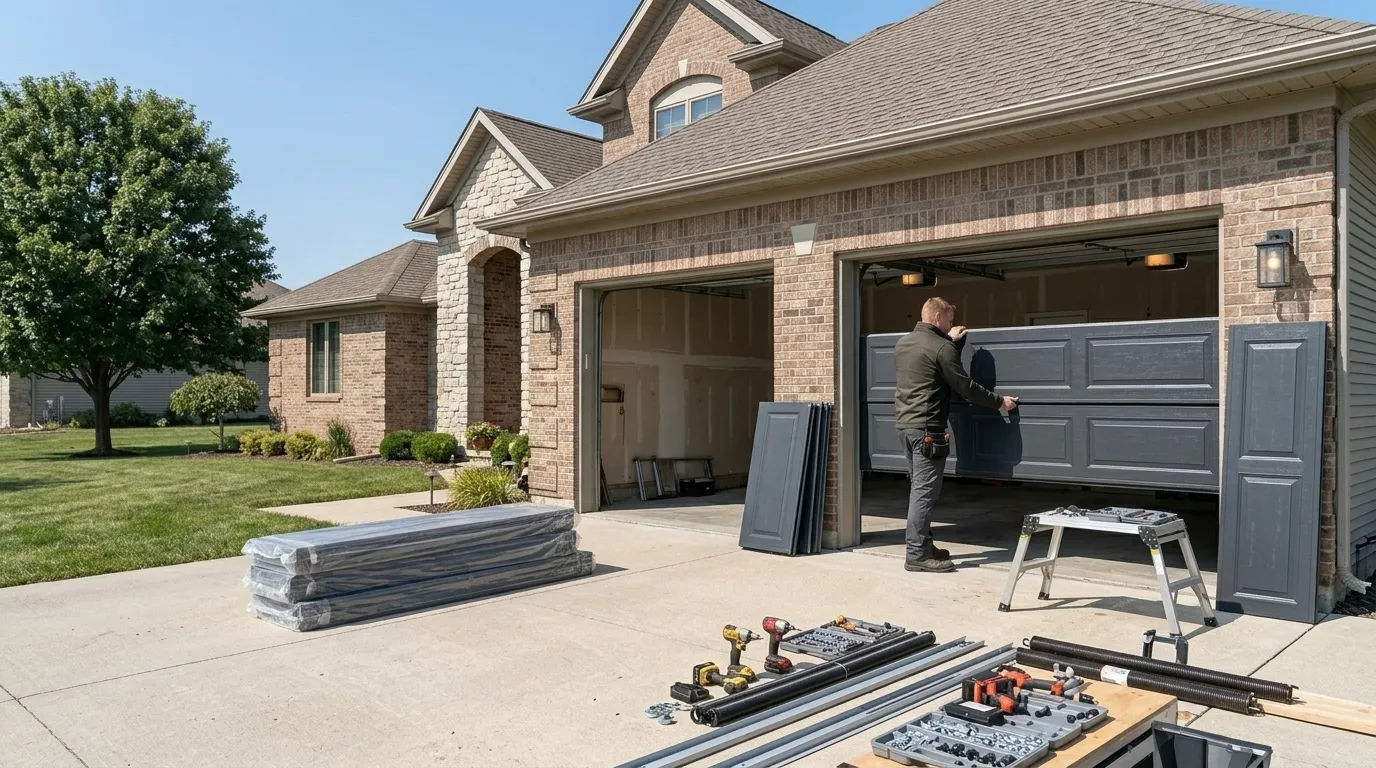
We take the call in Naperville and send a truck the 5 miles into Warrenville, so there's no local dispatch delay to explain - it's a straightforward drive, not a satellite office. When you call, tell us the door's approximate age, whether it's one spring or two, and whether the door is stuck up, stuck down, or won't move at all. That's enough for us to load the right spring size before we leave the shop. We don't quote a spring repair over the phone without knowing the door's width and whether it's torsion or extension - guessing wrong means a second trip, and we'd rather ask the extra question up front.

Warning signs

How It Shows Up

A broken or failing spring rarely comes out of nowhere, even when it feels sudden. Whether the setup is torsion or extension, original to 1980 or already replaced once, each failure pattern below points to a spring that was already running on borrowed time before the cold weather finished the job.

Loud Bang, Door Won't Lift

A broken torsion spring on a double door usually announces itself with a loud bang from the garage, followed by a door that won't lift past a few inches, or an opener straining and clicking off on overload. It's one of the more dramatic failures we see, but also one of the most straightforward to diagnose over the phone.
Frayed Cable or Sagging Pulley

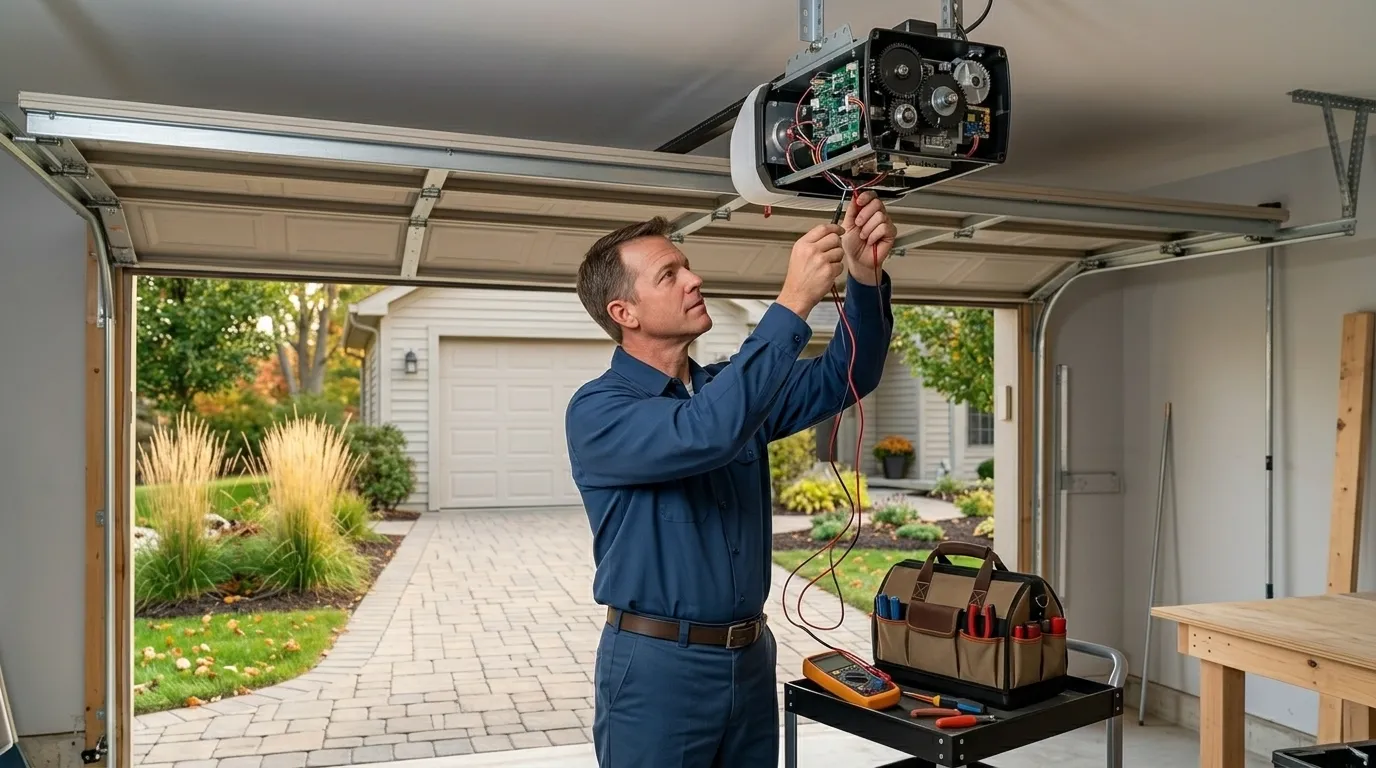
On the older extension-spring setups still around in this area, the failure is quieter - a frayed cable, a sagging cable pulley, or a spring that's stretched loose and lost tension. These symptoms build gradually, so the door often gets noticeably harder to lift well before anything actually snaps.

Pitted or Cracked Spring Housing

With a median build year of 1980, we expect a mix of hardware ages: some Warrenville garages got a spring swap sometime in the 90s or 2000s, while others are still running the original set. On those originals, the housing on the spring itself has often started to pit or crack from four-plus decades of use.

Cold Mornings Snap Marginal Springs

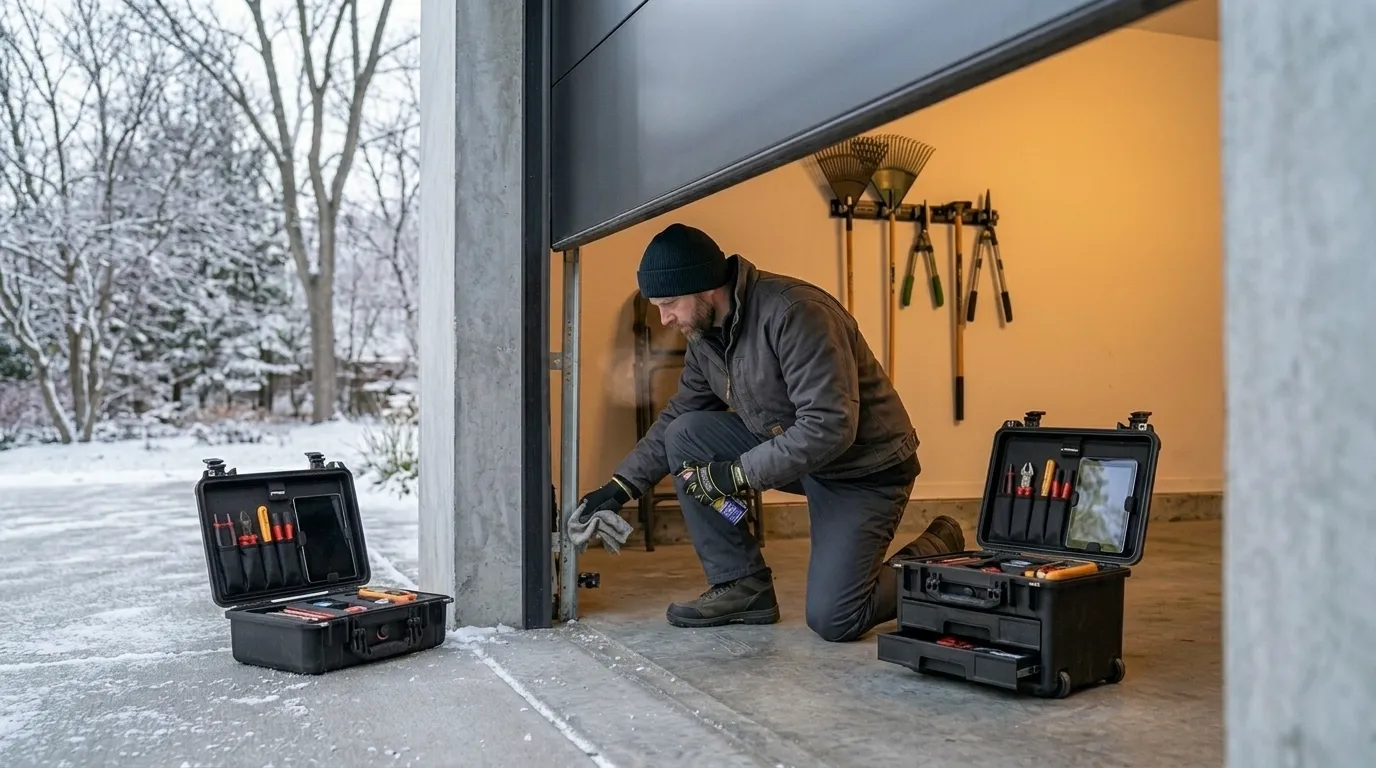
Cold-weather stiffness matters here, since this area sits in a moderate-cold climate band that makes a marginal spring more likely to snap on a frigid morning than a mild one. The steel loses some flex in the cold, which is often what finally pushes an already-tired spring past its limit.

Our process

How We Fix It

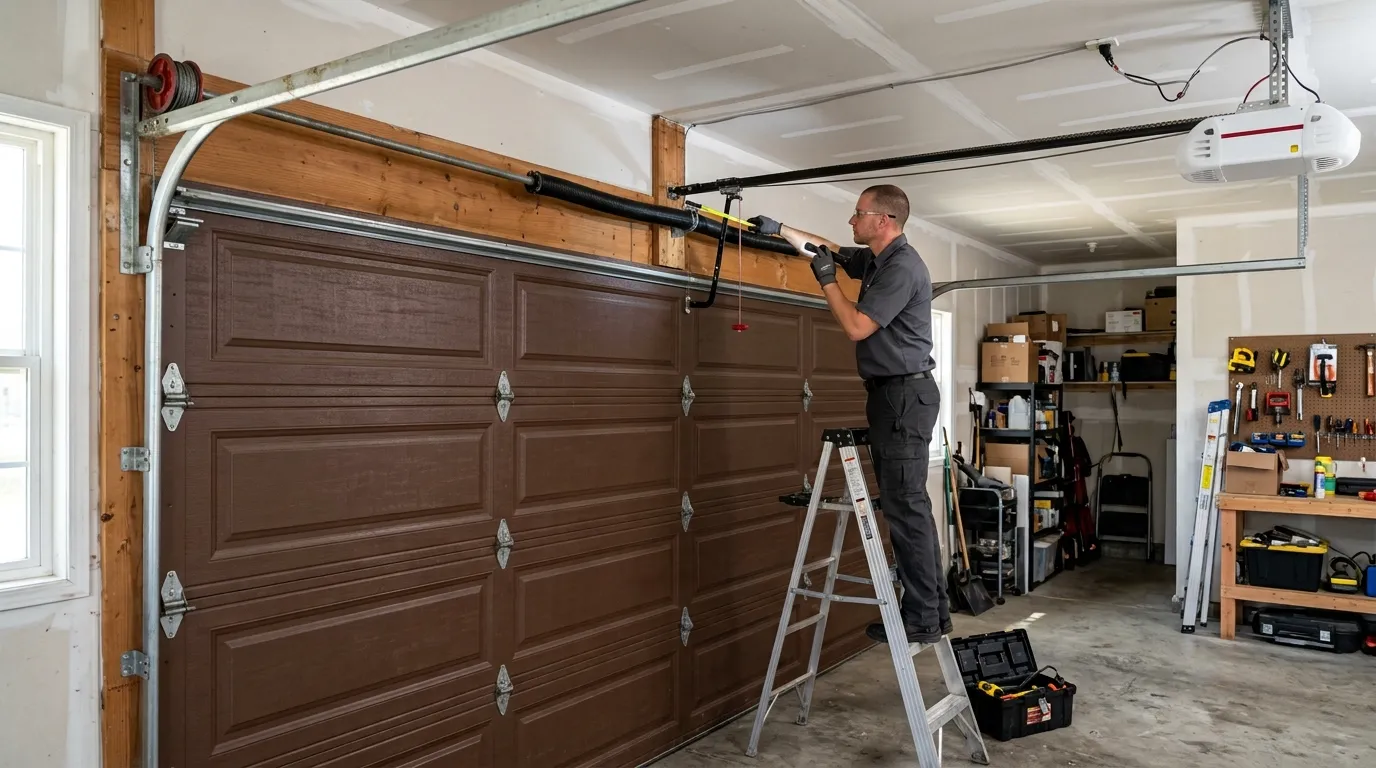
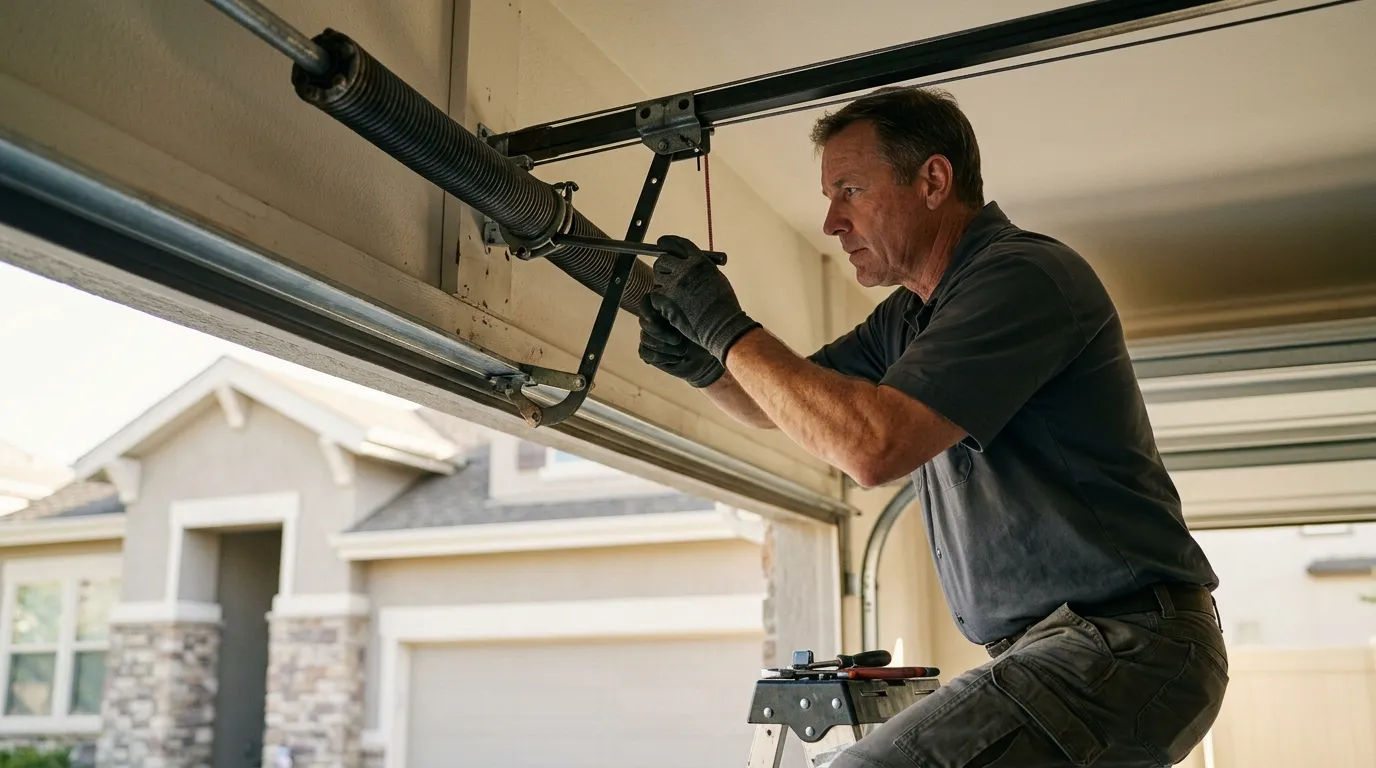
Once we know whether the setup is torsion or extension, the repair follows the same disciplined order: replace springs in matched pairs, check the parts that age alongside them, size everything to the actual door, and flag any hardware damage the spring alone won't fix.

  1. Replace Both Torsion Springs as a Pair

    We replace both springs on a torsion bar even if only one has broken, since an unmatched pair puts uneven load on the shaft and wears out the new spring fast. It's standard practice on any torsion setup, regardless of the door's age.

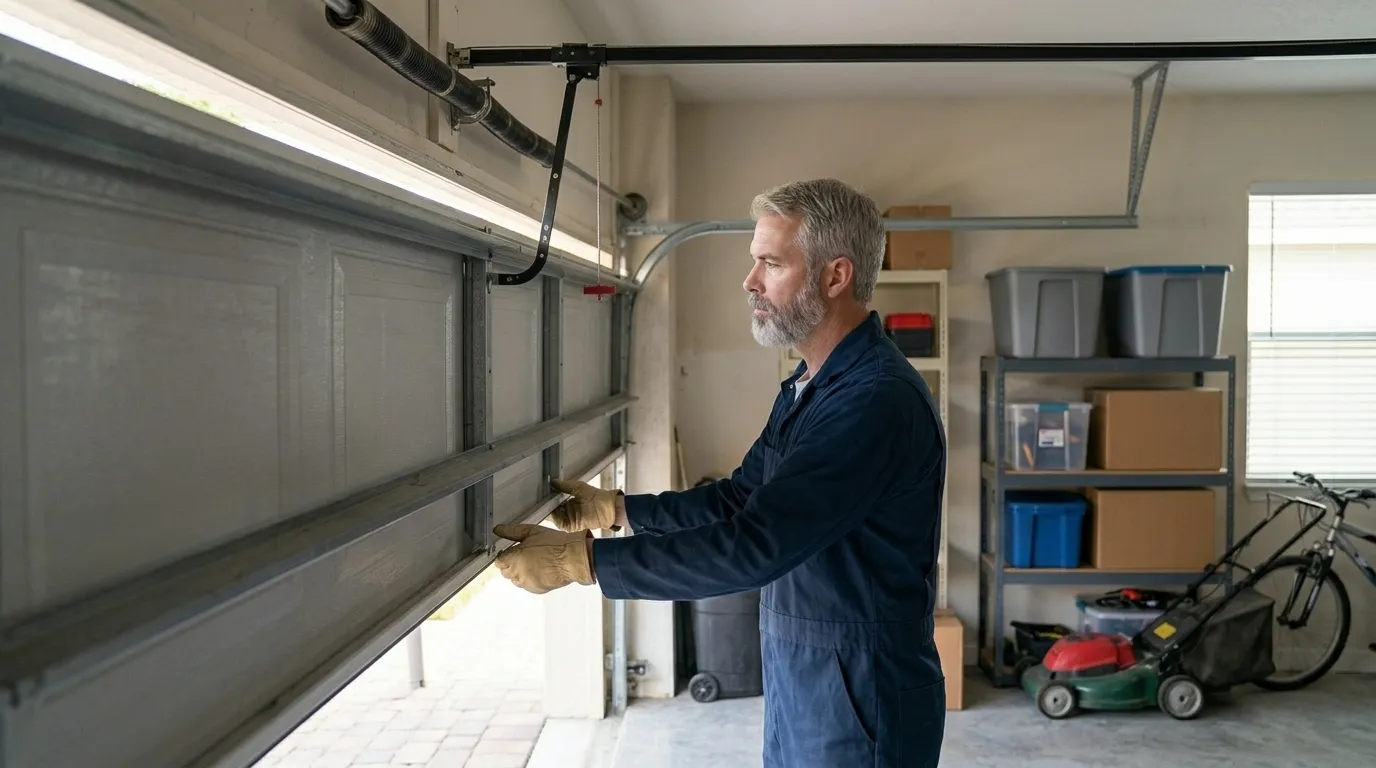
  2. Check Cables, Pulleys, and the Safety Cable

    For extension setups, we check the cables, pulleys, and safety cable at the same time, since those parts age on the same schedule as the springs. Catching a worn cable during a spring job avoids a second call for a part that was already close to failing.

  3. Size the Spring to the Door, Not the Broken Piece

    We size the new spring to the door's actual weight and cycle count rather than swapping in whatever matches the broken piece, because a spring that was slightly undersized from the factory is a common reason a door needed help sooner than it should have. Matching the old size just repeats the original mistake.

  4. Flag Bent or Rusted Hardware Upfront

    One limitation worth saying plainly: if the torsion bar or the drum is bent or rusted through, spring replacement alone won't fix the door - that's a hardware repair on top of the spring. We'll tell you before we start, not after, so there's no surprise on the bill.

What You Pay

Pricing

What You Pay

We don't have a published price list for this page, and we're not going to make one up. What a spring job costs depends on whether it's one spring or two, torsion or extension, and what shape the rest of the hardware is in - you'll get a number on-site before any work starts, not a phone estimate. What we can say is that the area's median household income sits around $99,028, close to the roughly $99,525 figure for the broader service area, which is part of why we quote the actual parts and labor rather than a flat rate that doesn't match the job in front of us.

DIY or pro

Doing It Yourself

There's a clear line between what's safe to check yourself on a spring problem and what genuinely needs the right tools and parts. With roughly 5,483 households in Warrenville sharing the same 1980-era hardware, guessing at spring size is a mistake that usually costs a second visit.

Torsion Springs Are Not a Learning Project

A torsion spring is under enough stored tension to break a wrist or worse if the winding bars slip, which is why this is not a job to learn on your own garage. The tension involved doesn't scale down just because the door looks ordinary.

Extension Springs Still Carry Real Risk

Extension springs are lower-tension than torsion setups but still capable of snapping a cable under load. Lower risk isn't the same as no risk, and a snapped cable under tension can move fast enough to cause real injury.

Safe Diagnostic Checks Anyone Can Do

If you're comfortable with basic mechanical work, you can safely check things yourself: listen for the bang, look at the cables for fraying, and see if the door lifts evenly by hand with the opener disconnected. These checks tell us a lot before we even arrive.

Hand the Repair Itself to Someone with the Right Parts

Beyond that diagnostic step, hand it to someone with the winding bars and the right spring size. Most garages in Warrenville share the same 1980-era hardware, so getting the spring size wrong once tends to mean doing the job twice.

Questions

Common questions

How old are most garage door springs in Warrenville?

Warrenville's housing stock has a median build year around 1980, so a lot of original springs are 40-plus years old if they were never replaced. Springs typically fail well before that age, so if your garage was built in that era and you don't know the spring's history, assume it's overdue rather than assume it's fine.

Do you have a local office in Warrenville?

No. We're based in Naperville and drive the roughly 5 miles out to Warrenville for calls. There's no separate branch here - just a scheduled visit from the Naperville truck, same crew, same parts stock.

Is it cheaper to fix one spring or replace both?

Replacing one spring and leaving the other original almost always costs more over time, since the mismatched pair wears unevenly and the older spring tends to fail again soon after. We replace both on a torsion bar as standard practice, and we'll explain the reasoning before we do the work.

Can cold weather actually break a spring?

Cold doesn't cause the break by itself, but it stiffens the steel and grease, which adds stress to a spring that's already near the end of its life. In this area's cold-moderate climate band, we see a noticeable jump in spring-break calls after a hard cold snap.

Ready when you are

Need a garage door sorted in Naperville?

Naperville Garage Door Pros repairs and installs garage doors, springs and openers in Naperville, IL and the surrounding area.

Call Now(331) 297-2514